Style Upgrade: Wine Out of the Box, Into the Boxxle

Have a glass while you cook

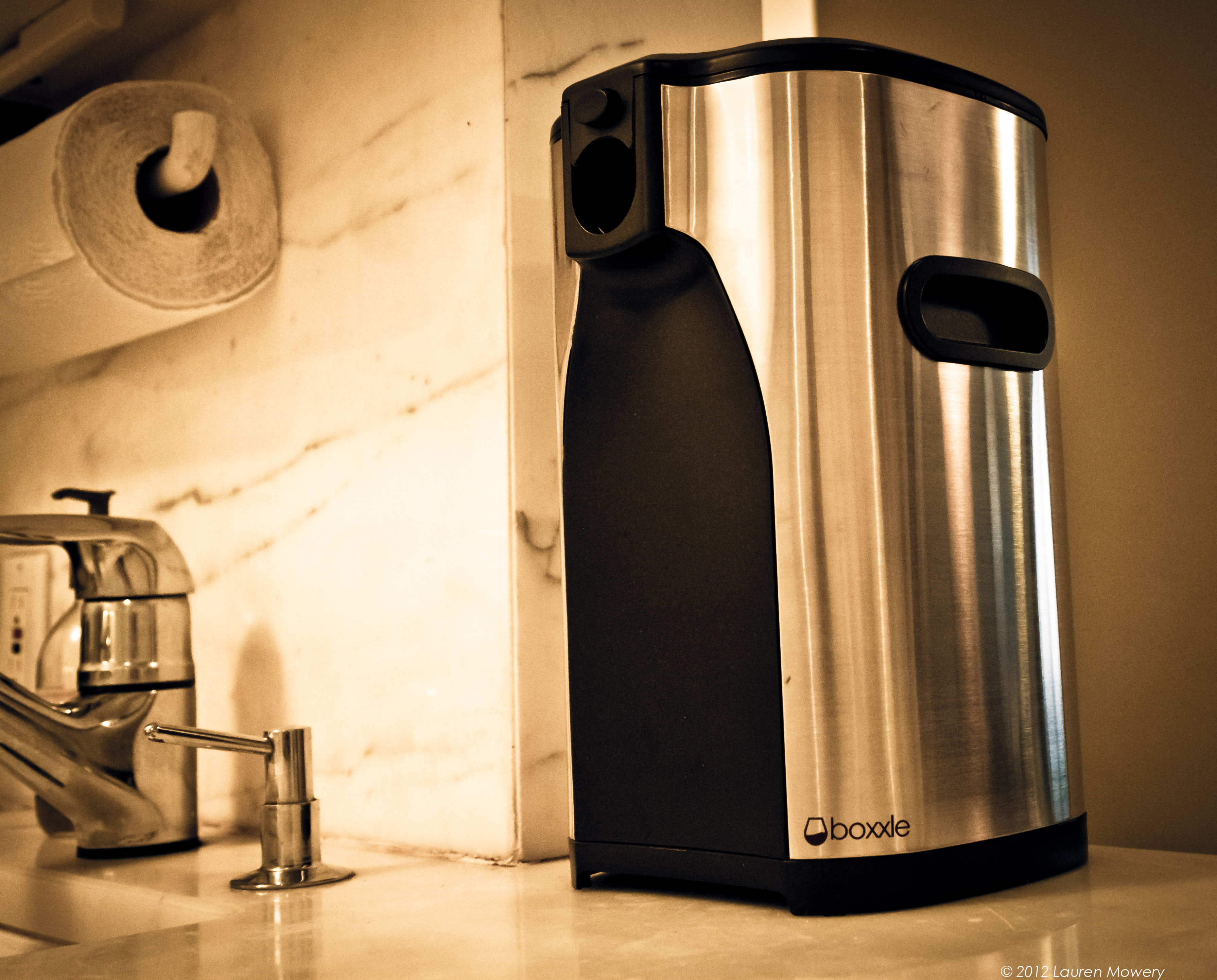
Behold, the Boxxle! Have a glass while you cook.

Last week on my blog (and early December in the Village Voice), I published an article reviewing the “best” boxed wines on the market. Prior to tasting twenty+ wines, winnowing the field of drinkable ones to eight, I posed the following question: Can one throw an affordable, elegant dinner party with boxed wines guests would enjoy drinking? The answer was Yes but No. Affordable and enjoyable: Yea, mostly. Elegant? That was still unsolved.

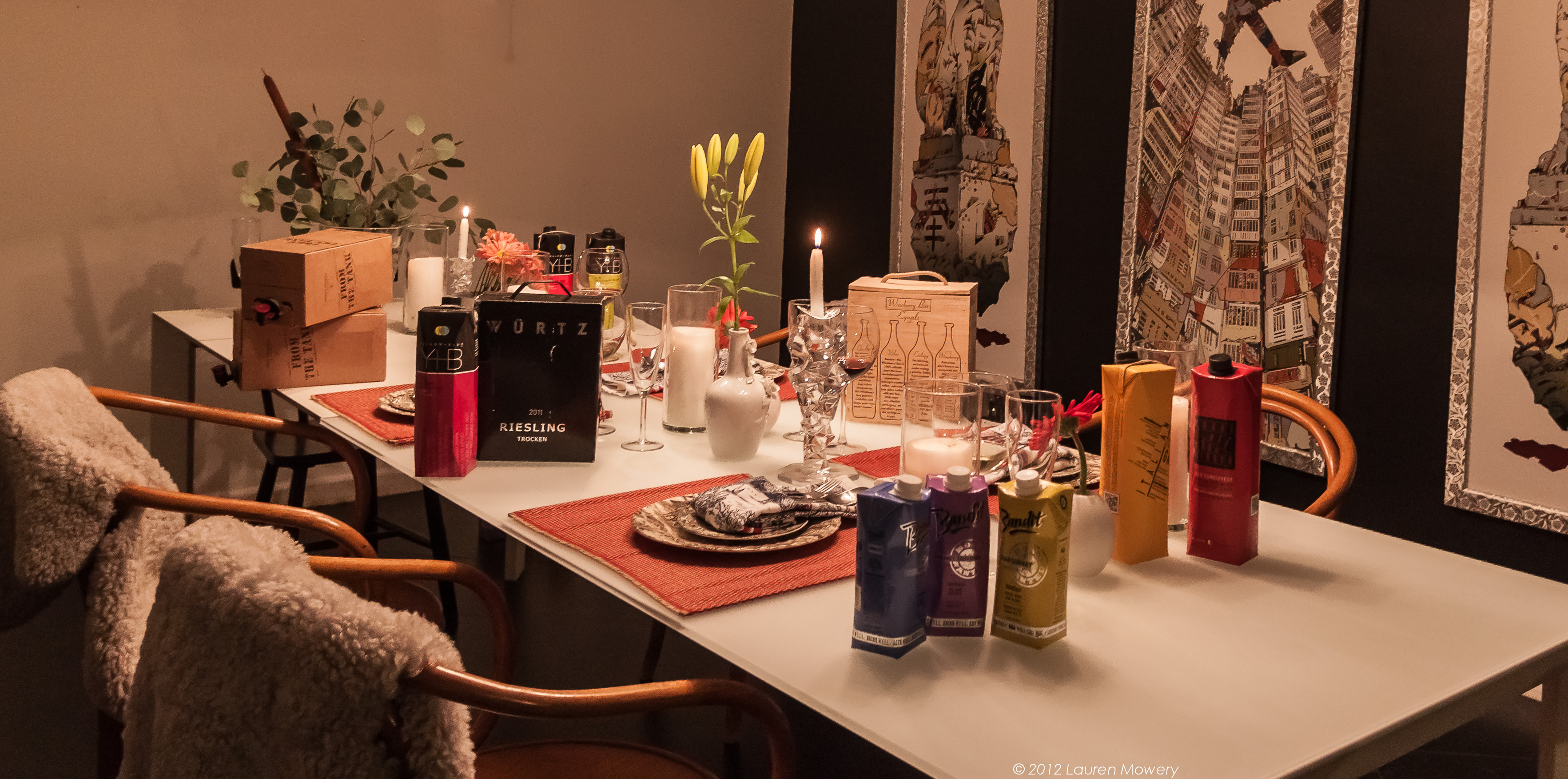
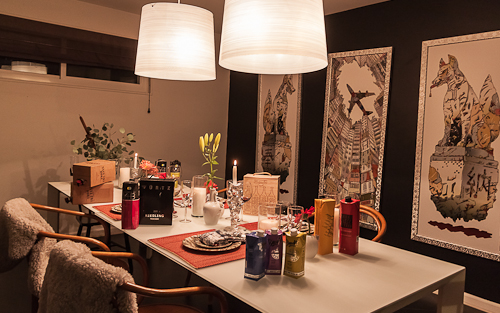
I tested my dinner party theory over Thanksgiving at my sister’s house. As you can see from the photo below, we sampled lots of wines, yet the loveliness of the dining room was undermined by the silly looking collection of boxes on the table. Clearly, refilling guests out of a cardboard container is far from sophisticated unless you plan to use decanters all night.  But decanters are only a solution for a party, not for daily consumption at home. Now, solving for both: The Boxxle.

Affordable and drinkable, but aesthetically displeasing

Affordable and drinkable, but aesthetically displeasing

Apparently I was not the only one to recognize this problem, but Tripp Middleton was the first address it. A University of Georgia graduate, Middleton acknowledged the issue of aesthetics as well as stigma around serving wine in a box, so he created the Boxxle, a patent-pending dispenser made for 3L (equal to 4 bottles) wine bladders.

As you may recall, inside every box of wine is an airtight plastic bag holding the juice. You must get that bladder into the Boxxle, a minor but surmountable challenge that involves pulling it out of the cardboard casing without puncturing it. I speak to that issue since, like an idiot, I tried opening a box with a knife, and well, you know where this is going.

The Boxxle itself features a stylish stainless steel exterior with looks akin to a simplehuman product. Perfect for matching your SH trashcan, Viking Range, Bosch Dishwasher and all the rest of the SS in your kitchen (mine included, although no Viking or Bosch here). The extraction system is easy to use and pretty genius. Rather than the traditional gravity drain method found in a normal box, the Boxxle uses a compression system to squeeze the wine out to the last drop–no embarrassing tilt and shake while trying to get that final spit of alcohol.

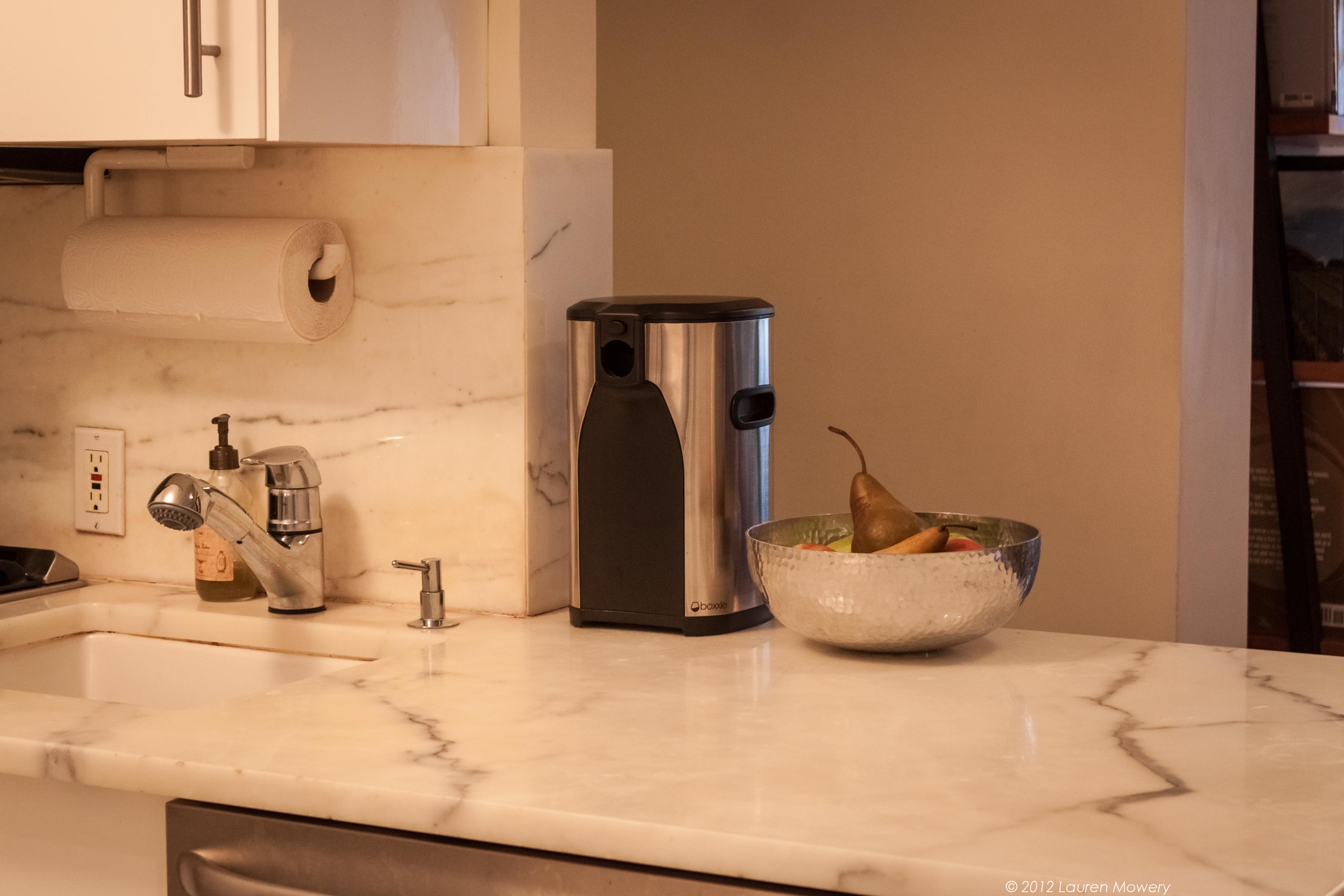
Looking elegant and discreet in my kitchen.

Boxxle looking elegant yet discreet in my kitchen.

If you are a regular drinker of red wine, you can leave the Boxxle on your counter (unless you live in the South–too hot folks!) with your favorite 3L bag of vino rosso inside. If you prefer whites, you may have difficulty finding space in the fridge; but a little life priority and shelf rearrangement will have you discreetly drinking chilled wine for months. The beauty of the Boxxle is that nobody can see how much goes out, as long as you put another bladder back in.

Other perks of the Boxxle include larger, nebulous but still important environmental impact savings such as glass bottle waste, shipping, labeling–basically a lowering of your carbon footprint. Plus your wine stays fresh for up to six weeks! A win-win for all. The only question is: Can you find a wine good enough for the Boxxle?

Leave a comment

Filed under Product Review, The Boxxle

The Boxed Wine Experiment

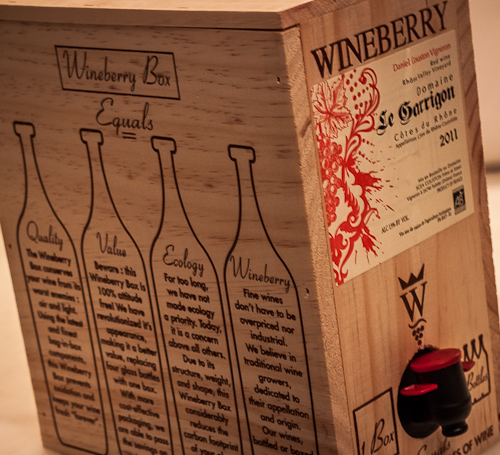
Literally, a box of wine

Literally, a box of wine

If you missed my article in the Village Voice on boxed wine, here is your second chance…

My last memory of drinking boxed wine is from a college football game. A friend duct-taped a Franzia Chardonnay bladder under khaki pants like a wino’s version of a flask. During the game, he would roll up his pant leg, flick the spigot and fill-up nearby students’ cups with the plonk. Given this was years ago, I figured the boxed-wine industry must have matured as much as my graduating class.

Since a box holds more wine, creates less garbage, weighs less, and costs less, if you could just find boxed wine that people actually want to drink, you could throw an affordable, eco-friendly, elegant party. Right?

I perused the shelves at Astor, known for carrying nearly thirty different economy-format wines. I then collected twenty-two samples from various producers who had the best online reviews: Bandit, Würtz and Wineberry, plus the organic wines of Y&B, From the Tank, and Fuori Strada. I even included a college throwback, Franzia, to see if they had improved their game.

Modern packaging styles include Tetra Pak (same material used for chicken broth) with plastic screw caps or the classic bag-in-a-box with spigot. Sizes were generally 1L and 3L, although Bandit also makes a cute 500 ml that fits perfectly in a purse (for football games!)

Boxed wine for a dinner party? Yes!

Boxed wine for a dinner party? Yes!

Here are eight wines for your next party:

Le Garrigon, Côtes du Rhone 2011 from Wineberry, 3L, $40. By far the most sophisticated in taste and packaging. Also, survived the longest at three+ weeks post T-Day in the fridge.

From the Tank, Côtes du Rhone Red, 3L, $36. Blend of Grenache, Syrah and Carignan, this smooth, red berry and cherry-fruit red was a household favorite, finished in two days.

Y&B Select Red 2010, 1 L, $12. A Santa Barbara-sourced blend with blackberry and spice notes; would make a nice weeknight glass with dinner.

Fuori Strada Sangiovese 2010, 1L, $12. Medium-bodied with smooth tannins and juicy, red fruit. Another surprise keeper.

Würtz Riesling, 3 L, $25. Dry, crisp and fruity crowd-pleaser in a slick, attractive black box.

From the Tank, Languedoc White, 3L, $33. 100% Chardonnay with pretty, but subtle flavors of stone fruit, green apple and citrus. Perfect if you need a white wine option for a party.

Bandit Merlot, 1L, $8. Simple party sipper with moderate tannins, a hint of cedar and vanilla with blueberry-plum fruit.

Fuori Strada Grillo 2011, 1L $12. Lemon-citrus and minerality dominate this clean, fresh and lively wine, if a slight bit tart.

And here’s what I learned about boxed wine:

  • The quality gap between the reds and whites was like that between the Patriots and the Jets. We enjoyed drinking the best reds, while the mostly insipid, often tart whites were a chore to get down, some too sour to drink at all.
  •  The wines in Tetra Pak degraded faster than bottled wine; drink within 24 hours of opening.
  •  The wine spigots were hard to retrieve out of the interior of the boxes. Try pulling them out with pliers.
  •  Don’t bring boxed wine to a party. If my sister (who hosted my tasting over Thanksgiving) wasn’t thrilled, I suspect a non-familial hostess will appreciate the gesture even less. Go glass when gifting.
  • To qualify as “elegant,” serve the wines from decanters.

4 Comments

Filed under Boxed Wine

Australian Shiraz 2.0: Six Wines Worth Finding

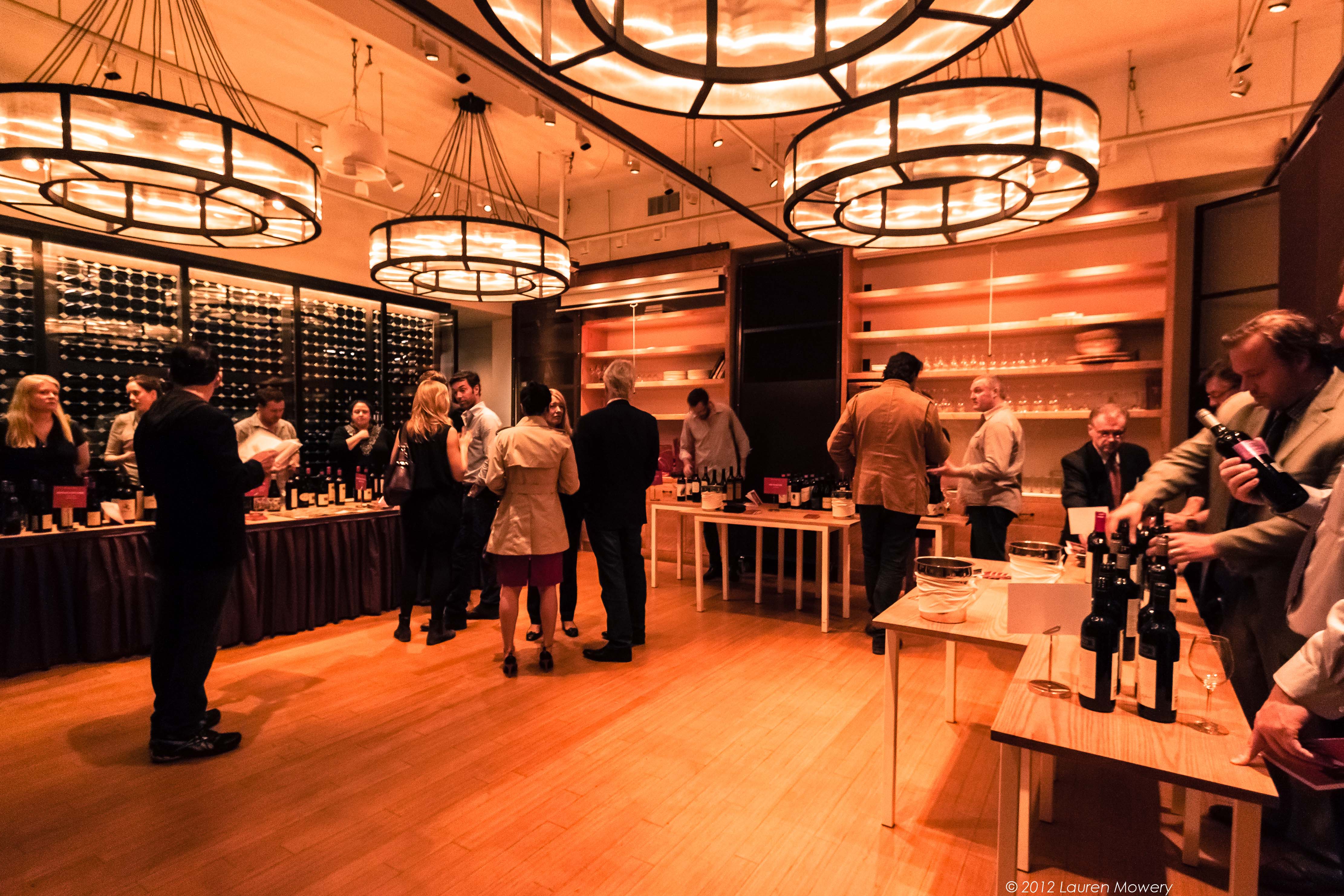
Recent tasting of Australian Shiraz at Corkbuzz Wine Studio

Recent tasting of Australian Shiraz at Corkbuzz Wine Studio

I think we can all agree that Australian Shiraz went through a bubble not unlike the housing crisis in the U.S. But just as homeownership is making a slow, wobbly comeback, so is Shiraz trickling back into the market.

I addressed some of the issues the Australian wine market faced in a previous post, so this is old news. But to briefly recap the story of Shiraz, by winemakers’ own admissions, they glommed on to the trend of producing ripe, oaky syrup intended to please palates of critics and Coca-Cola loving Americans. But they made too much of it, and the style expired (or is still expiring—fingers crossed for the Mid-West!), as all trends do. Americans opened up their wallets and palates to different countries—Argentinian Malbec, for example—as well as to leaner wines with greater finesse. Shiraz was left to wither on the proverbial vine.

Enter Australia 2.0. The country has since come to realize their epic mistake for relying on one grape, one style, one low price point and a couple of critters to represent the country’s potential. Frankly, any thoughtful wine drinker can look at a map of Australia and conceive that there are many different micro-climates, varieties, producers and thus styles that should be heading our way.  However, Australians needed introspection; thus, the industry took a look at their own map, defined their regions, embraced them and are looking to share it with us.

In progression towards this goal, Wine Australia has hosted monthly regional immersion classes for industry folks in hopes we spread the good wine word. I have attended class the last four months, each one focusing on different grapes/styles/regions.

To be honest, when the Shiraz class came up on the schedule, I wasn’t particularly thrilled. I had recently been to a tasting that left me underwhelmed—many of the wines were too ripe, lacked acidity, and had the same profile for which we sent the grape packing in the first place. So, why relive the nightmare in the classroom, when there are so many other wines worth knowing? However, I kept an open mind because that is kind of the point of discovery and Australia is, by my own acknowledgment, a big place.

We tasted 22 wines in all price points, and surprise, many of them were wonderful! I felt like I was tasting the real Shiraz, or at least something different from the past 10 years. Don’t get me wrong—the wines still hold loads of plush fruit, but many had depth, complexity and finally some acidity. The class was a great re-introduction to Aussie Shiraz’ potential, and I kept notes on a handful of wines I believe deserve recognition.

What’s fun about this list is that good Shiraz is being made all over Australia, some regions with cooler climes and thus less ripe styles. Here are a few worth seeking out, and my simplified tasting notes from class:

2010 Inkberry Mountain Estate Shiraz-Cabernet, Central Ranges, NSW, $13: Black cherry, blackberry, black raspberry and a touch of menthol; good value.

2009 Fowles Stone Dwellers Shiraz, Strathbogie Ranges, VIC $20: Fruit and flowers nose; fruit leather, Christmas spice, Sichuan peppercorn and integrated oak palate.

2010 Shingleback The Davey Estate Shiraz, McLaren Vale, SA $22: Mint-choco chip ice cream with silky, warm blackberry sauce; lingering, pepper and herb finish.

2008 Plantagenet Shiraz, Mount Barker, WA $29: Earthy, floral and fruity; lifting acidity and a chocolate-minty finish.

2009 Brokenwood Shiraz, Hunter Valley, NSW, $36: Potpourri of baking spice, dried orange rind, cherries with traces of white fruit; good structure and acidity.

2007 Kilikanoon Oracle Shiraz, Clare Valley, SA $70: Vibrant mint, tobacco and black fruits; silky tannins fine like turkish coffee.

1 Comment

Filed under Australia 2.0, Shiraz

Welcome to 2013. Try a Painkiller.

Happy New Year! Before I get back to wine related topics, I thought I would share some photos from my Christmas and New Year’s holiday spent with the family in Tortola.

We had a sun-and-rum-soaked two weeks down in the British Virgin Islands. As expected, local liquor stores had limited wine inventory, so we drank rum. Lots of delicious, inexpensive, dark, spicy rums that we mixed into all kinds of juices: guava, papaya, passionfruit, pineapple.

The Painkiller is the national drink, founded at the Soggy Dollar Bar on Jost Van Dyke. The cocktail, so delicious and simple to make, just may perk up your grey, dreary January days. Here is the recipe:

2-4 oz. of Dark Rum
4 oz. pineapple juice (or 4 oz of any combo of juices you like)
1 oz. cream of coconut, preferably Coco Lopez brand
1 oz. orange juice

Shake, strain and serve over ice.
Grated fresh nutmeg on top!

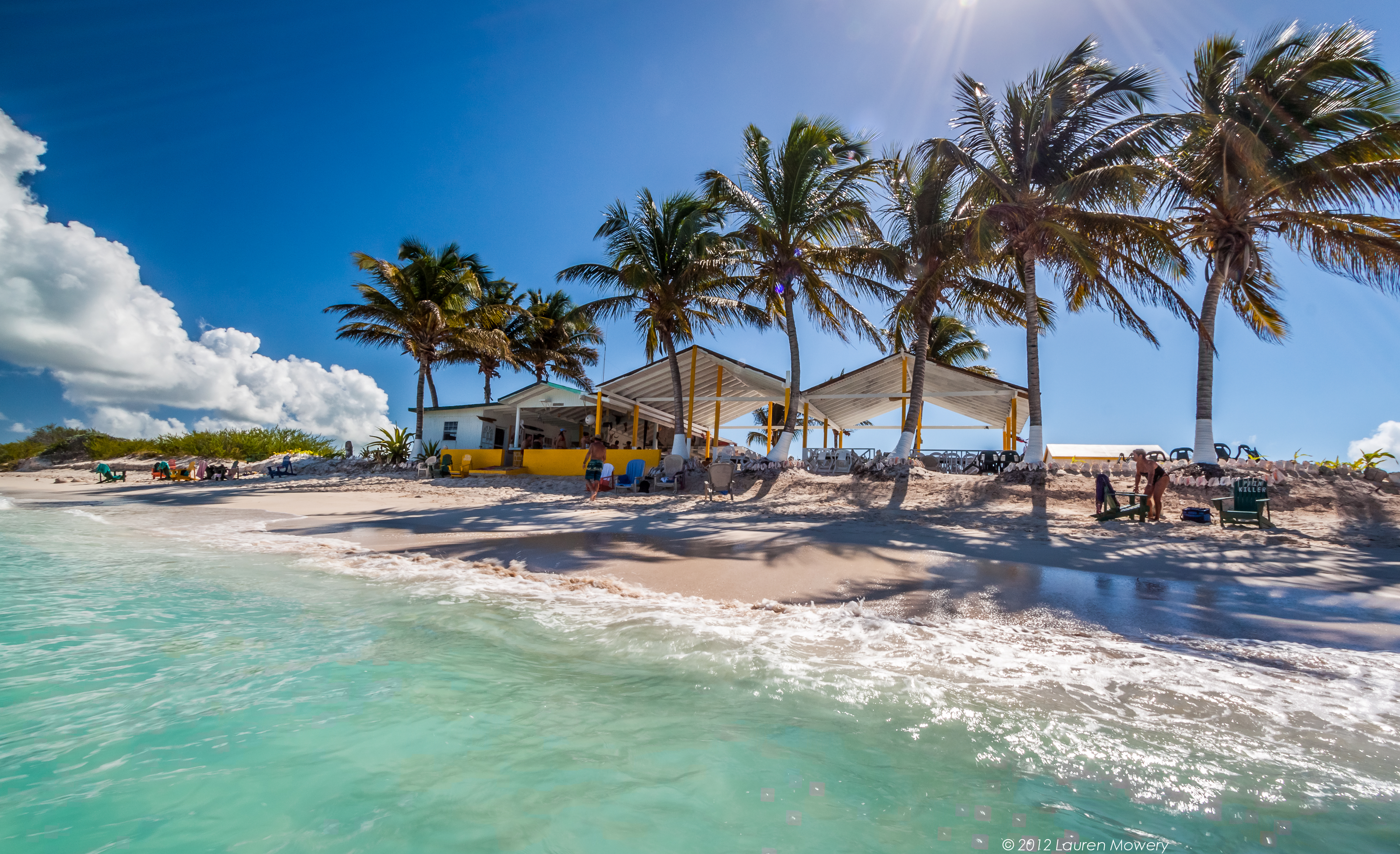
Cow Wreck beach bar on Anegada

Cow Wreck beach bar on Anegada

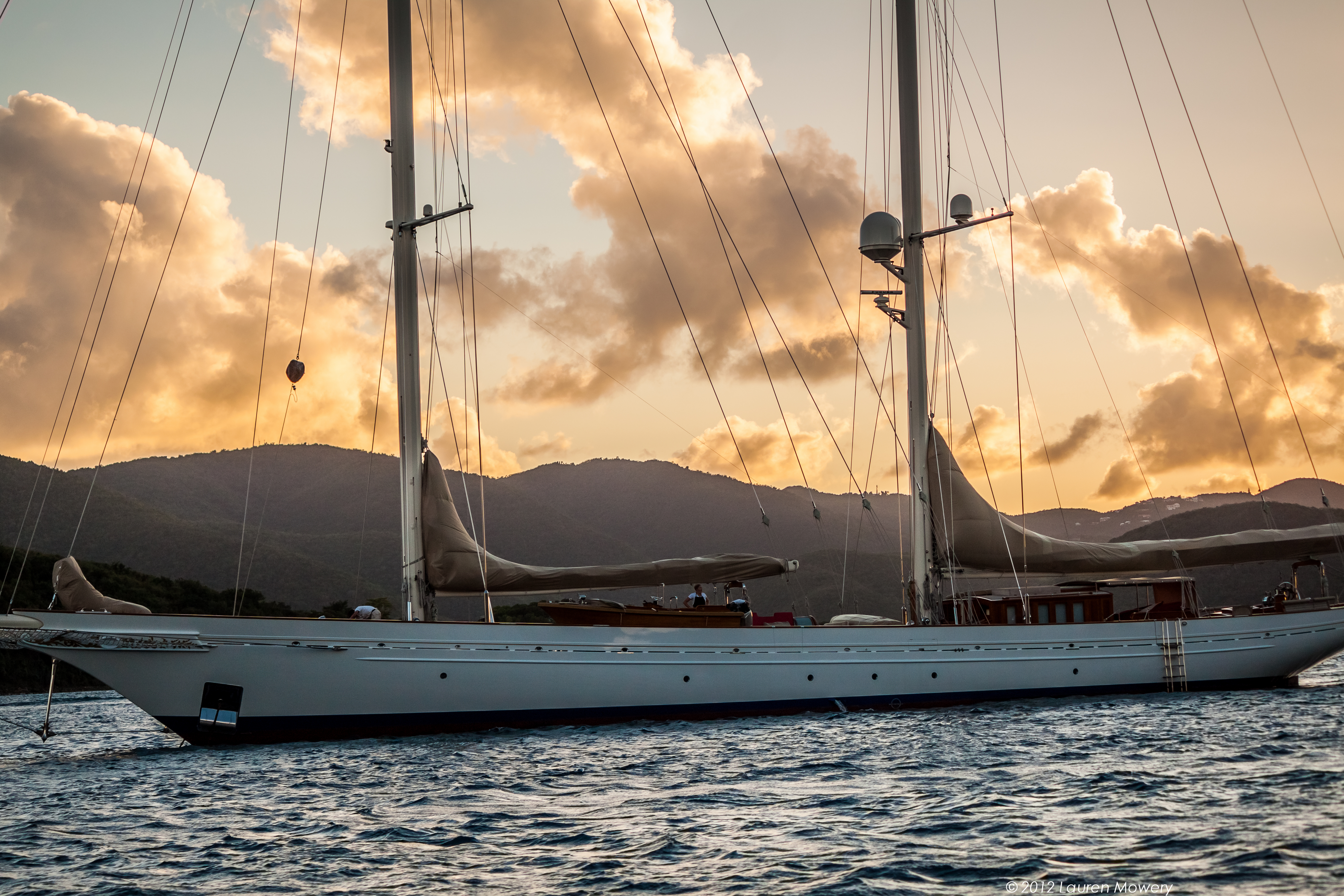
The most beautiful sailing ship I will never afford

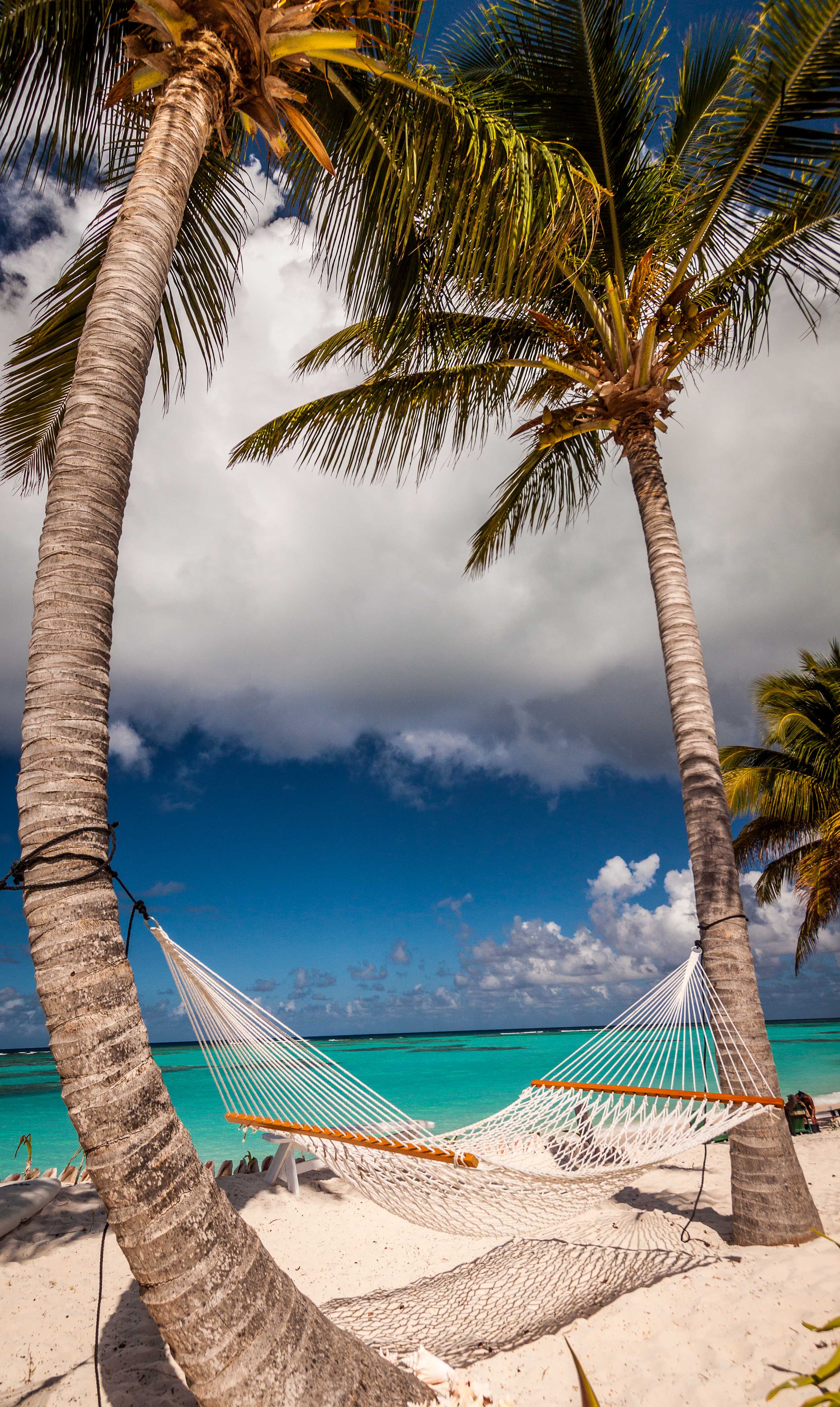
My regret is not enough time in this hammock

1 Comment

Filed under British Virgin Islands, Painkiller Recipe

Four Alternative Sparklers to Champagne and Prosecco

bubbly-lead-sm.jpg

This holiday season I am putting to rest two widely held notions: Champagne is the only way to celebrate stylishly, and if you can’t afford Champagne, you must drink Prosecco.

Both have their place, but so do other regions that produce exceptional sparkling wines using the same time consuming, laborious method as the Champenois, with wallet-happy results.

So, let’s take it from the top!

Bubbles for Beginners

All sparkling wines undergo two fermentations: The first turns juice into wine; the second creates the bubbles.

Authentic Champagne comes from the Champagne region in North-Central France and the rest is sparkling wine. The Champenois have effectively stopped the rest of the EU (but not the Americans) from labeling sparkling wine products “Champagne,” hence the term méthode traditionnelle (traditional method) to identify wines made similarly.

To be considered traditional method, the second fermentation must take place in a bottle, spurred by the addition of yeast and sugar. Next, the wine must spend a minimum amount of time aging on the dead yeast (lees) to gain the desirable bread crust, biscuit and brioche notes for which Champagne is renowned. Finally, the yeast is coaxed into the neck of the wine bottle, the lees are frozen then expelled upon the uncapping of the bottle, and the bottle is corked.

Champagne alternatives
Keep in mind these suggestions are not replacements for Champagne; they don’t taste like Champagne because they aren’t Champagne. Rather, each region offers a sparkling expression of its time and place. But would you only travel to Paris when you could also visit Tokyo, Cape Town and Bali?

FRANCE: The French have perfected the art of bubbles, and produce them all over the country in the style of Champagne, identifiable by the term Crémant. Two regions to try:

cremant-alsace-sm.jpg

Crémant d’Alsace: I once had a sommelier tell me he wouldn’t put Crémant d’Alsace on his list because it wasn’t trendy enough. Ironically, this category of fizz tops the charts in sales amongst the French, after Champagne; gaining favor when the economy was tanking and bubble enthusiasts wanted less expensive, high-quality alternatives. The postcard-pretty region, set in the shadow of the Vosges Mountains, has been making sparkling wine since the 1880’s. The grapes allowed are Pinot Blanc, Pinot Gris, Auxerrois, Riesling and Chardonnay. Pinot Noir is the only varietal for blanc de noir or rosé. If you can’t afford rosé Champagne, look to Alsace for cheaper yet charming options.

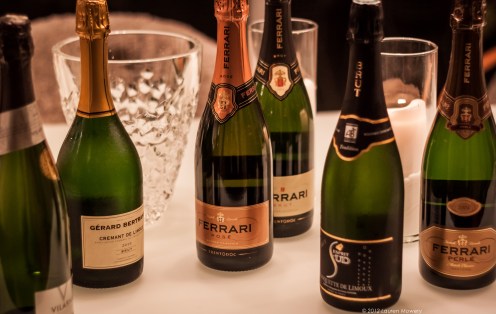
Wine to find: Gustave Lorentz, Crémant d’Alsace Rosé NV, $24. This clean, crisp 100% Pinot Noir with a rose-petal tint exudes strawberry, raspberry and bright orange zest flavors with a hint of spice. Cheap and charming with a party-perfect hue.

cremant-limoux-sm.jpg

Crémant de Limoux: Located on the mountainous, western edge of the Languedoc, most people haven’t heard of this region; a good thing if you appreciate high QPR in your wines plus bonus points for obscurity. Locals claim a record of sparkling wine production that precedes Champagne, meaning they have been working on the formula a long time. The wines are made from three grapes: Mauzac, Chardonnay and Chenin Blanc. Modern Crémant styles utilize Chard and Chenin, but the ultra-traditional, more rustic Blanquette de Limoux is made from a majority of Mauzac.

Wine to Find: Gérard Bertrand Crémant de Limoux, $13. This dry, bright wine made from Chardonnay (70%), Chenin (20%) and Mauzac (10%) is how I imagine Chablis turned Crémant might taste. Fresh, zippy apple notes hang on an austere frame with nuances of bread dough and a chalky, mineral-laden finish.

ITALY: Prosecco is fun and friendly, but not made in the traditional method. Italy has two appellations offering serious yet affordable contenders to Champagne:

ferrari-brut-sm.jpg

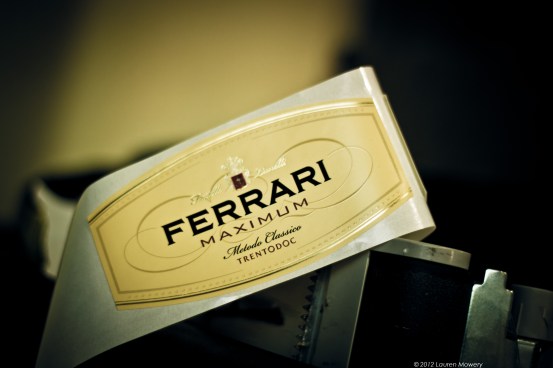
TrentoDOC in Trentino: Metodo Classico wine production in Italy dates back to 1902 with the founding of Ferrari winery in Trentino. Guilio Ferrari learned to make Champagne in Épernay then returned home to produce his own luxury brand, bringing along the first Chardonnay grapes to be planted in Italy. The high-altitude vineyards of the appellation, nestled at the base of the Dolomite Mountains in North-Central Italy, produce stunning, refined and structured wines. The region would be poised for recognition as the premier producer of Italian sparkling if more of the 38 wineries were picked up for exportation. As it stands, Ferrari is the dominant, albeit superior, producer available in the U.S. Although four grapes are allowed for sparkling: Chardonnay, Pinot Noir, Pinot Meunier, and Pinot Blanc, blanc de blancs (100% Chardonnay) is the regional highlight.

Wine to Find: Ferrari Brut NV, $25. This creamy, elegant blanc de blancs with persistent perlage, offers bright lemon, fragrant pear and fresh bread-dough, for an incredible price. Make this your “house” sparkling.

bosco-cuvee-sm.jpg

Franciacorta DOCG in Lombardia: Franciacorta has at times been referred to as the “Champagne of Italy”, though never by the producers themselves who loathe the comparison. The wines are crafted where the Italian Alps descend into Lago D’Iseo in Brescia. The name Franciacorta applies solely to sparkling wines from this area, made in the traditional method using Chardonnay, Pinot Blanc, Pinot Noir and Pinot Gris. Although the history of sparkling here is nascent as compared to Trentino, Franciacorta enjoys greater name recognition in the U.S., thus wider distribution and slightly higher prices. Relative to Champagne, however, the quality to price for these structured, elegant wines is still outstanding.

Wine to Find: Ca’Del Bosco NV Cuvee Prestige Brut, $35. Packaged like Cristal, this house’s entry-level bottling is made from Chardonnay, Pinot Noir and Pinot Blanc. The wine shows vibrant acidity, a creamy mousse and hints of pear, apple skin, and hazelnut, with a touch of honeyed happiness on the finish.

Leave a comment

Filed under Four Alternative Sparklers to Champagne, Sparkling Wine

The secret to Cantine Ferrari: A Family Formula

Instead of wine, I want to talk about family. Or rather, about a family that makes wine. There are thousands of them in Italy. But not all families making beautiful wines can sell them in the modern, international marketplace; vintners need more than a deft hand in the cellar to grow the business, be financially successful all while preserving the wine’s integrity.

Nowadays, a successful wine business taps multiple skill sets: business acumen, social networking, mastery of marketing and media, and old-fashioned sales panache. To fill all these roles effectively as a family is like climbing Kilimanjaro—it’s not impossible conquer, but how many people do you know have done it?

Let me get a few details out of the way before I dig in. This article is about the Lunelli Family who own and run Cantine Ferrari in Trentino, Italy. Their sparkling wines are impeccable. If they weren’t, there wouldn’t be much point to me writing this—I don’t care about a family that can sell the hell out of a mediocre wine (of which notably, there are several).

I am not going to spend time espousing the finer points of each wine in the Ferrari line-up, offering tasting notes and professing the sublimity of wines like the Guilio Ferrari Riserva (which is sublime).  Anybody can—and should—taste these wines to understand their elegance, finesse and role in the market as an exceptionally priced, luxury product. All of Italy has figured this out, annually voting with their dollars Ferrari the preferred choice for Metodo Classico in the marketplace.

And if selection by the masses isn’t convincing—it certainly isn’t here in America (hello, Gallo?)—then consider that Prada, the fashion-house synonymous with style, toasts with Ferrari too. Does this mean the average Italian has better taste than Americans?
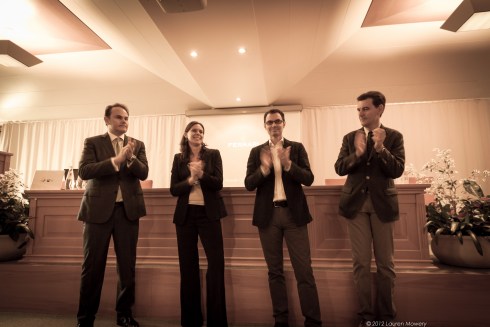
Matteo, Camilla, Marcello and Alessandro - The Fab Four

Matteo, Camilla, Alessandro and  Marcello – The Fab Four

Instead, I want to share my observations of the family behind the brand. The Lunellis: Matteo, Camilla, Alessandro and Marcello, are the third generation to run Ferrari winery, founded by Guilio Ferrari in 1902.

Ferrari learned the art of Champagne making in Épernay; he brought the craft and Chardonnay grapes home to Trentino as the forefather of Metodo Classico in Italy. Ferrari didn’t have any children, so he tapped local cantina owner Bruno Lunelli to replace him as steward of his vinous contribution to the world. Bruno and his sons built the brand from nine thousand bottle production to one of the most famous and successful sparkling wines in the world, all while staying true to quality.
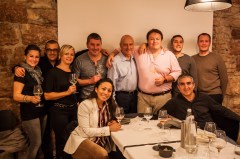
Campers!

Campers!

In late October, I spent several days at the inaugural Metodo Classico Sparkling Wine Camp hosted by the Lunellis in Trentino. The camp was a beautiful week filled with tastings, seminars, tours, dinners, helicopter rides and side-trips to spectacular cities like Venice. One might wonder how I could have an objective bone left in my body after attending what felt like the Super Bowl of wine camp. I questioned this as well. So, I waited a month to write my review of the experience, allowing time to truly reflect on the people I met and my feelings about them. What I am left with is this: family envy.

Let’s consider the idea of “family” for a second. We all have one, you can’t pick them, and many aren’t good—consider the Lohans and Jacksons as celebrity examples.  Even if your siblings and parents are smart, talented AND sane, the likelihood you will all have the same professional interest and get along in business is improbable—your mom can belt out a few Joan Jett lines in the car, but you aren’t going to start a rock band with her.

Watching the inner workings of the Lunellis—some siblings, some cousins—reminded me of how rare it is to be born with the right recipe of family members who can bring a different and necessary ingredient to the pot.  Most impressive, however, is the fact that none of the Lunellis were entitled to work at Ferrari until stepping out into the world to prove themselves before returning willingly as leaders.

Camilla Lunelli

Camilla Lunelli

Charming and gracious Camilla first worked for Deloitte Consulting. She then opted to work with the United Nations in two of the poorest regions of the world, Niger and Uganda, before returning to Ferrari to become the first woman manager in the 100-year-old company. She is now responsible for communications and public relations, with a keen awareness of social media, a PR component often overlooked by wineries.

Matteo is a natural leader—he is the charismatic Chairman of Ferrari Winery and C.E.O. of the Lunelli Group, having spent several years prior in financial consulting at Goldman Sachs.

Marcello is clearly the passionate master of the cellar as the Chief Winemaker at Ferrari. He learned the trade alongside his uncle and predecessor Mauro Lunelli; then he spent time in the wineries of South Africa, California and Europe before returning home to Ferrari in 1995.

Alessandro, kind and inquisitive, began his managerial career with McKinsey. He spent several more years with Unilever working across the globe before returning home to Trento and joining the general management team of Ferrari and the Lunelli Group.

Watching their interactions reminded me of my siblings a bit. I appreciated the Lunelli’s tight-knit bond, daily opportunities to work with each other, and do so successfully and seamlessly, given their four distinct personalities.  But I believe they function effectively as a team because each member has a clearly defined role, respect for each other, and most importantly, strict discipline to not poach on each other’s turf.
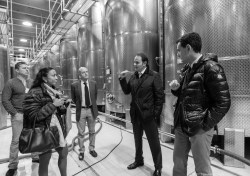
Matteo jibing Marcello in the cellar

Matteo enjoys ribbing Marcello in the cellar

Of course, all families have quibbles. They must. To be family is to endure drama. For as much time as we spent with them, the Lunellis had the grace not to air most discrepancies, a not so easy feat, Kardashians! A spark or two did fly though, most notably when Matteo tried to school Marcello on the English language, not always correctly, and in Marcello’s domain. You don’t mess with a winemaker in his cellar.

Perhaps they duped us at Camp, and it was all a grand show. I asked myself: could they be this perfect? Are they really Stepfords disguised as cousins? Then I realized what I really wanted to know: are they looking to adopt?

I happen to adore my family, idiosyncrasies and all, but having met the Lunellis, I fully appreciate that my family should never go into business together–we could not replicate the magic formula that lies in the Lunelli genes.

In the last few years, my sisters and I reinstated an annual family trip we call Father-Daughters. This Christmas we are optimistically off to Tortola for what will probably be a too-long ten days of sibling arguments, dad’s crazy driving and lots of cocktails, over which a family business plan will inevitably be hatched. And the trip will end; we will return with mostly wonderful memories, beautiful photos and bottles of BVI rum. We will also be empty-handed of a business plan, and be all the better for it.
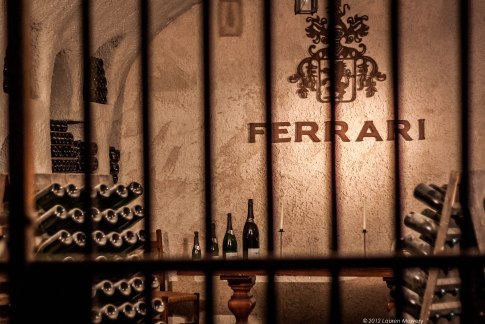
Image by Lauren Mowery

1 Comment

Filed under Cantine Ferrari, Sparkling Wine

Got the Champagne Price Tag Blues? Try TrentoDOC in Italy

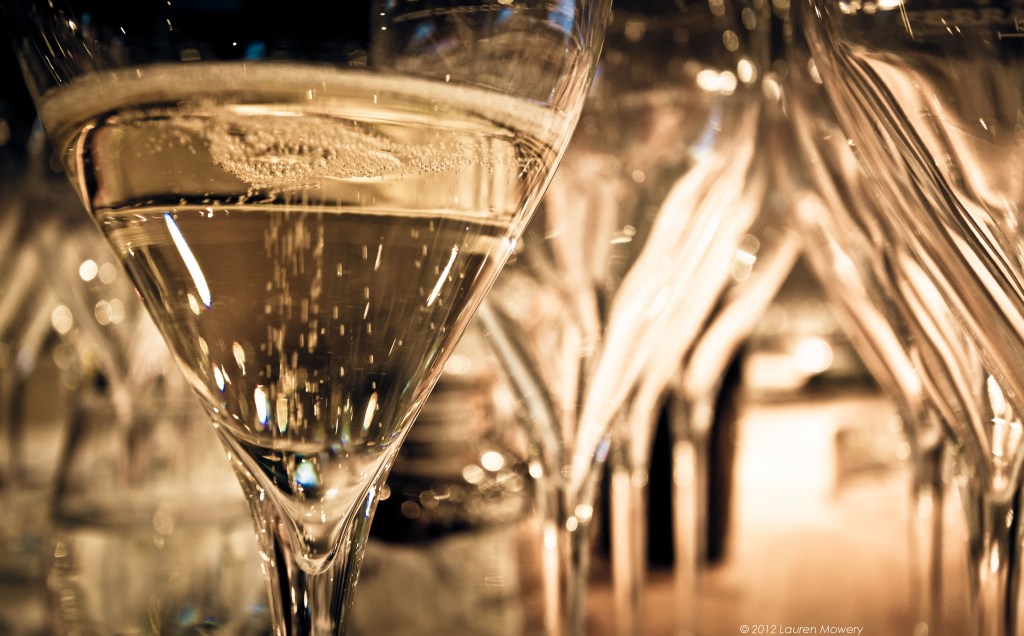
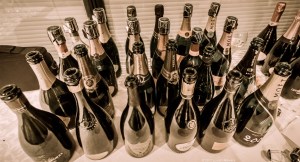
Lots and lots of sparkles

Plenty of well-priced sparklers in TrentoDOC

The first week of December is a fitting time to discuss sparkling wine—many of us reach for a bottle of bubbly during the holidays. Since I use this blog as a forum for promoting wine regions deserving of more attention than they receive from the American wine drinker, I thought I would focus on one that does bubbles really well. Bubbles on par with Champagne. Bond-worthy bubbles James might drink if he weren’t already in bed with Bollinger. And by the way, they cost a lot less.

The region is Trentino, located due south of Alto Adige, and it is the Italian-speaking part of this pristine, central alpine region of Italy (they mostly speak German in the AA). The regional capital is Trento—as in Council of Trent—which combined with DOC (Denominazione di Origine Controllata), provides the TrentoDOC appellation devoted to this region’s sparkling wines.

Beautiful Downtown Trento

Beautiful Downtown Trento

What makes Trentino special? The craggy terrain at the foothills of the dolomites provides a solemn, spiritual backdrop to the task of winemaking. The air is pure and fresh, and the rivers sparkle while gliding through the glacial valley. But perhaps most significant is the intense bond between the locals and their landscape.

Amongst the people to whom I spoke, a conversational theme was the region’s “mountain magnetism” and the constant pull they felt to be amongst them. I met one professional who manages to mountaineer between office meetings. Yet everyone, from a winery’s brand export manager to the winemaker himself, spoke of vocational excellence, seemingly as fond of their jobs as the outdoors. I believe this attitude drives the quality of the wines. For ultimately, what is the tending of a vineyard, the crafting of wine and the business of selling it, if not the culmination of a career tied to nature?

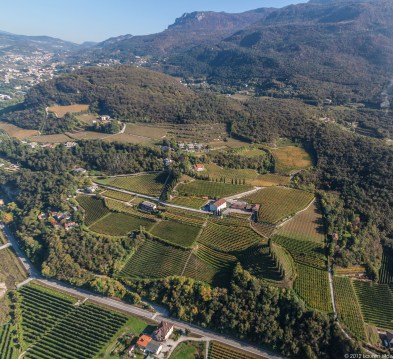
View of high altitude vineyards

View of high altitude vineyards

Just as the mountains are integral to the psyche of Trentinos, one can’t discuss TrentoDOC without acknowledging the role of Cantine Ferrari. Ferrari singlehandedly set the quality bar on sparkling wine and has tirelessly promoted the region’s uniqueness domestically and worldwide.

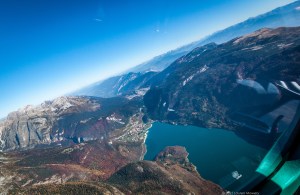
Nearby lake amongst the mountains

Nearby lake amongst the mountains

Ferrari’s founder Guilio was the forefather of méthode traditionnelle in Trentino, known as Metodo Classico in Italy. Of equal note, Guilio brought Italians their first Chardonnay grapes. Enamored of the wines of Champagne, he spent time in the region learning the art form of its production so he could return to Trentino in 1902 to create a luxurious sparkling wine for Italians, by Italians.

Ferrari’s instinct that Trentino would be a superb sparkling wine region due to climate and terrain was correct. After pioneering the effort, the region now boasts a few dozen wineries producing sparkling wine under the TrentoDOC guidelines. Four grapes are allowed: Chardonnay, Pinot Noir, Pinot Meunier and Pinot Blanc. In line with the Champagne method, the second fermentation must take place in bottle, and wines must age at least fifteen months on the lees for “brut” and “rosè” varieties, twenty-four months for vintage, while “reserve” label wines must be aged a minimum of thirty-six months. Just as in Champagne, many Trentino wineries age their bottles much longer than required.

One trait of the Trentino region that may prove advantageous in our brave new world of climate change is the high altitude available for vineyard sites. Should vineyard temperatures continue to rise, as has already happened over the last decade, Trentinos can respond by pushing their plantings further up the mountains to cooler temperatures. Unfortunately, the Champenois have nowhere to go. Perhaps still wines will be their future?

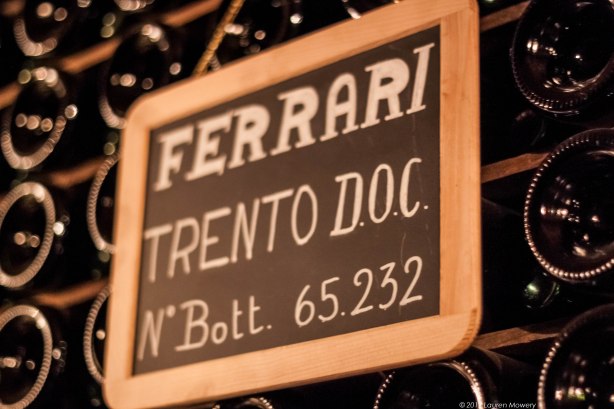
Image by Lauren Mowery

Wines to Find:

  • Ferrari: They are the leaders in the appellation. All of their wines are carefully made, of exceptional quality, and extraordinary value, particularly as compared to Champagne. If you are fond of vintage wines, Ferrari crafts a line called Perlé that is outstanding and retails around $35. Yes, $35. For vintage wine. Most from Champagne start at double that price.
  • Cavit: The largest producer in the region. You have probably seen their entry-level Pinot Grigio on a grocery shelf or by the glass at a chain restaurant. But they actually make nice sparkling wines (forget that Pinot Grigio crap). Look for Cavit Altemasi Brut and their vintage Riserva Graal 2004.
  • Cesarini Sforza: A small producer, but I was able to track down a bottle using wine-searcher: Tridentum Brut for $32.99.
  • Abate Nero: I tasted this in Italy. I couldn’t find it on wine-searcher, but that doesn’t mean it isn’t out there. Talk to your local wine shop or visit in person!
  • Maso Martis: I tried the rosé and the blanc de blancs while in Italy. Both had strong character, presumably reflective of the winemaker. Worth hunting down, but may be difficult. Look for this producer while in Trentino.

If you are considering a visit to Trentino, here are some details from my trip that may help you plan yours:

How to get there: Flying from the States, I took a direct flight to Rome, then a connection to Verona. We had a car service, but one could rent a vehicle from Verona to drive the last hour and a half to Trento.

Where to Stay: I stayed at the Grand Hotel Trento. Despite its modest, mid-century exterior, the rooms were nice with generously-sized marble baths. The morning breakfast buffet was plentiful, offered in a pleasant, sunlit room. Although I didn’t have a chance to partake, the daily spa deals sounded enticing

Dining: The best dining in the city can be found right outside of the gorgeous Villa Margon at the Michelin starred Locanda Margon, owned by the Lunelli family (Ferrari). One may dine with lighter Ferrari Metodo Classico Camp-42fare on the Veranda—perfect on a sunny afternoon with views of the valley; or in the elegant dining room which offers creative, gourmet dishes from the chef Alfio Ghezzi. Of note is their wine list. The family’s former wine shop is the source of inventory, so mine away at the unique, modestly priced selections. Once those bottles are drunk, they are gone forever.

Other dining options in the town of Trento include:

Activities: The region is known for its mountains(!), providing lots of opportunity for hiking in the summer, and skiing in the winter. And if you need a mountaineer man, I know just the guy named Federiko.

Wines of Ferrari TrentoDOC

Wines of Ferrari TrentoDOC

Leave a comment

Filed under Sparkling Wine, Trentino and TrentoDOC

Sparkling Wine Week: Where to taste free bubbles in NYC

As the chill of December descends upon us, we can’t help but notice the holidays have arrived. And what would the holidays be without a glass full of bubbles? Would a Fraser Fir be a Christmas tree without lights?

To put the “holiday” in your season, I am celebrating all things sparkling this week, starting with where you can try before you buy. Below is a list of the best gratis sparkling tastings throughout December in NYC.

Flatiron Wines and Spirits

Throughout the month, Flatiron will be focusing on Champagne and sparkling wines every Friday night from 5-8 pm. This Friday, December 7th they are showcasing a grower Champagne, the big trend out of the region the last few years. This is definitely a tasting to hit if you haven’t had a chance to sample this category of Champagne (wines are made by the growers of the grapes, rather than the big houses or brands). 929 Broadway, (212) 477-1315

Astor Wine and Spirits

This comprehensive shop is offering the following impressive line-up of tastings:

December 7th, 6-8 PM: Sparkles by André Clouet

December 12th, 6-8 PM: A taste of the Belle Epoque (a rare chance to taste Perrier-Jouët “Belle Epoque” Champagne 2004)

December 27th, 6-8 PM: A Selection of four Grower-Producer Champagnes

December 28th, 6-8 PM: Champagnes of Terry Theise Selections

140 Fourth Avenue, (212) 675-8100

Union Square Wines

Known for the generous tastings, USQ justifies their reputation with a big, boozy holiday party on Saturday, December 8th from 2-5 PM. With at least two dozen bottles of sparkling wine popped, you can expect a little of everything including grower Champagnes, Spanish Cava and Italian Lambruscos. 399 Lafayette St., (212) 674-7500

Leave a comment

Filed under Sparkling Wine

Under the Umbrian Sun, Part 5: Adanti

Image by Lauren Mowery

Adanti

Adanti was my last winery stop in Bevagna and a perfect finale to my mini-tour of this slice of Umbria. Founded in 1974 on the hill of Arquata, Adanti winery was the vision of the Adanti brothers Domenico and Pietro; they purchased an old convent, the 17th century home to a congregation of wine-loving Fillipini monks, and converted it into a winery.

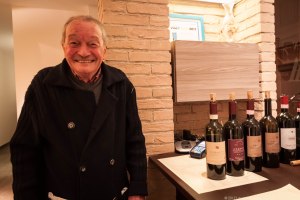
While visiting Adanti’s tasting room, I met the first cellar master and winemaker Alvaro Palini, along with his son Daniele, the current winemaker. Even though I was unable to communicate with Alvaro, his mannerisms revealed an adorable, sprightly senior and enthusiastic host. Donatella Adanti was also in their makeshift tasting room (the winery is currently being renovated), and proffered the story of how Alvaro came to make wine for them.

Adanti's first winemaker Alvaro Palini

From tailor to winemaker

Back in the late ’70s, Alvaro Palini, a tailor and Parisian dressmaker, returned from France to his native region of Umbria just as the Adantis were making their first wines. The brothers asked Palini to assess their efforts, to which he dared he could make a better wine, despite no formal training. Amazingly, they hired him (easiest job interview ever)!

Fortunately for the Adantis, Palini, an apparent grape-whisperer, had incredible instinct when it came to the growing and handling of Sagrantino, an extremely tannic grape that produces aggressive, rustic wines when not handled properly. He modified their vinification techniques and lowered vineyard yields to create one of the most admired wines of the region for over three decades.

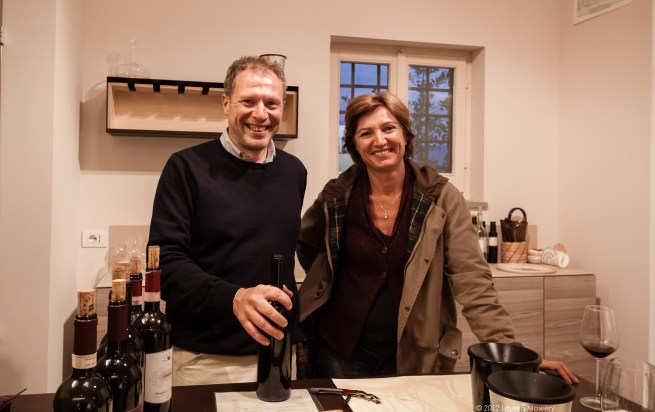
Today, Alvaro’s son Daniele is the steward of the wines, as Donatella, a second-generation Adanti, runs the winery. There is a tight bond between the Adantis and Palinis, yet they welcome guests like new members of their clan. My tour and tasting lasted several hours, culminating in a dinner invitation that evening. As I said before, there is no such thing as “alone” in Italy.

Daniele, the winemaker on left, Donatella Adanti on  right

Daniele, the winemaker on left, Donatella Adanti on right

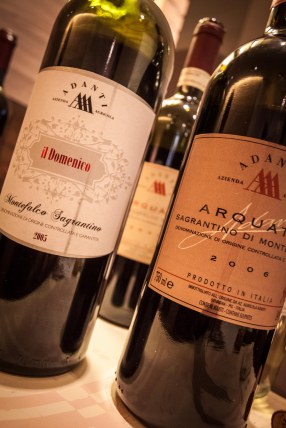
As for the wines, we tasted through their line-up, which meant sampling the 2006 Sagrantino (as opposed to 2007 at many other wineries) and 2005 for their first bottling of their highest altitude, vineyard designated il Domenico. Adanti holds their wines back one year longer than many other wineries because Daniele feels Sagrantino needs a healthy dose of bottle aging before drinking.

2005 Il Domenico and 2006 Sagrantino

2005 il Domenico and 2006 Sagrantino

Each wine had its own personality, but I particularly loved the cherry-tobacco perfumed Montefalco Rosso 2008 and the power and intensity of the blackberry-laced il Domenico 2005.

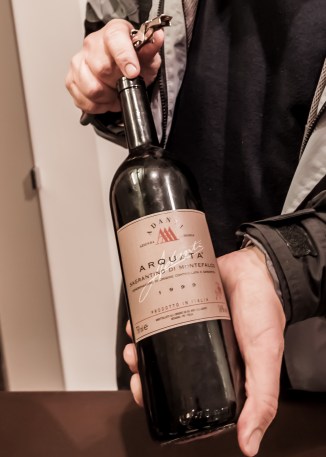
I must admit to being spoiled like a princess—Daniele tracked down a 1999 so I could experience an older Sagrantino. So far on the trip, I had only sampled babies and I wanted to taste a mature bottle. The 1999 submitted a convincing oral argument for the need to lay this wine down (and have a wine cellar). Loads of black fruit, tobacco, leather and caramel notes filled my glass, but all that tannic intensity had dissolved into a smooth, silky texture. That bottle was a highlight of my visit, and I was lucky enough have another one sent home with me.

Sagrantino from 1999, a highlight of the trip

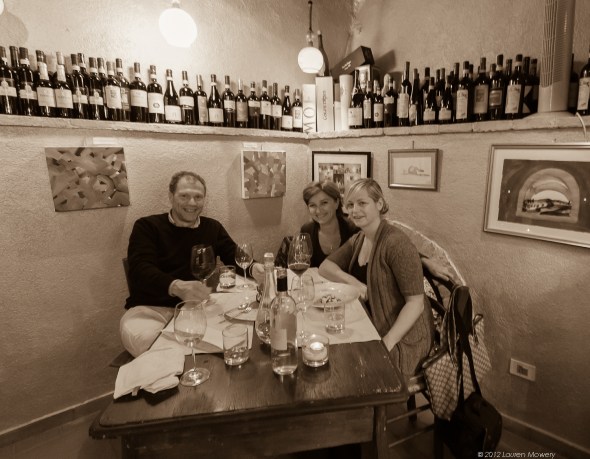
After the tasting, we went out to an exceptional dinner at Enoteca L’Alchimista in Montefalco. I was amused to suggest a place they had not been before, despite this being their hometown. The food was incredibly fresh, focusing on seasonal, local produce—the norm in Italy. Porcini mushrooms hit their stride that week, so we indulged in multiple plates, washed down with Adanti wines and local, craft beers.

Enoteca L'Alchimista with Daniele and Donatella

Enoteca L’Alchimista with Daniele, Donatella and Sagrantino teeth!

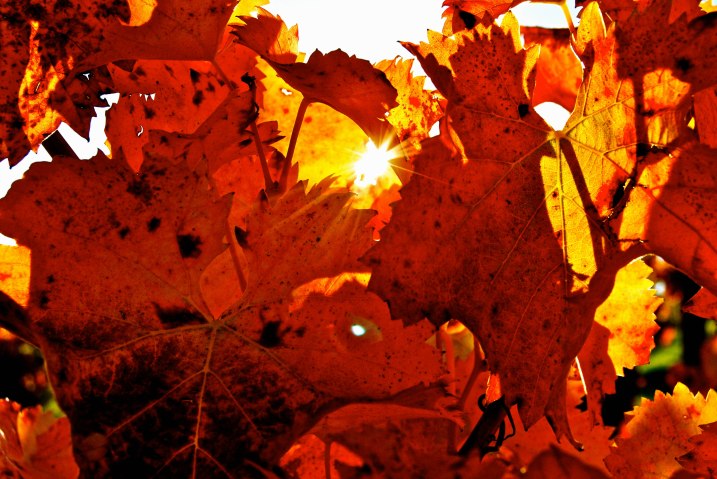
I have since stayed in touch with both Donatella and Daniele. Donatella has sent me several images of the changing leaves in the vineyards. Donatella’s niece Stella took the image of the red Sagrantino leaves below. She has a lovely eye!

Crimson Sagarantino Leaves

Crimson Sagrantino Leaves, photo by Stella Bastianelli

Red Vineyards, taken by Donatella Adanti

Red Vineyards, photo by Donatella Adanti

2 Comments

Filed under Adanti Winery, Umbria

Under the Umbrian Sun, Part 4: Milziade Antano

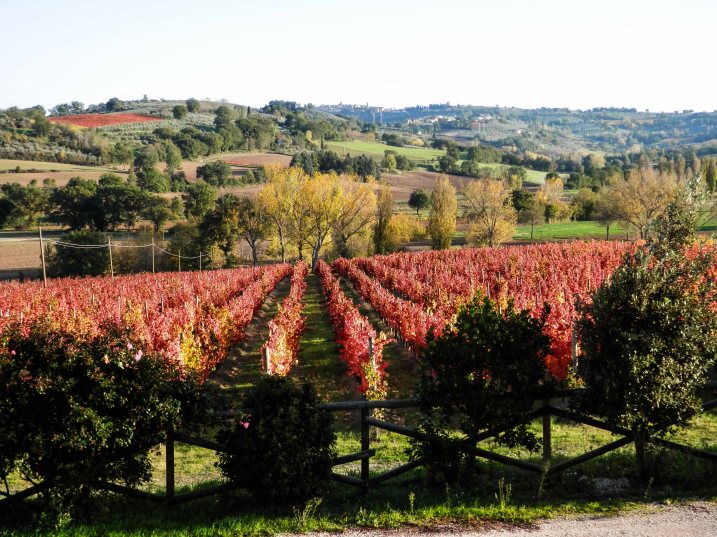
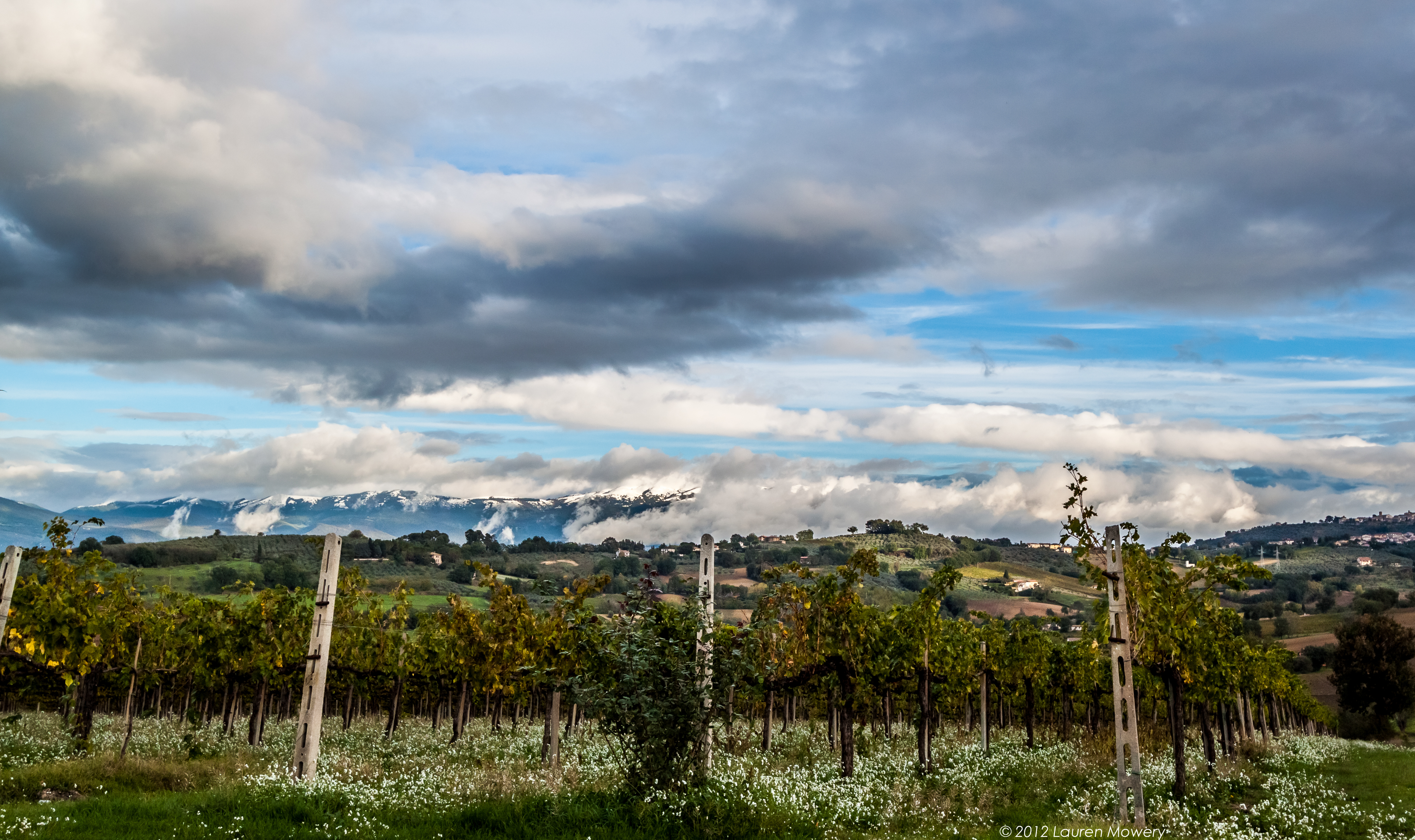
The vineyards of Antano and the snow-dusted Apennines (home to great pecorino)

Milziade Antano

While in Umbria, I stayed at the adorable B&B la Corte de’Vasari, set in a medieval building in Bevagna. On a side note, the B&B doesn’t really serve breakfast unless you prefer to start your day with a slice of cake and a side of cookie. Aside from that, the owner was charming and spent over an hour with me the night of my arrival, practicing English and helping shape my list of places to taste Sagrantino. Daniele, the proprietor, felt strongly about including Milziade Antano as a good example of a “humble and traditional” winery.

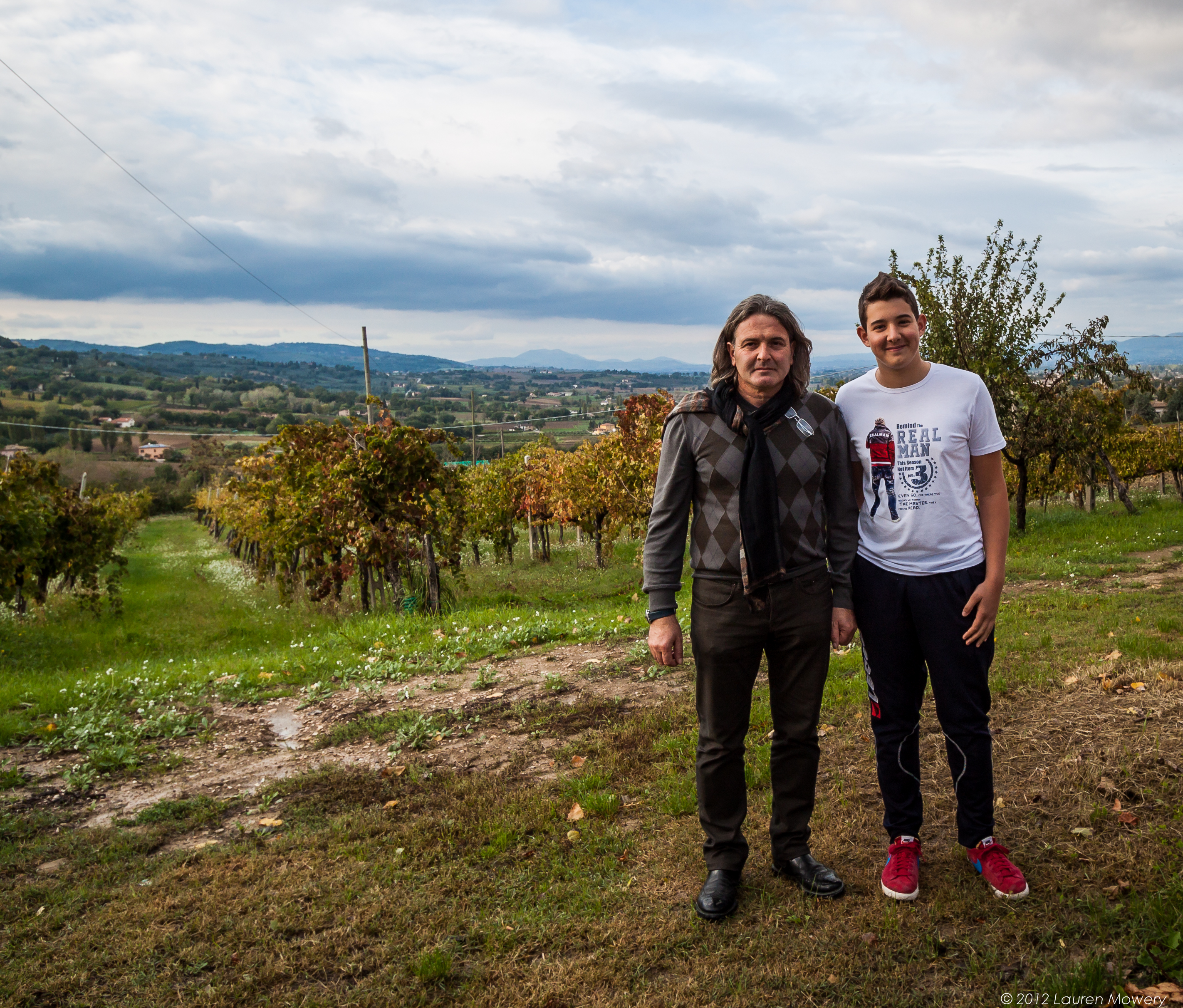
After my visit with Caprai, I followed Marco in my Jr. vehicle up to Antano. The winery had a gorgeous setting perched on a hilltop with views of the Apennine Mountains and Montefalco. I was meeting with Francesco, the owner/winemaker, who didn’t speak English, and his son Giordano, who did.

Will he make wine with his dad one day?

I could see why the innkeeper suggested Antano as a contrast; the operation was clearly a “garage” winery, particularly as compared to Caprai. Although the son spoke English and was knowledgeable about the specific wines, I had a little trouble getting background info on the winery and vineyard. I took to the web and found T. Edward Wines in NYC who import and distribute Antano. Their website noted the vines were planted in 1975, and that Antano is “old school” in style with a lack of intervention in the winery, no barrique and no high-tech equipment. In the vineyard, Antano green harvests aggressively and has very low tonnage per acre.

Inside the winery, the son Giordano poured each of the wines. I asked him if he planned to follow his lineage and make the wine at Antano. He crinkled his nose, looking at his dad out of the corner of his eye. He said he wasn’t convinced sticking around Montefalco was his destiny, but maybe time in a big(ger) city would bring him back one day, far away. Fair enough, I thought. I don’t think his Dad loved the response, translated for him by Marco, but it probably wasn’t the first time he had heard it.
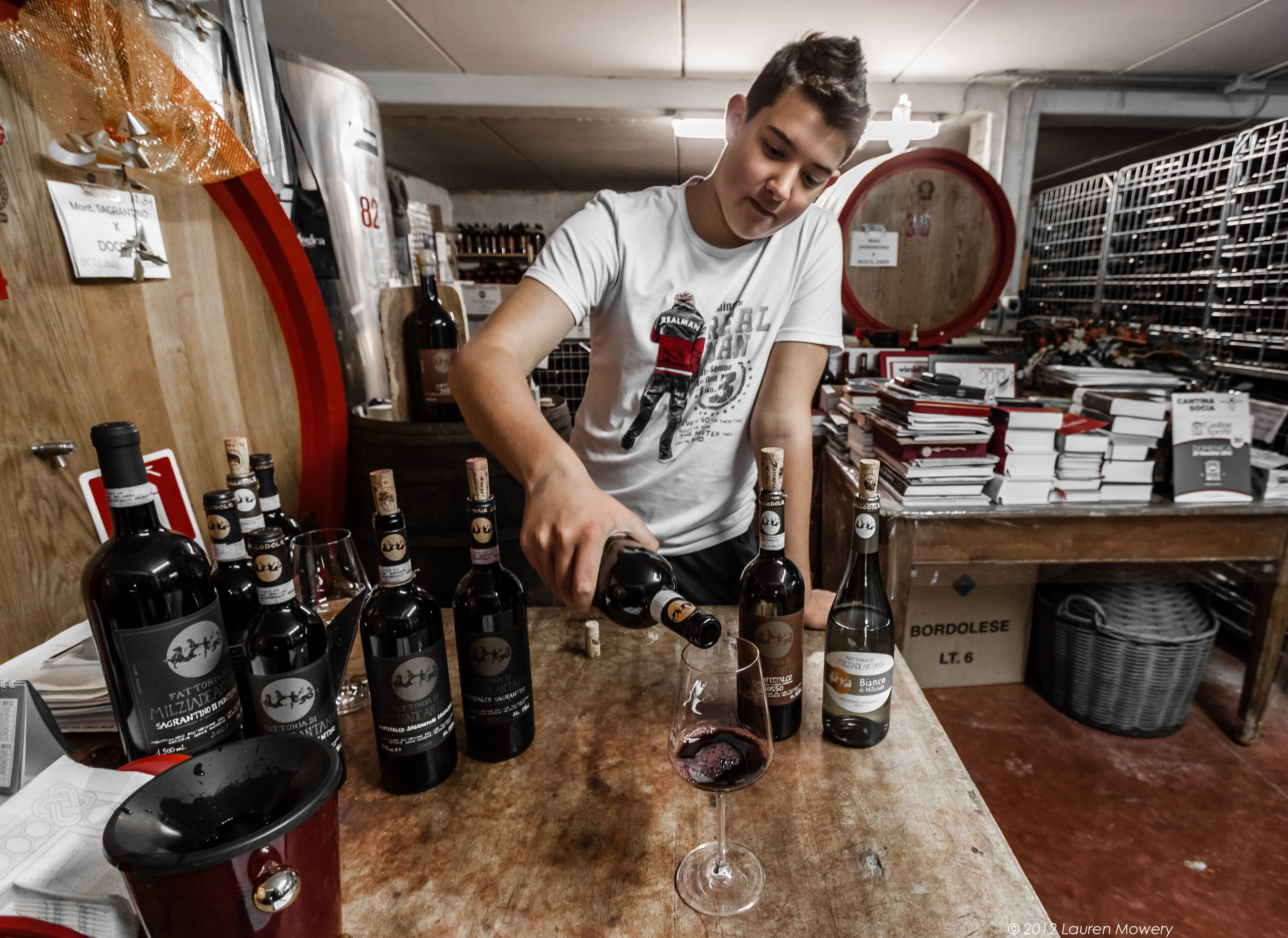
Giordano pouring and explaining the wines

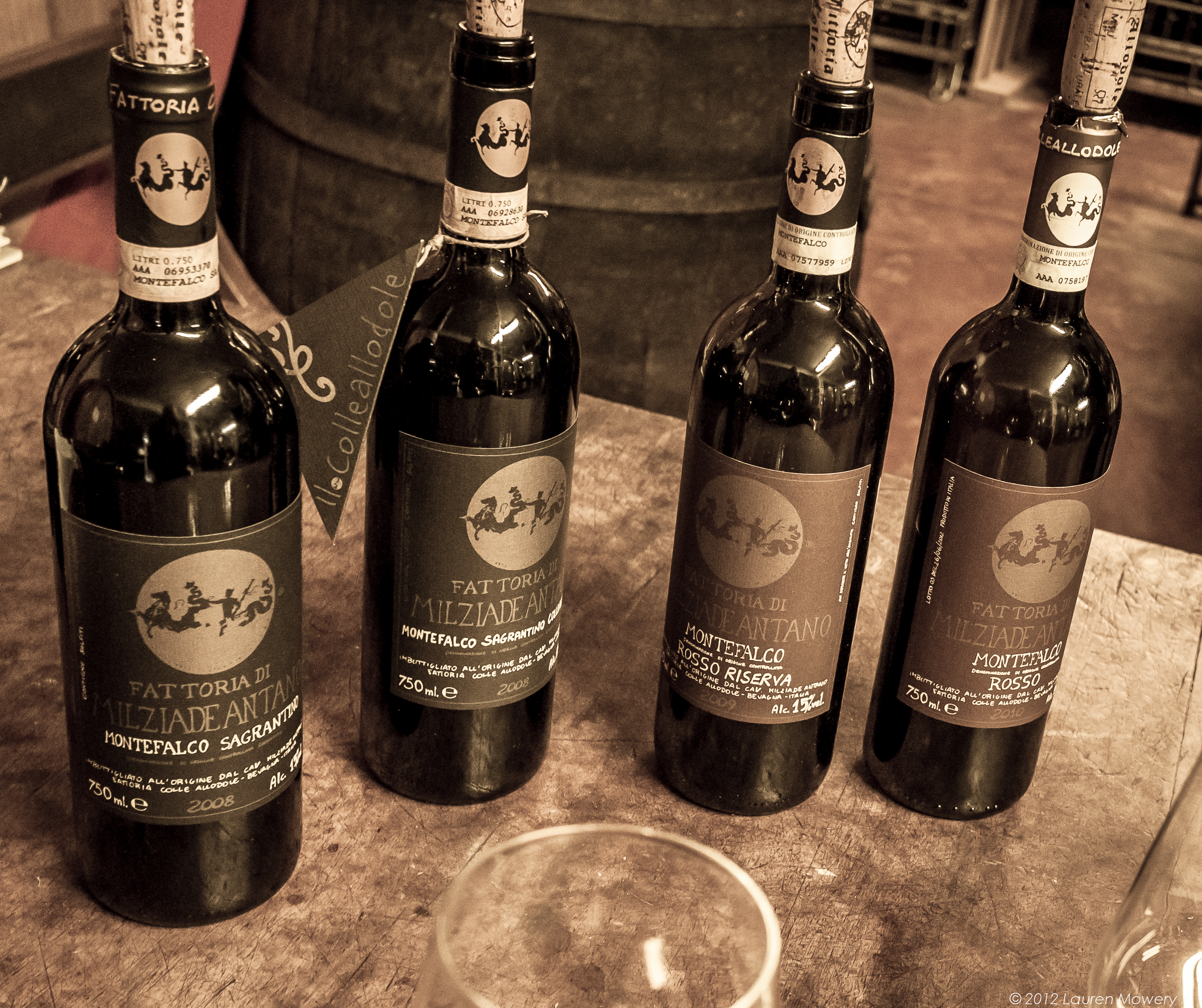
After the father/son politics concluded, we addressed the wines.  Milziade Antano has a line-up similar to most of the wineries in the area. They offer a Bianco IGT blend (but no 100% Grechetto); two Montefalco Rossos, one being a Riserva; two Sagrantinos, one version a vineyard designate “Colleallodole”; and a Passito.

Antano definitely excelled in their dry reds, which makes sense. The Montefalco Rossos were particularly lovely, both offering a wild streak of Sagrantino tamed by the softer Sangiovese and small percentage of Merlot. Sweet plums and black cherry were prevalent in the Rosso; the Riserva, which had a little Cabernet Sauvignon and more barrel time, showed additional notes of figs, blackberry and balsamic. The tannins in both were grippy; clearly the wines needed more time.  I would’ve liked a nibble between tastes, but given the garage-style digs, I guess that was expecting too much.

Montefalco Rossos and Sagrantinos

The Sagrantinos were big, broad, palate ball-busters. They were demanding wines with an edge of rusticity, but yet attractive; infants in a bottle with a future you could envision. The 2008 was aged 3 years before release: 15 months in barrel, 15 months stainless steel and 6 months in bottle. The wine showed notes of coffee, tobacco, leather, cherry and blackberry with layers of spice.

The Colleallodole, made from a designated vineyard and only 1000 bottles produced, had similar notes, but an earthier quality, with accentuated tobacco, leather and raisin. The tannins were big but smoother. It was also double the price: $25 v. $50. Again, these are food wines and really need to sleep a half-decade before opening, but should be worth the wait.

Next up: The final stop on my winery tour, Adanti

Leave a comment

Filed under Milziade Antano, Umbria