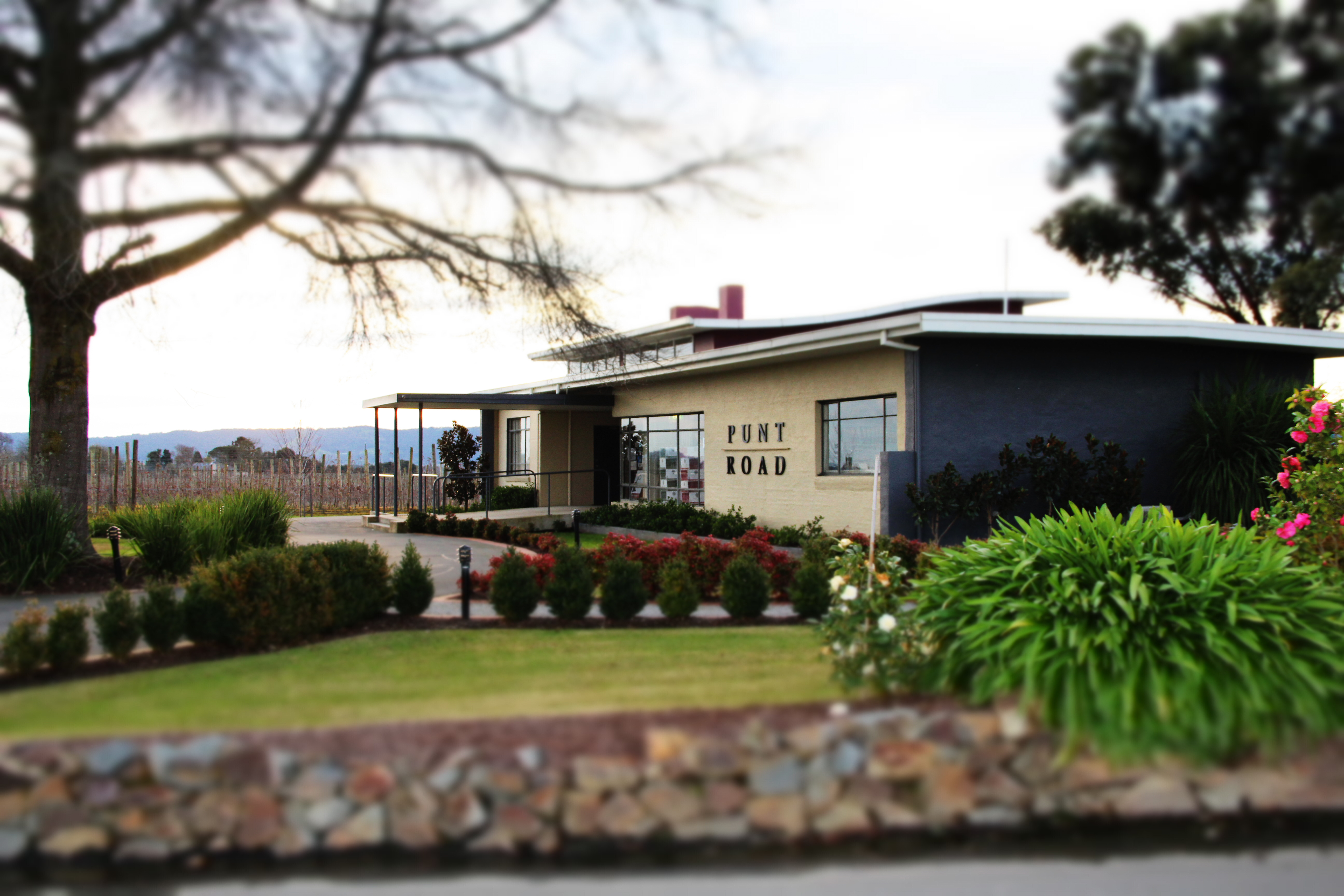
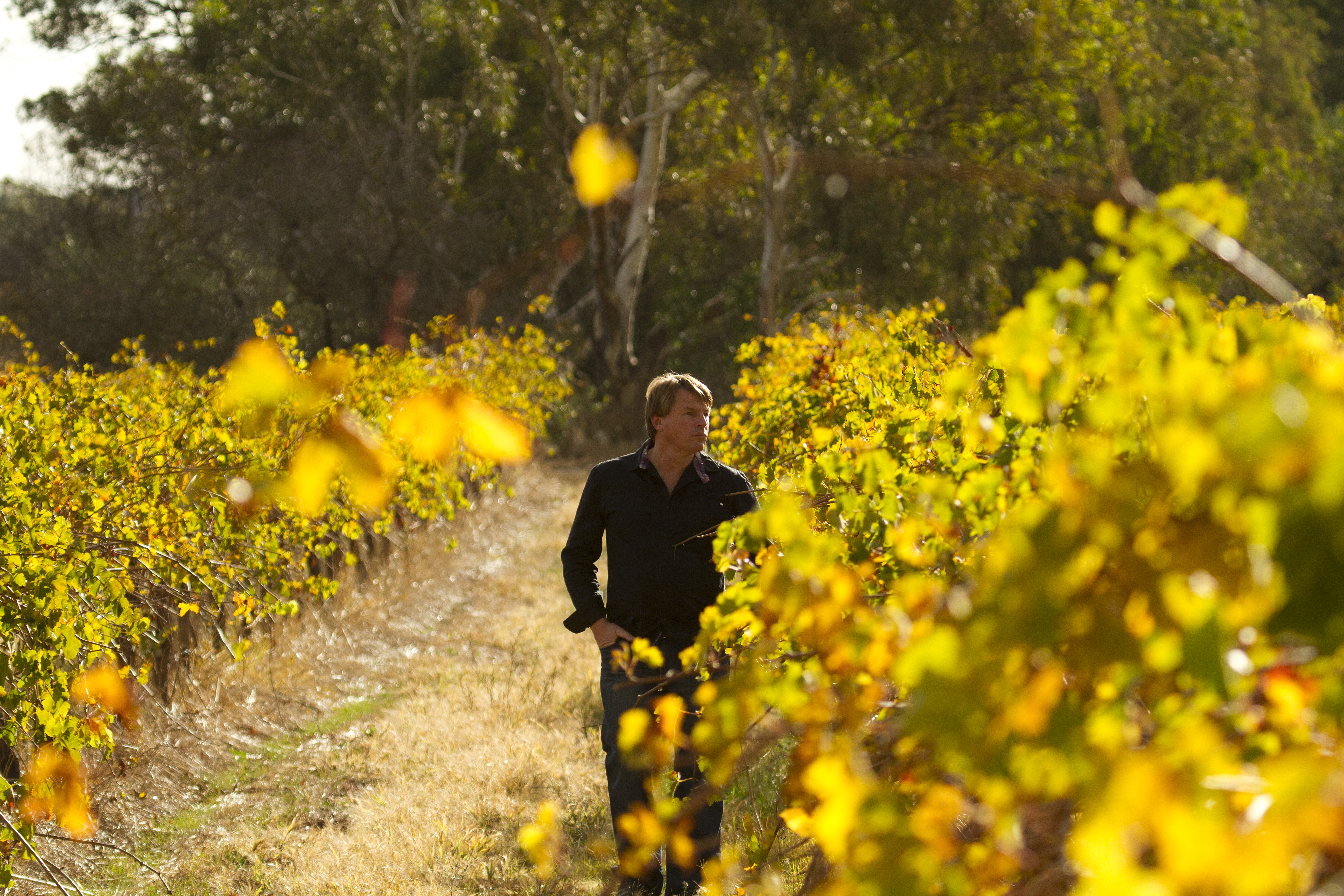
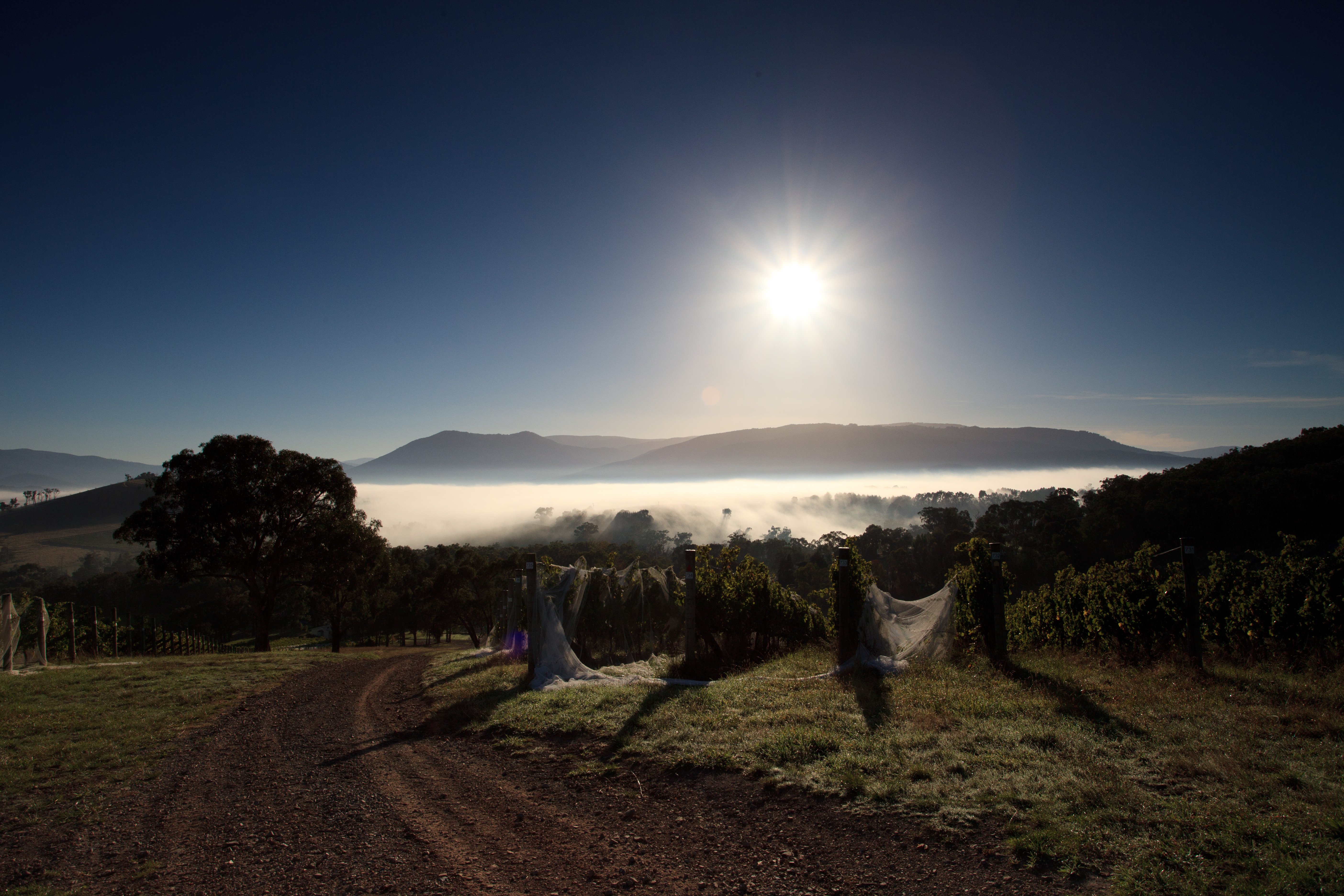
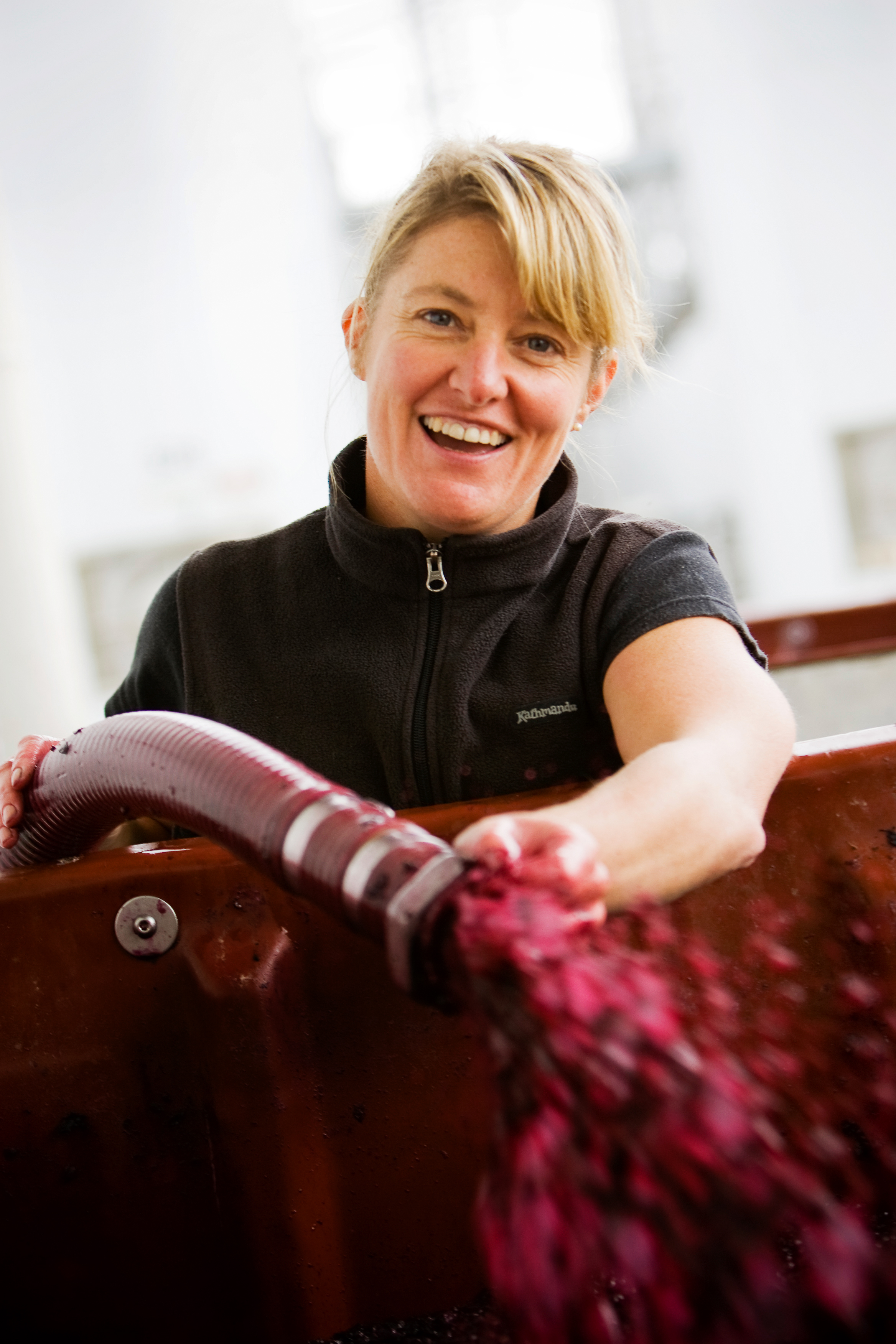
Kate Goodman of Punt Road Wines, Yarra Valley, Victoria

Kate Goodman of Punt Road Wines

Kate Goodman, Winemaker for Punt Road Wines, Yarra Valley, Victoria

Where were you born? I was born on the east coast of Australia, 2 hours south of Sydney, just a hop, skip, and a jump from the ocean.

Where do you live now? I am now living in the Yarra Valley, Victoria.

How did you get into the wine business? I studied Microbiology when first out of high school, but it really wasn’t for me. A non-creative indoors, white coat environment didn’t really satisfy. I completed that degree, then went and got a cellar hand job in a winery in Mclaren Vale, SA. I Enrolled in a winemaking degree which I completed by distance education whilst working. I haven’t looked back and love what I do.

What is most and least rewarding about being a winemaker? Without doubt, the most rewarding thing is creating new wines every season, wines that reflect the year and something for others to enjoy. The least rewarding? Nothing springs to mind.

What are the challenges of making wine in your region? The weather, as it is everywhere!

Punt Road Wines

Have Australians’ wine preferences changed in the last 10 years? As a general rule, there is a move away from big, tannic, extracted red wines. Whites are also ‘slimming down.’ I wonder if Australian wine drinkers are become more adventurous as well.

Have you been to the U.S.? I have been to the USA numerous times, the first time was as a high school exchange student in upstate NY. I have also made wine in California for a previous employer. I have holiday’d and done a number of sales trips. I love New York, so feel free to invite me any time!

Do you think Australia gets an unfair reputation in the U.S. for producing unbalanced, fruit bombs? I think Australian wine has been given a broad brush of sameness. Whilst some regions do produce big, fruity wines (and I believe these are a valid style, just not my style ), there are many cooler climate regions that have been continuing to do their own thing, producing wines of elegance and freshness. They are just being rediscovered and appreciated for their varietal integrity, complexity and ability to sit evenly with food rather than compete with it.

Which wine or grape is the least understood or respected? Chardonnay is back on the radar after many years on the periphery; Cool-climate Shiraz is cool again, and so perhaps is Cabernet Sauvignon. A solid noble variety, often brooding quietly, when made well, can be most rewarding.

What excites you most about Australian wine right now? The degree of experimentation seems to be huge, winemakers are really pushing boundaries and pushing to get the most from their grapes. Cooler regions are being pursued. Savoury wines are back in fashion.

What do you drink when relaxing at home? Depends on the ‘occasion’ although I am very partial to Chardonnay, I would drink more Burgundy if I could afford it.

What types of food do you like to eat? Cooking is relaxing for me. I will try my hand at cooking anything. I do enjoy blending my own spice mixes to make a good curry and anything slow-cooked during the winter.

What music do you listen to? My tastes are so varied: from Nick Cave , First Aid Kit, Sharon Jones, and Martha Wainwright. I listen to many genres.

Which non-Australian wines do you like? Who doesn’t love Champagne or Burgundy! I also enjoy drinking Spanish and Italian wines–the tannin structure, mouthfeel and flavor profiles are delicious.

If you could be traveling somewhere else right now, where would you be? Spain. I have worked in and visited Spain a couple of times. I enjoy the Spanish way of eating, the architecture of the south and the shoes!

Leave a comment

Filed under Australia 2.0, Kate Goodman of Punt Road Wines, Yarra

Tim Smith of Tim Smith Wines, Barossa Valley, South Australia

Tim Smith on bike

Tim Smith of Tim Smith Wines, Barossa Valley, South Australia

Signature Wines/Prices: Barossa Mataro/Grenache/Shiraz $35 USD, Barossa Shiraz $35 USD, Eden Valley Viognier (TBD)

Where were you born?  Where do you live now?  Born in Adelaide, South Australia. Now resident in Vine Vale, via Tanunda, Barossa Valley.

How did you get into the wine business? Drinking a bottle of old Yarra Yering Dry Red #2 then meeting it’s maker, Dr Bailey Carrodus, coincidentally a few months later. I wanted to make something that had such an alluring bouquet.

What is most and least rewarding about being a winemaker? Most rewarding: travelling overseas, and talking to people that have tried and liked the wines. Least rewarding: Spending too much time doing the ‘admin’ side of the business!

What are the challenges of making wine in your region? Water is a big issue, as is growing grapes and getting them to be flavor ripe at lower sugar levels.

Have Australians’ wine preferences changed in the last 10 years? Yes, we are tending to drink more cooler-climate style red wines. Hopefully we stop drinking Marlborough Sauvignon Blanc and discover our own unique whites as well.

Have you been to the U.S.?  Have visited the USA a number of times.

Do you think Australia gets an unfair reputation in the U.S. for producing unbalanced, fruit bombs?  I do think we are misunderstood in terms of the diverse range of styles that we actually do make. Sure, there are producers who still make the old fashioned, extracted, ‘blood and guts’ style of Shiraz, but playing devil’s advocate, there is still a market for those styles. Australia is not just one region people! The Yarra Valley is vastly different to the Barossa which is vastly different to the Barossa, etc.

Which wine or grape is the least understood or respected? Lots. I think Australia has a good understanding of what it does best, i.e Shiraz, Cabernet, Riesling, Mataro, Grenache etc, but the current fascination for ‘new’ or ‘alternative’ varieties fascinates me. We have had our core range of varieties for up to 160 years now and they have thrived in our country for a very good reason: they grow well and we make them well. I’m not down playing interest in new varieties, but for example there is the same validity applied to Tempranillo thriving in Spain: it grows well there and is made well there because it is understood.

What excites you most about Australian wine right now? The younger generation of winemakers, especially the guys I tend to have a beer with. They just ‘get it’, mostly. Another thing that I am grateful for is the number of inspirational people I have met along the way in this business–not necessarily winemakers (but mostly so). And the people that have given me the chance to be a part of this wonderful journey. Enough soul searching for now…

What do you drink when relaxing at home? Cotes du Rhone, Aussie Riesling for weekdays, St Joseph, Condrieu, Cote Rotie for weekends!

Tim Smith Barossa Valley

What types of food do you like to eat? I really love good locally home grown vegetables and meat. I’m a fan of the ‘low food miles’ concept. We have a breed of pork raised locally (Berkshire Gold) which is particularly tasty, as well as of course great Australian Angus beef. As part of working in this industry I’m fortunate to be able to eat in some of the best restaurants in the world, which is fine, but there is nothing so satisfying as a great meal at home.

What music do you listen to? The clichéd ‘all types’ but I am especially partial to Australian music. Some Aussie names off the top of my head: Paul Kelly, The Beasts of Bourbon, Keith Urban, Cold Chisel, AC/DC, The Living End, You Am I, Nick Cave. Internationally: Santana, Led Zeppelin, Johnny Cash, Kings of Leon, Bob Dylan, Lucinda Williams, Rolling Stones, Tom Waits. Get the picture?

Which non-Australian wines do you like? Non-Australian wines I drink the most of include but are not limited to: Cote Rotie (Jamet, Guigal); Cornas (tasted the 2010 Clape Cornas recently in Cornas–best Northern Rhone wine I have had the pleasure of tasting); Bandol–visited Domaine Tempier recently as well; and other Southern Rhones including Usseglio and Chateau Rayas.

Are there any wines you can’t stand to drink? The only wine I can’t stand to drink would be Marlborough Sauv Blanc, and anything not made with (a) a pedigree and (b) a passionate producer.

If you could be traveling somewhere else right now, where would you be? I am right in the middle of vintage as I type this, so a secluded beach and a fishing rod sounds great!

Anything else you care to share? Can’t wait to get back to New York in September! Also, thanks for the opportunity to tell you a bit about my region and myself.

Leave a comment

Filed under Australia 2.0, Tim Smith Wines of Barossa Valley

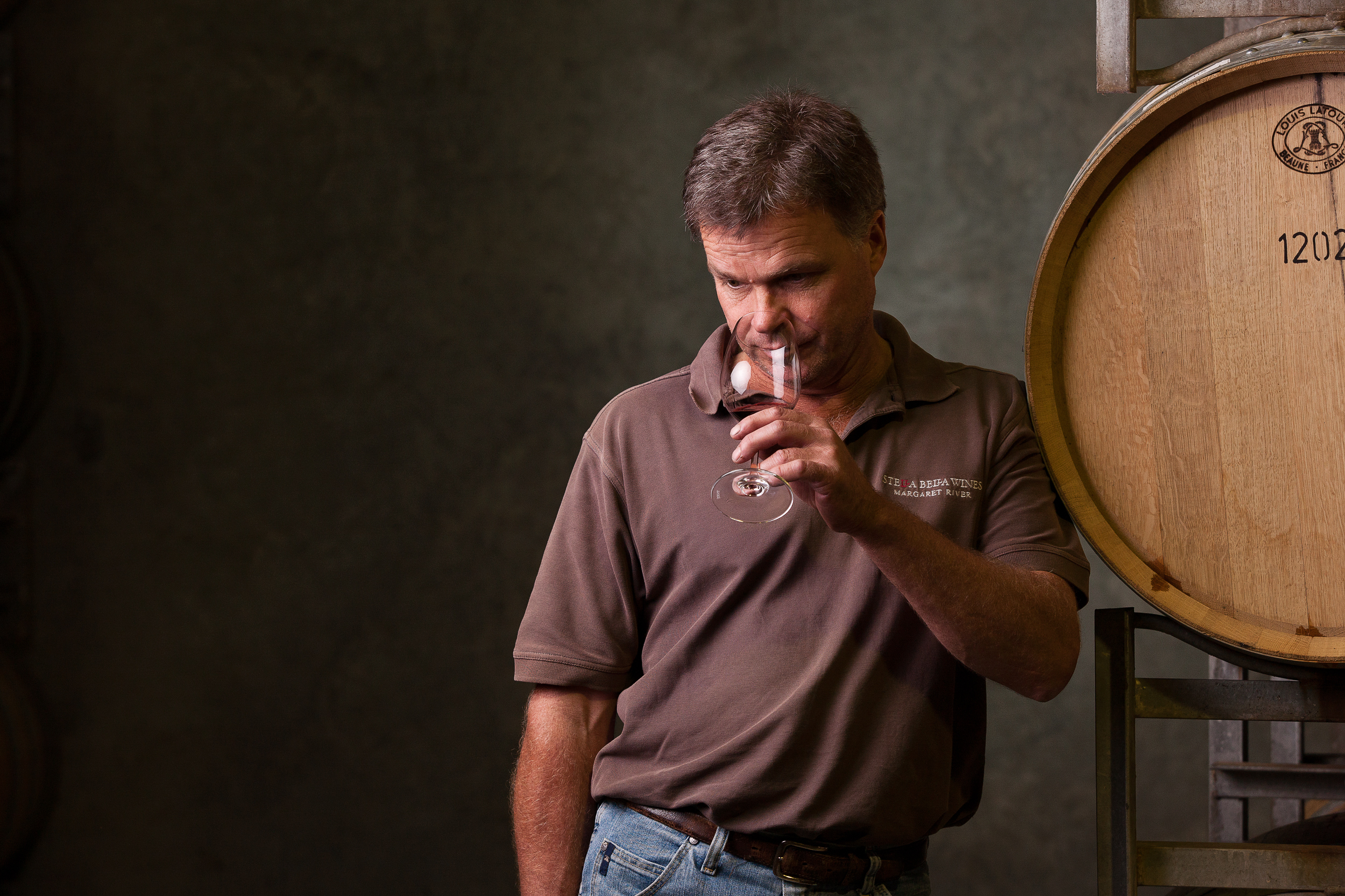
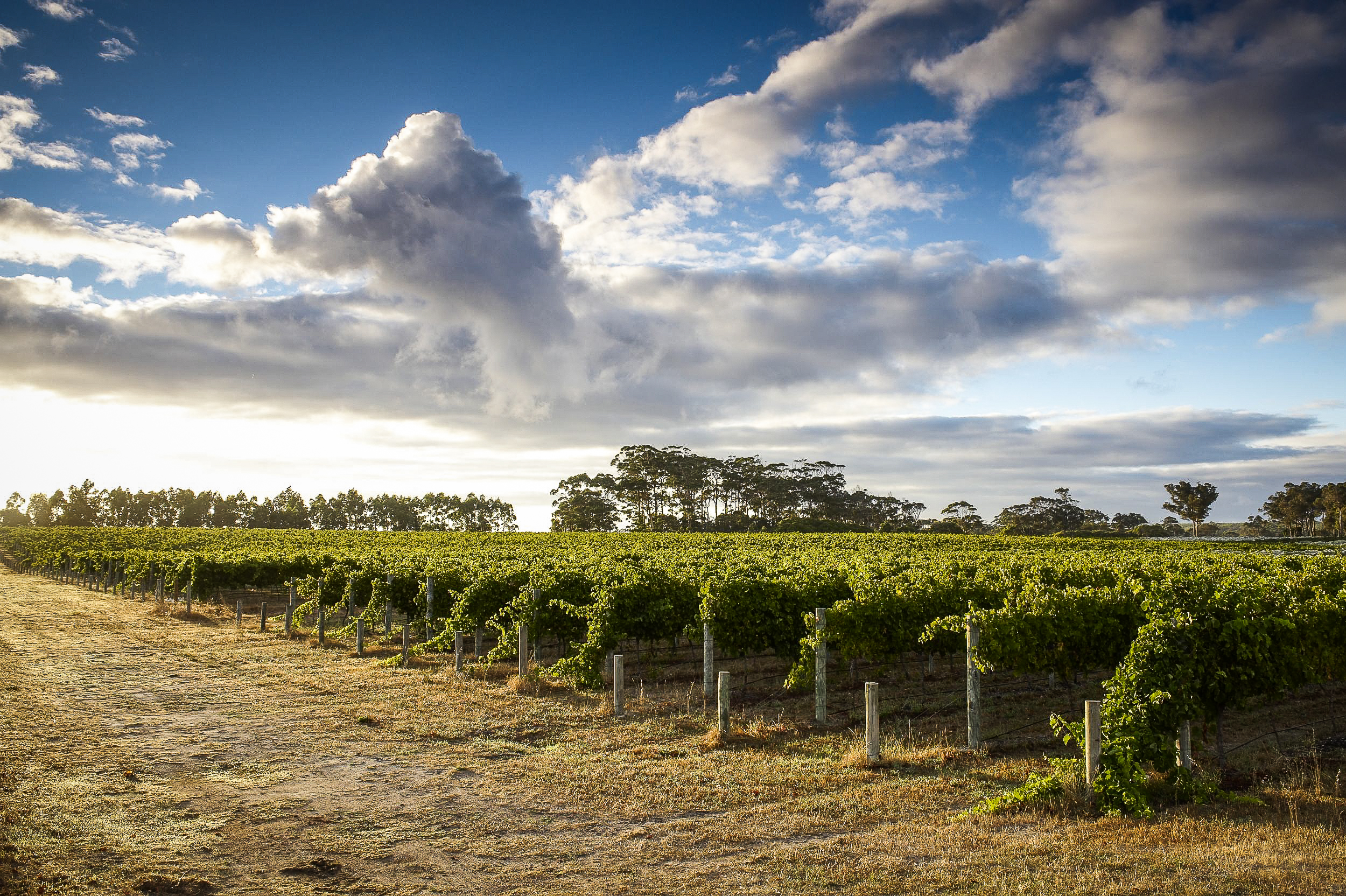
Stuart Pym of Stella Bella Wines, Margaret River, Western Australia

Stella Bella Stuart Pym Personal Margaret River

Stuart Pym of Stella Bella Wines, Margaret River, Western Australia

Where were you born? Perth, Western Australia.

Where do you live now? Margaret River, Western Australia. I have lived in other places as well.

How did you get into the wine business? I often get asked this, and my normal response is gravity – I fell into it. My parents had a strong interest in wine, and planted a vineyard in Margaret River in the early 70’s. I finished a completely unrelated degree about the same time, and was bumming around looking for something to do (realised I didn’t want to be a phys-ed teacher once I finished the degree), so I helped them out in the vineyard and winery, and found myself interested in it. I started a correspondence degree in winemaking in 1983.

What is most and least rewarding about being a winemaker? Most–you get to take your work home with you; least–I am not an early morning person, and you frequently have to start early.

What are the challenges of making wine in your region? Margaret River has a very good climate, so compared to many other regions, there are very few challenges that present themself. However, there are more logistical challenges, like getting good staff. Certainly the distance from everything else can present challenges, as well as bringing the special Margaret River attitude.

Have Australians’ wine preferences changed in the last 10 years? Yes, like the rest of the world, we have discovered Sauv Blanc from NZ. Similarly there appears to be a desire for fresher, more fruit-oriented wines, but at the most fundamental level, most people want wines that have flavour, balance and harmony (at a good price). At that level, there has not been that much change.

Have you been to the U.S.?  Do you think Australia gets an unfair reputation in the U.S. for producing unbalanced, fruit bombs? Yes, I have been to the US. I don’t think our reputation for unbalanced fruit bomb wines is unfair, because we have made lots of wines like that. First, we have because we can (it is one of the blessings of our grape growing, in that we can and do get pronounced varietal fruit characters –it is part of our unique terroir), and second, because that was what was being rewarded by the journalists, or demanded by the public. If we are guilty of anything, it is not promoting the variety of wine styles that come from the many regions of the country. Not all red wines come from the Barossa, and not all have the characteristics of Barossa Shiraz. Margaret River is 2000 kms from the Barossa Valley, and our wines are very different.

Stella Bella Stuart Pym Margaret River

Which wine or grape is the least understood or respected? I desperately want to say Chardonnay here, because I just don’t understand how people can say I don’t drink Chardonnay (I know this is from you–Simply. Never. Do. I. Drink. Chardonnay.) The least understood and appreciated variety of any repute, however, (avoiding all the obscure varieties that are being “rediscovered”) has to be Gewurztraminer. The wines have such distinctive aromatics, flavour, texture and personality, yet people want to drink Pinot Grigio? Explain that.

What excites you most about Australian wine right now? The fantastic run of great vintages Margaret River has had –7 and still rolling.

What do you drink when relaxing at home? Many and varied, but usually from Australia, Spain, Italy or France. I am trying to cut down on the many.

What types of food do you like to eat? I have a similarly eclectic taste with food. My preference is for someone else to cook it, and do the dishes. I am not a big fan of offal, everything else is fair game though.

What music do you listen to? I have broad tastes in music. I used to listen to a lot of jazz and contemporary types of music. However, as I have aged, I prefer less challenging music, and now prefer more textural and tonally based music, rather than as many awkward notes in the shortest possible time. I guess I have matured. I still have all my old CDs and records, and do listen to them occasionally. I don’t like rap.

Which non-Australian wines do you like? Are there any wines you can’t stand to drink? I like Barolo, white Burgundy, Sancerre, reds from Priorat, Champagne and most other wines. There are many wine styles I don’t drink regularly, but none that I can’t stand to drink.

If you could be traveling somewhere else right now, where would you be? The northern hemisphere is cold at the moment, so I’ll skip wine regions, and have New York, because it is New York.

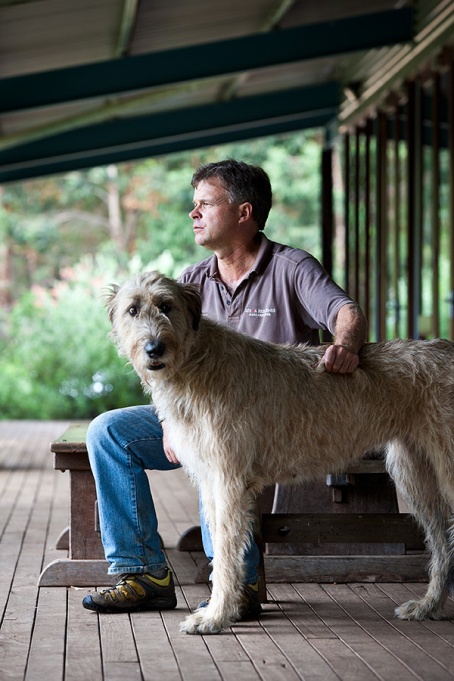
Is there a winery dog? We have four winery dogs at the moment. My winery dog is Poppy, the Irish Wolfhound. She has just turned 4. We do have a new addition to the winery dog list, Lucille, a 25-week-old Irish Wolfound. She is a redhead, and named after Lucille Ball. We also have Matilda the Border Collie, and Axel the Labrador.

Anything else you care to share? In my spare time I play one of my guitars, or work in my vineyard.

Stuart Pym and Poppy

1 Comment

Filed under Australia 2.0, Margaret River, Stuart Pym of Stella Bella

Phil Sexton of Innocent Bystander and Giant Steps, Yarra Valley, Victoria

Phil Sexton Giant Steps

Phil Sexton of Giant Steps and Innocent Bystander, Yarra Valley, Victoria

Signature Wines:

  • Giant Steps single vineyard wines, $35
  • Mea Culpa Shiraz $45
  • Harrys Monster (named after Phil’s’ son Harry; Cabernet Sauvignon-based wine) $45
  • Innocent Bystander Moscato $6.99 in can, $11.99 750mL bottle

Where were you born?  Where do you live now?  Born in Melbourne, brought up in Margaret River (Western Australia) and now live on my vineyard in the Yarra Valley (near Melbourne).

How did you get into the wine business? Started life after University as a pupil Brew master in a large brewery. I slowly graduated to wine as my palate and interest developed. My first wine venture was 1981 when I planted Devil’s Lair vineyard in Margaret River.

What is most and least rewarding about being a winemaker?  Most rewarding is showing and discussing my wines with kindred souls around the world. Least rewarding is the continual battle for cash; it is a very capital-intensive business and there are few rich winemakers. But then if we were rich, we would just spend it all on new barrels, new equipment and better bottles of other peoples’ wine to try with our friends and colleagues.

What are the benefits and challenges of making wine in your region? Being close to a very wine and food centric city like Melbourne is of considerable advantage; we sell a lot of wine within 1 hour of our winery, to knowledgeable and interested customers.  Challenges include being surrounded by other great producers; it is hard to stand out from the crowd when you are in illustrious company, but then, we really love that anyway. Other challenges include a trying climate; we are very cool and some vintages are a struggle, even with early ripening varieties such as Pinot Noir, particularly our higher vineyards (up on the side of the Great Dividing Range). 

Have Australians’ wine preferences changed in the last 10 years?  Yes, very much so. I would say there has been a dramatic shift to more classically styled wines, which come from cooler climate areas. There is a tendency towards lower alcohol wines that are fully ripe (this is a viticultural and location-based challenge); a tendency towards minimal intervention, both through the sourcing of single vineyard sites, hand viticulture, indigenous fermentations and minimal additions from there on, particularly with the use of sulfur. Customers are seeking out these wines and are very interested to learn about them as well as asserting their preference this way.

Have you been to the U.S.?  Yes, many times. I even lived there for 2 years in Portland, Oregon working on the Bridgeport Brewery as a sabbatical from my wine business at that time, Devil’s Lair in Margaret River.

Do you think Australia gets an unfair reputation in the U.S. for producing unbalanced, fruit bombs? On reputation, I think that we have been master of our own demise, to some extent. Just because everyone claps and cheers when you take your clothes off, doesn’t mean that you are taken seriously or that it is going to do you any good. So yes, we went with the applause rather than our gut and wine instincts. This second wave of Australian wine that is starting to get more attention (off a tiny base) has always been around in Australia and we are seeing serious attention paid to these wines as we trickle them into your market. But they will always be in small volumes as they come from smaller family producers such as ourselves (=no capital market pressures); from small, carefully tended, special vineyard sites; and require explanation and hand selling, rather than brand-based selling. So I don’t expect there will ever be a huge wave of Australian wine hitting your shores again, rather a steady influx of well-made, appellation and often site-specific wines made by smaller producers.

Which wine or grape is the least understood or respected? From Australia, it would have to be Semillon. We don’t grow it as it prefers warmer climates, but probably the wine I drink most with my team would be aged Hunter Valley Semillon. It’s an art to grow and make properly in the challenging environment north of Sydney, but the end result is heaven in the bottle; we don’t talk about it very much because we would rather it stayed here in Australia.

Giant Steps Vineyards

What excites you most about Australian wine right now? The inevitable return to what fine wine is all about: great sites and dedicated, uncompromised and independent producers doing what they believe in, slowly. Rather than a beverage industry directed by marketing men and corporates.

What do you drink when relaxing at home?  Aged Hunter Valley Semillon, Rieslings (Australian), Pinot Noir (from everywhere) and Chardonnay (from cool appellations), cool climate Syrah/Shiraz (including Northern Rhone) and good beer, including Bridgeport IPA (yes, it’s on tap in Australia) and Trumer Pils (yes, also on tap in Australia). Currently, I am really enjoying the wines from Ted Lemon at Littorai (CA). They are inspirational examples of low/no intervention wines. It’s our peers that excite us most of all.

What types of food do you like to eat? Australian/Thai based food. This cuisine is a big movement in Australia and marries the precision and spice of High Thai (Thailand is not far away) cooking with the robustness and enthusiasm of classically trained Australian chefs (see Thai Cooking, by Australian Chef David Thompson). Also, thin crust pizza from a wood burning oven (no cheat heating, i.e. gas flames)  We have a huge business at our winery based around “the dragon”, our wood burning oven and I never tire of the classic Italian styles (with respect, not Wolfgang Puck styles).  They go with any wine.

What music do you listen to? Jazz: Brubeck, Coltrane, Burrell, Jarrett, Loussier and French Jazz in general; classical (but not “best of”), and alt rock and country. I have every album by Manchester (England) composer and guitarist Vini Reilly/Durutti Column and as a contrast, but certainly not second, Nick Cave, Townes Van Zandt and every album by John Prine.

Which non-Australian wines do you like? I love Chablis (most sites, most producers), Barolo (same as for Chablis) and my partner Donna loves grower Champagnes…. so of course “I love them too”… but with tongue out-of-cheek, I love what the grower producers are doing, with what was previously a very controlled front.

Are there any wines you can’t stand to drink? First of all, I do not like infused wines in general, but some of the new botanical styles are intriguing. I don’t like high alcohol wines (hot) so I avoid them. I have a huge problem with producers who refuse to deal with cork problems. Why should we pay good money for faulted wine, even if it was great when it went into the bottle?

If you could be traveling somewhere else right now, where would you be?  Where I am right now as I am writing to you: Paris. It’s got it all and if I could improve my French a bit, I would move here. I am kidding. If I ever make any money in the wine industry, I will plonk myself right on my front porch and enjoy the view…. and the wine.

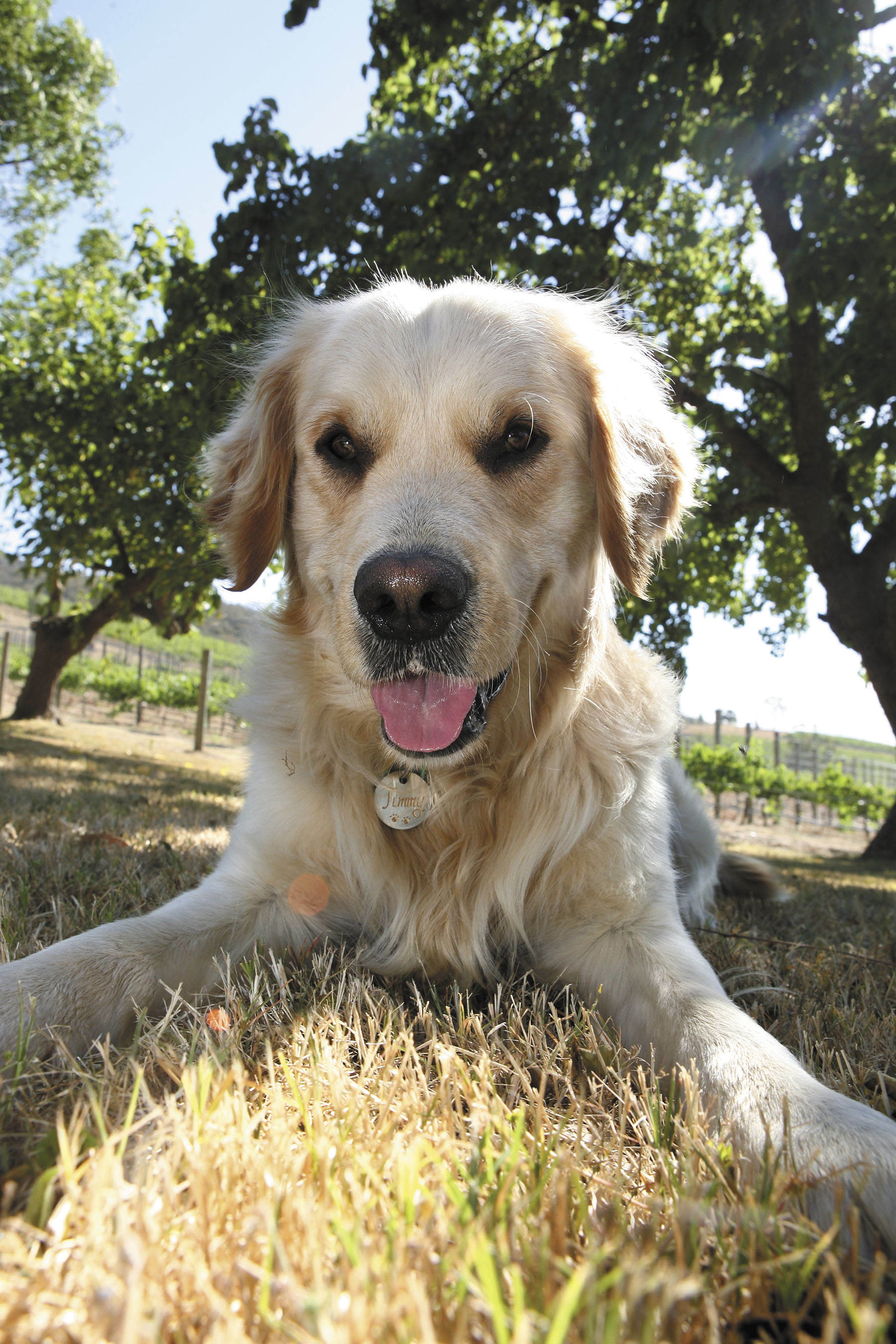
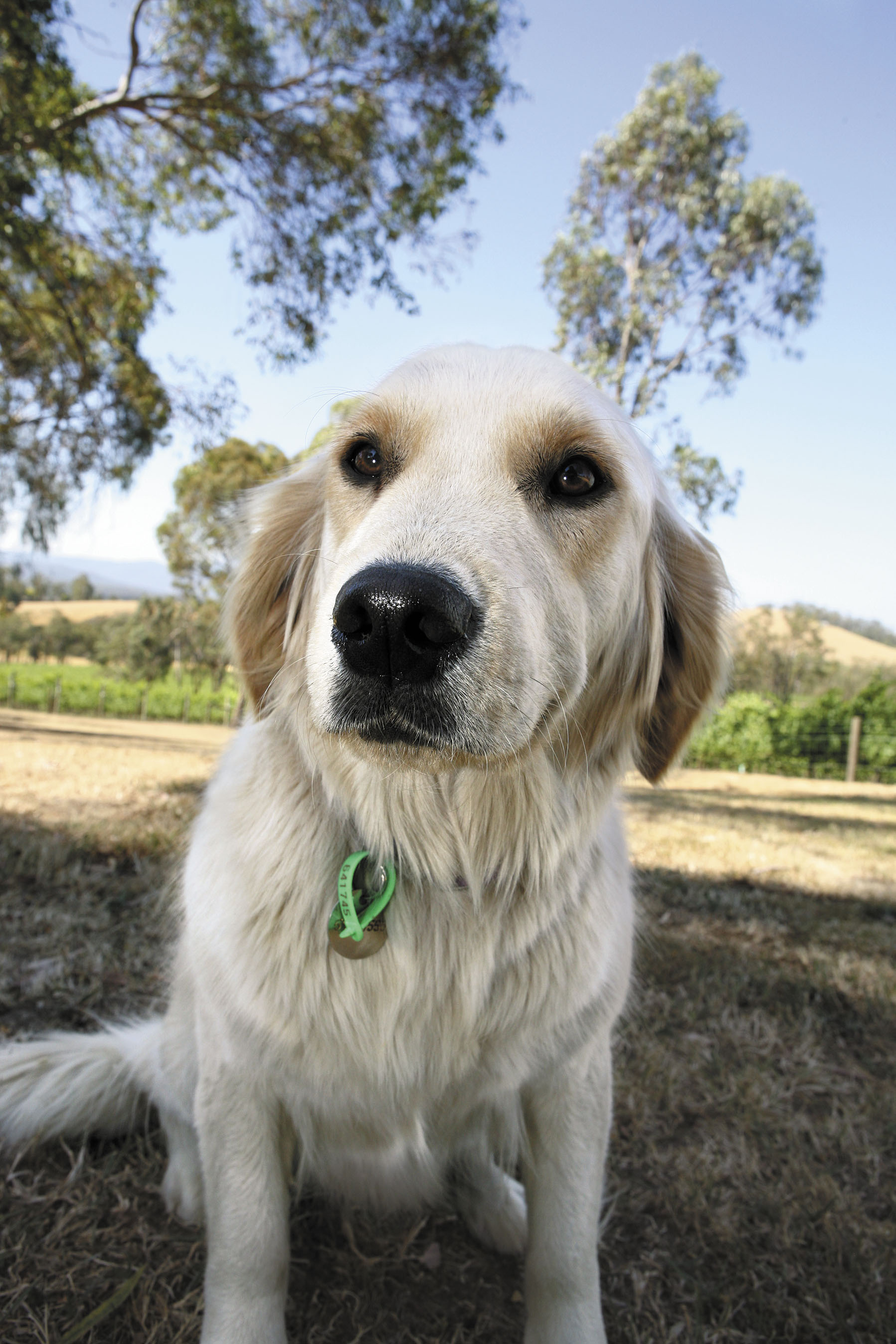
Is there a winery dog? Yes, three vineyard dogs: Timmy and Elsa the Golden Retrievers and Edie, the Brown Labrador. All are very selective consumers of high-quality wine grapes (they know exactly where to go in the vineyard) and vintage life becomes focused around stopping them eating the best fruit before we get to it!

Anything else you care to share? If your readers ever plan to visit Australia, they MUST plan properly. Allow 4 weeks (at least) or they will do little more than the tourist shuffle, and miss the heartbeat of a very different culture located in one of the most unique environments in the world.

 Giant Steps Timmy1 Giant Steps Elsa

1 Comment

Filed under Australia 2.0, Phil Sexton of Giant Steps/Innocent Bystander, Yarra Valley

Tod Dexter of Dexter Wines, Mornington Peninsula, Victoria

OLYMPUS DIGITAL CAMERA

Hopefully you caught my article on Australian wine in the Village Voice this morning. I am featuring a different winemaker on my blog each day this week.  Check back to hear from our vintners Down Under.

Tod Dexter of Dexter Wines, Mornington Peninsula, Victoria

Signature Wines: Chardonnay and Pinot Noir. I recently blended a wine for Route du Van that is a blend of Sauvignon Blanc (54%), Pinot Gris (22%), Viognier (18%) and Chardonnay (6%) and it is only 11.8% alcohol. It is a great summer drink.

Where were you born?  Where do you live now? Born in Melbourne, now live in Mornington Peninsula.

How did you get into the wine business? Our family always enjoyed good food and wine. I tried a number of jobs: carpentry, hospitality, outdoor sports retail and ski instructing. But after a ski season in Colorado, when I drove out to the Napa Valley and got my first job in a winery, was when I decided to join the business. That Napa job was with Cakebread cellars in 1979.

What is most and least rewarding about being a winemaker? It is so rewarding in many ways. Being able to grow a crop and change it into such a complex beverage and seeing the pleasure it brings so many people perhaps sums it up. Least rewarding is the challenges faced today in such a competitive market worldwide. The consumer has never had it better in terms of choice and price of great wine!

What are the challenges of making wine in your region? The weather! We can swing from drought years to wet years, it seems, on a more regular basis, which is challenging for any farmer.  

Have Australians’ wine preferences changed in the last 10 years? Yes. There is a slow shift from big, high-alcohol wines back towards wines of better balance and lower alcohols. Chardonnay is making a comeback and the love affair with New Zealand Sauvignon Blanc is slowing down.

Dexter Wines Vineyard Mornington Peninsula

Have you been to the U.S.?  Do you think Australia gets an unfair reputation in the U.S. for producing unbalanced, fruit bombs? Yes, I have visited the U.S.  No, it is not an unfair reputation based on the majority of Australian wine that has been exported to date.

Which wine or grape is the least understood or respected? In Australia, perhaps Italian or Spanish wine. We are only beginning to truly open the door to these regions. The strength of our dollar is helping as imported wines are now cheaper than ever.

What excites you most about Australian wine right now? The swing back to better balanced, more drinkable wines, particularly in Chardonnay.

What do you drink when relaxing at home? Beer, Gin & Tonic and Mojitos! Wine with a meal, of course, and most often Pinot Noir.

What types of food do you like to eat; any special dishes you make/care to share? Fresh pasta, BBQ-anything, locally caught fresh fish. We lean towards Asian influences–Australia is almost part of Asia geographically–but Italy and France also have a strong influence. 

What music do you listen to? I guess I lean towards Rock and Blues with a mix of other genres. Depends on the mood. Rolling Stones, Janis Joplin, John Butler Trio, Xavier Rudd, The Waifs, Ray Charles and Eilen Jewel.

Which non-Australian wines do you like? Burgundy, Northern Rhone, Alsace, Italian Reds.

Are there any wines you can’t stand to drink? New Zealand Sauvignon Blanc and new world Pinot Gris. Of course, there are a few exceptions!

If you could be traveling somewhere else right now, where would you be? Alaska, Kashmir or Mongolia.

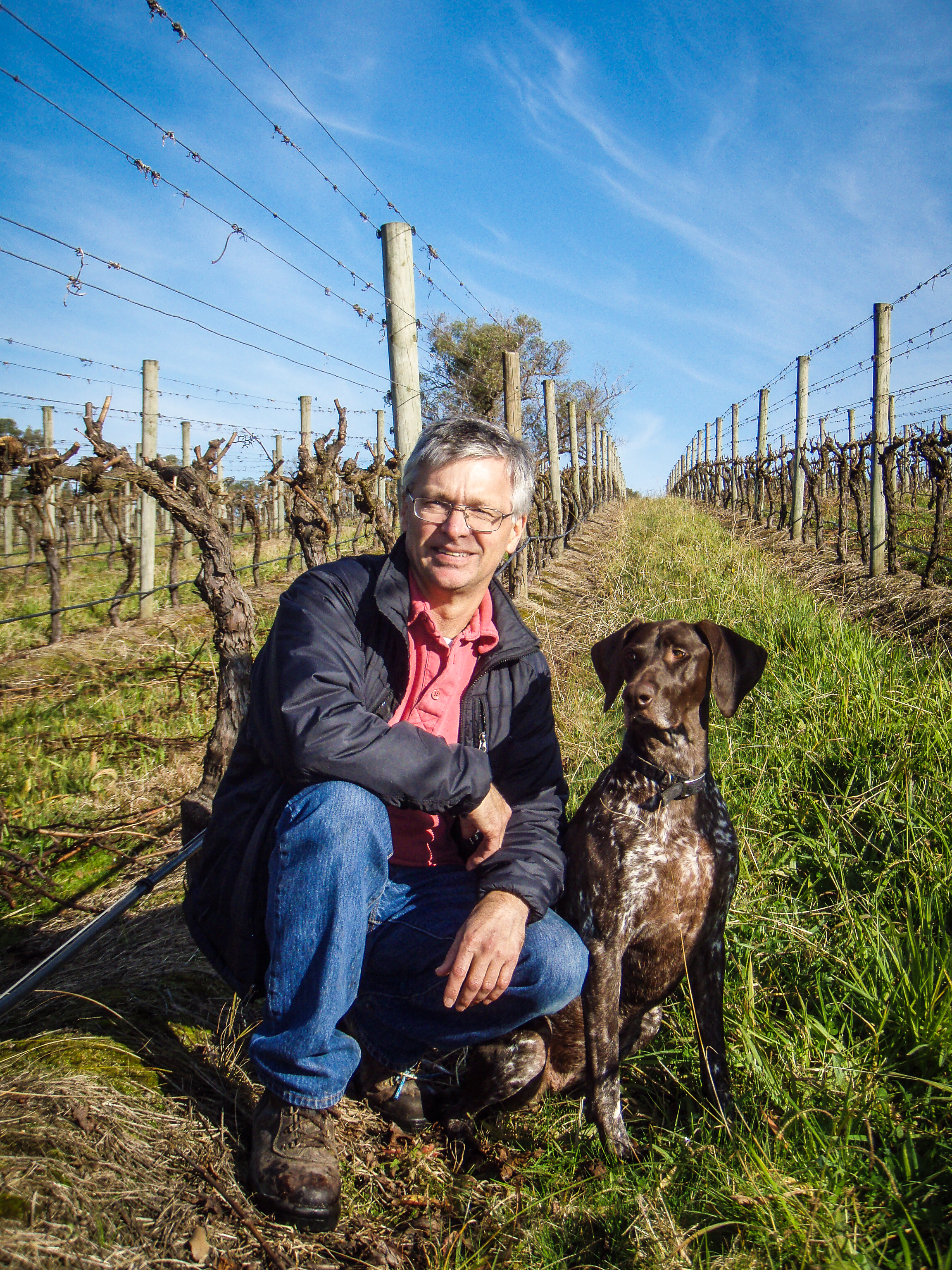
Is there a winery dog? Yes. Stella, 5 years old. German Short Hair Pointer. 

3 Comments

Filed under Australia 2.0, Mornington Peninsula, Tod Dexter of Dexter Wines

Cool-Climate Aussie Wine and the Gift of Forgiveness

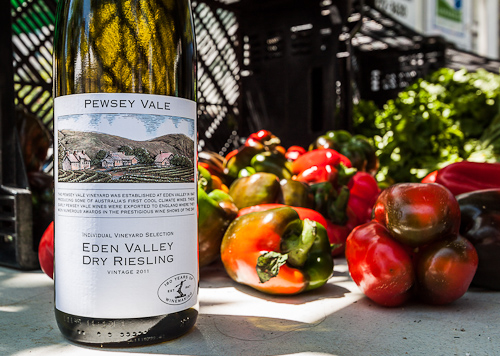
Pewsey Vale at farmer's market

If you want the short explanation for what Aussie wine you should be drinking now, read my column Unscrewed in the Village Voice. For those interested in the long answer, read on…

WHY AUSTRALIA NOW?

If your last memory of Australian wine was an overripe, jammy Shiraz you tried to repurpose as boiled down syrup for dressing scones or steaks (depending whether it was breakfast or dinner), erase it, please. The new breed of Aussie wine is leaner, more structured and food-friendlier than before, and they are headed to New York’s shores, thanks to a wave of young, dynamic winemakers and importers.

Not that older generations of Australian vintners didn’t already produce balanced, delicate wines; it’s just the bulk of what landed on our shelves accommodated our wallet and palate preferences of the time: “cheap and cheerful” in the image of, if not, Yellowtail; or big and alcoholic, propagated by Robert Parker’s world wine-ratings domination. Thankfully, consumer fealty is no longer pledged to critters or critics as we slowly move out of both eras and into a phase of open-minded discovery.

Trying to broach the topic of Australian wine in this smidgen of a column, however, is akin to condensing the Iliad into a leaflet (although that is essentially what we have done with Aussie wine imports). Australia is a tome-worthy topic; if you want to dig deeper into it, a very good one has been written: James Halliday’s Wine Atlas of Australia.

Let me start with a brief geography lesson. I attended an Australian wine tasting and conference the other week, and during a panel Q&A, a fellow attendee (and presumably knowledgeable member of the wine trade) raised his hand to ask why nobody has vineyards in the middle of the country. Remember that photo in high school geography class of a big, fat rock known as Ayers? It sits in a desert. I am sure Mr. Whomever-taught-him-social-studies-in-high-school would have been mortified by the query.

This initially hilarious gaffe led to my realization that Australia is grossly misunderstood in a number of ways, starting with her climate, geography and topography. Australia is the sixth largest country in the world, and the driest habitable continent, thus a lot of the land is far from suitable for grape production. Up North, the weather is downright tropical: good for beach-holidays and diving the Great Barrier Reef, but not vineyards. That leaves the South for the preponderance of vineyard sites, and if you look at a map, we are really talking about the Southwest and Southeast regions.

australia-wine-map

But within the SW and SE of Australia lies incredible diversity. The number of Macro-, Meso-, and Micro-climates in Australia is as multitudinous as ethnic eateries in the five boroughs. So, it is unfair to continue lumping all of Australian wine into one category, one style, one grape (Shiraz/Syrah) with one broad brushstroke. It’s like equating a New Yorker with a Texan (macro); a LES denizen with an Upper East Side socialite (meso); or Christopher Street “patron” with Charles Street resident (micro). We are all Americans, but definitively not the same.

So what happened Down Under? Export growth to the U.S. exploded in the ’90s and in 2004 Australia overtook France as the second largest supplier of wine to the U.S. market. But like many trends not based on quality and integrity, oversaturation led to busted demand (like Jersey Shore and supposedly, now, cupcakes). Additionally, many producers had relied on a narrow profit margin based on a currency advantage that ultimately swung out of their favor, leading to both hard financial times and a vinous identity crisis.  One sad outcome of all this was the death of boutique importers bringing handpicked, unique wines from talented winemakers to the U.S. Suddenly “Aussie wine” was a dirty word (or phrase, rather).

But this should really be old news, and fast, because there is a silver-lining to market corrections. Instead of serving up another global Frass Canyon-style spit bucket of Shiraz, a la Sideways, the country has come together collectively through the Government supported Australian Wine Trade Board to promote their wine regions individually. Although every region holds gifted vintners worthy of our attention, the hot new wines piquing the interest of writers, importers and consumers are coming from “cool-climate” regions.  What does that mean? Cooler climates tend to produce grapes that lead to wines of greater finesse, delicacy, balance and acidity and often, lower alcohol. The antithesis of what we previously demanded from Australia.

Gordon Little pouring at Wines of Australia Tasting

Courageous New York-based importers of small batch Aussie-only wines Gordon Little and his wife Lauren Peacock of Little Peacock Imports, are working to deliver the Aussie wine renaissance to New York. Calling them courageous may sound melodramatic, but given America’s slow-to-fade hangover from the first Australian wine experiment, staking their livelihood on championing these wines is a form of bravery.  The company slogan: “Wines Aussies kept for themselves. Now imported to the United States” provides hope that careful curators like them are staging a comeback, with New Yorkers’ palates serving as proving ground.

Mr. Little outlined their goals: “introduce Australian wines that reflect their terroir or sense of place,” that “over-deliver at the price point, have vibrant acidity and moderate alcohol and pair well with food.”  Mr. Little and his wife spent weeks chasing down wines from smaller producers “who care about growing good fruit and using a more minimal intervention approach in their wines, letting the soils speak for themselves.”

Mr. Little spoke to a few of the struggles they are facing in the current NY Market: “Australian wine above $10 is a challenge – first, because New York is a highly competitive wine market. Second, and more importantly, with Australian wine we have to change perceptions of what it is and can be.” He noted that many educated wine drinkers had no idea that Australia produced Pinot Noir, let alone good ones. His advice for tasting the promise of Australia’s fine wines is to look for smaller producers from cooler-climate zones. He also provided us recommendations of regions to look out for, including ones with ample Pinot Noir.

Margaret River: On the furthest shores of southwest Australia lies this maritime region known for profound Cabernet Sauvignon and Chardonnay, as well as surfing off some particularly gorgeous beaches. Fine wines are the foundation of the region’s reputation, and these gems are finally receiving the international acclaim they deserve. Bordeaux blends, especially whites, are also praised. Pioneers and premium producers include LeeuwinMoss WoodVasse Felix, and Stella Bella..

Yarra Valley: Known for its stunning beauty, the vineyards in this cool-climate region in Victoria may date back to 1838, but it’s also the stage for many young winemakers spearheading the new wave of Aussie wines. Their philosophy: lower alcohol, reduced use of oak, hand-harvesting, and food-friendliness. These winemakers refer to themselves as the “South Pack.” The region’s principal grapes are Pinot Noir and Chardonnay, with Cabernet Sauvignon and Shiraz close behind. Looking for Côte Rôtie-style wines? Some exceptional bottlings of Syrah blended with a small percentage of Viognier are produced in Yarra. Try wines from Luke Lambert, Jamsheed, Ben Haines, Giant Steps, and Punt Road.

Mornington Peninsula: Terroir, terroir, terroir. This could be written of most places, but is especially significant in this crescent-shaped region where soil, aspect, altitude and wind change by the meter. Pinot Noir dominates red wine production, Chardonnay for white, with exceptionally made (and often priced) single-vineyard bottlings showing off the potential of this playground of the nearby affluent Melbourne locals. Moorooduc Estate and Dexter Wines are both available in New York and produce delicious, competitively priced wines.

Adelaide Hills: Twenty-five minutes east of Adelaide, altitude is the key to this region’s cool climate; in that short time, temperature can drop by as much as 30 degrees. Vineyards are tucked into dips and peaks of valleys, and in between cherry and apple orchards — driving through this landscape could satisfy a rollercoaster enthusiast. Planted predominantly with white grapes, many claim the Hills as the home of Aussie Sauvignon Blanc, and increasingly, sparkling wines from Pinot and Chard. Reds are driven by Pinot, with a growing appreciation for spicy Shiraz and Italian varieties such as Nebbiolo and Barbera. Look for Shaw and Smith, Henschke, and d’Arenberg, with more producers coming soon.

Eden Valley: Sitting within but high above the Barossa Valley is this cool, windswept region that produces a high percentage of Shiraz but is prized for its Riesling. Eden Riesling develops unlike any other place in the world besides the Clare Valley (also in Australia), into bright, stony, lime-juice-y concentrated wines that are not only a great value but have the capacity to age up to ten years (if not longer). In fact, shop for older vintages, as the high acid in young wines can brighten teeth like Crest Whitening Strips. Pewsey Vale, the oldest winery dating to 1847, sets the benchmark for the region, and is relatively easy to find in NYC stores.

If you prefer to taste before you buy, Public Restaurant and Eleven Madison Park are the two big supporters of Aussie wines in New York, with rare and small parcels often pre-sold to them first.

Public, 210 Elizabeth Street, 212-343-0918; Eleven Madison Park, 11 Madison Avenue, 212-889-0905

To accompany this article, I reached out to nine wineries around Australia for a short Q&A. I wanted to give vintners an opportunity to speak directly to American drinkers about the experience and struggle of winemaking in Australia. A new winery and winemaker will be posted on my blog each day. Please follow at chasingthevine.com

 

3 Comments

Filed under Australia 2.0

South African Birthday Braai in Brooklyn with 36 Wines

Colorful coastal beach cottages. I have no pictures of wine country for this article because my husband accidentally deleted all of them. Yes, we are still married.

Today is my birthday and I turn 19, again. I am celebrating by throwing a Braai-style BBQ in Brooklyn to accompany a large, multi-regional tasting of wines procured from South Africa.  If I can’t spend my B-Day in Stellenbosch, then I will bring the spirit of the Cape Winelands to a Brooklyn Heights apartment with a bonafide patio and grill (unfortunately not mine, but a generous friend’s).

I spent weeks obtaining 36 wines from 18 vineyards. Most are samples, but a precious few are direct from my wine fridge, carefully cared for since bringing them back from South Africa 2 years, 3 months and 17 days ago.  And holy shit, I didn’t even look at the calendar before spitting out that number, and I just verified it was on the dot. Eerie!

Why a birthday party around South Africa? Skeptics say I can’t fall in love with a place I only knew seven days. Maybe I wasn’t there long enough to outgrow the honeymoon and commence day-to-day life with my sweetheart, flaws slowly unfurling, first charming, and eventually grating. Was I romanced by the vineyards of Stellenbosch, the adorable village of Franschhoek and long wine producing history of Constantia like a contestant on the Bachelor–all helicopters rides, fantasy suites and chiseled abs? Actually, that wasn’t my experience at all.

Most of the world is aware of South Africa’s history and problems, her citizens quite painfully. But with dramatic lows come equally dramatic highs, particularly with regard to her physical beauty; the scenery is flat-out stunning, probably made more so because I wasn’t expecting it. How often do close friends, even acquaintances, rave about her wines or the beauty of South African wine country? Most haven’t been, probably from fear of the 17-hour flight or misperceived cost of travel so far from home. Those who do visit, often consider South Africa synonymous with Kruger National Park or Table Mountain and Cape Town; and for the adventurous, maybe a cage-dip in Shark Alley to see the Great Whites.

But the flight is manageable (particularly with Valium, Ambien and free cocktails). South African Airways flies direct to Jo’burg from JFK, a United partner and accepting of FF miles. And without miles, airfare this summer (winter there) is on sale for $1000. That is cheaper than flying to Europe. Once arriving in Jo’Burg, you have an easy connection to Cape Town. Rent a car and off you go another 1.5 hours up to Stellenbosch. Yes, I know it sounds painful, but your reward is great. That first view of vineyards tucked into the mountains, laid-out one after another between the Wineland towns is heart-stopping.

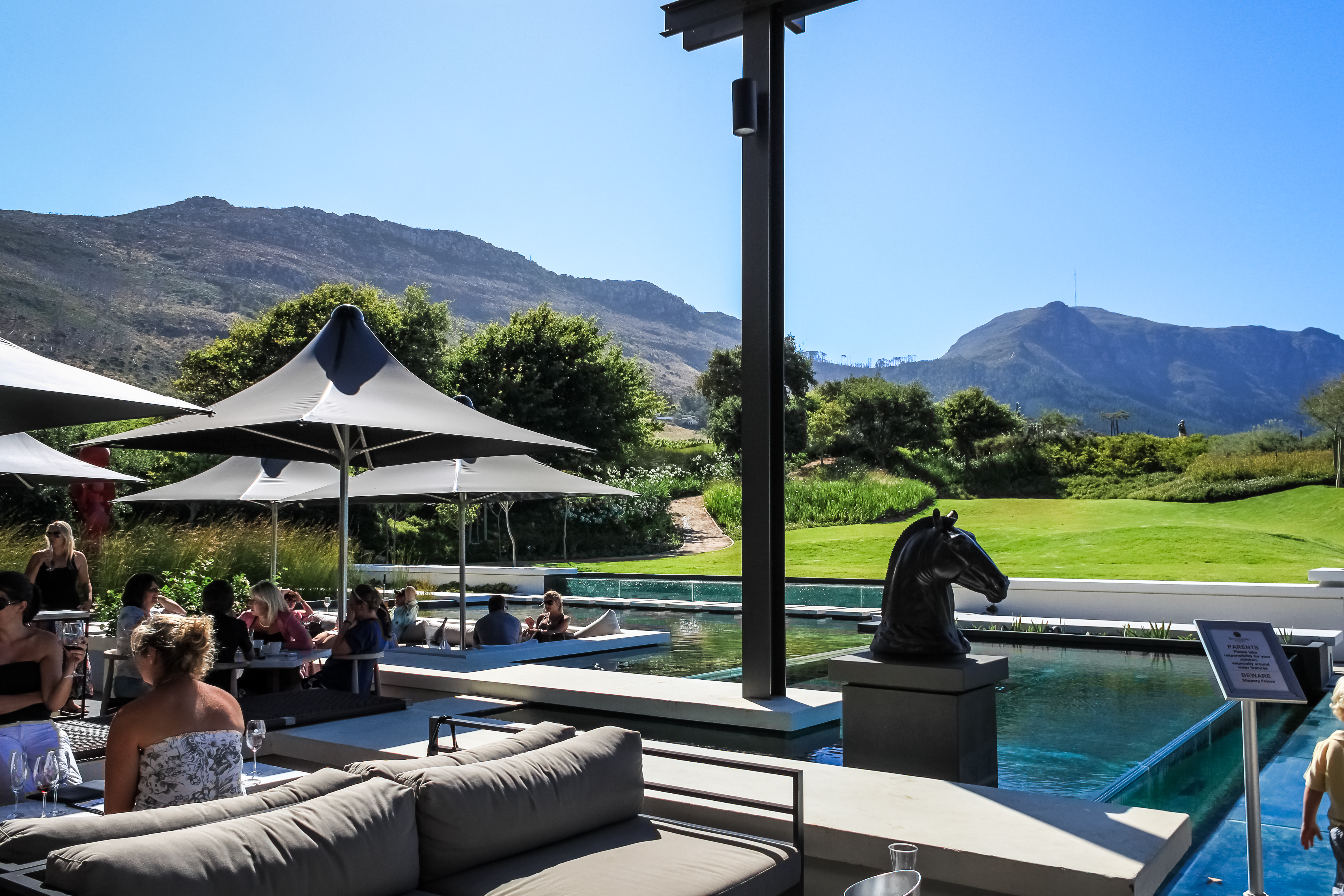
Steenberg Winery patio. I only have this single photo to show.

The wineries are as sophisticated as Napa without pretension, and the lodging extraordinary in quality and variety offering relative reasonableness of price.  We spent several lovely nights in the Hawksmoor House, a beautiful B&B set in an old Cape Dutch country home filled thoughtfully with antiques and modern touches—a retreat to which you could imagine retiring one day. Each morning’s homemade breakfast was served on the patio with views over the rectangular garden pool that stretched to the mist-shrouded mountains beyond. Evenings at Hawksmoor offered complimentary dessert wines from the honor bar; we would slip into the house after dinner each night, choose our wine, and relax in whichever stately parlor room we fancied to pretend was ours for a few hours.

The restaurants are numerous, varied in cuisine and price; if your wine country vacation isn’t complete without fine multi-course dining, however, there are tasting menus to rival Yountville at half the price. We adored our anniversary dinner at Rust En Vrede, a 350-year old Country Dutch property that offers exceptional estate wines paired with their exemplary cuisine. Try a cocktail (or wine) on the balcony of the beautiful Delaire Graff Estate, watching the sun dip down, forever gone for that day, then pop over to Tokara restaurant across the road for dinner in a chic setting that belies the prices on the menu.

The wineries, however, impressed the most. I was struck over and over by the level of sophistication, attention to detail, aesthetics and use of technology. Part of what makes wine travel so fun is to see how each vintner and winery owner applies their personal-touch to the final wine and design of the buildings. Much of the architecture shows-off the charming Cape Dutch-look, but several were über-modern; all capitalized on the dramatic views, gardens and countryside greenery available to them. Overall, the wines were of reasonable price for very good quality (although only occasionally transcendental). South Africa is often associated with Chenin Blanc and Pinotage, but their Rhone and Bordeaux blends stand-out, and varietal bottlings of Syrah, Pinot Noir and Chardonnay deserve attention.

As is the case with most non-traditional European wine-producing regions, finding the same diversity of wines you sampled while visiting, back home in the States, is impossible. So the point of my tasting tonight is to explore the depths of what is available from South Africa in our market so as to inform friends and readers of this extraordinary place.  Greater demand for South African wines will bring more variety of selection. I plan to compile the tasting notes from this evening in my Unscrewed column in the Village Voice sometime in May or early June. Hopefully my words will encourage readers to spend more time considering South Africa on their store shelves and in their imaginations.

And for our Braai tonight? Yes, I know that we aren’t using real wood and a massive fire, so we are technically not doing it right. We are making do with what’s available in an urban environment, however, and working off cookbooks, the internet, an iPhone text and facebook messages, to put together a semi-authentic collection of dishes to pair with the wines. Below is our menu, and further down, our vinous line-up!

MENU

Peri Peri Shrimp and Chicken Drumsticks
Lamb Sosatie (kebabs)
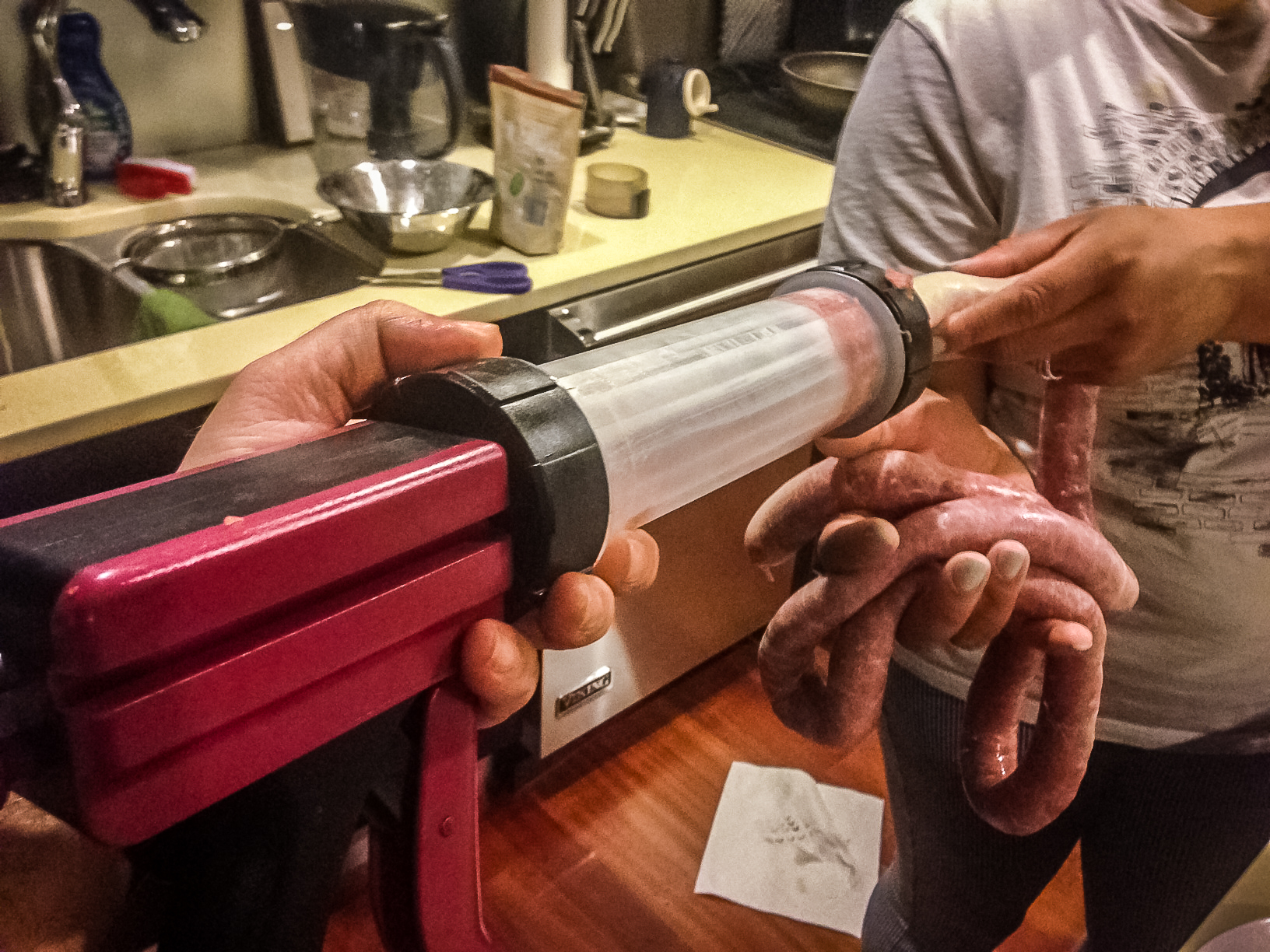
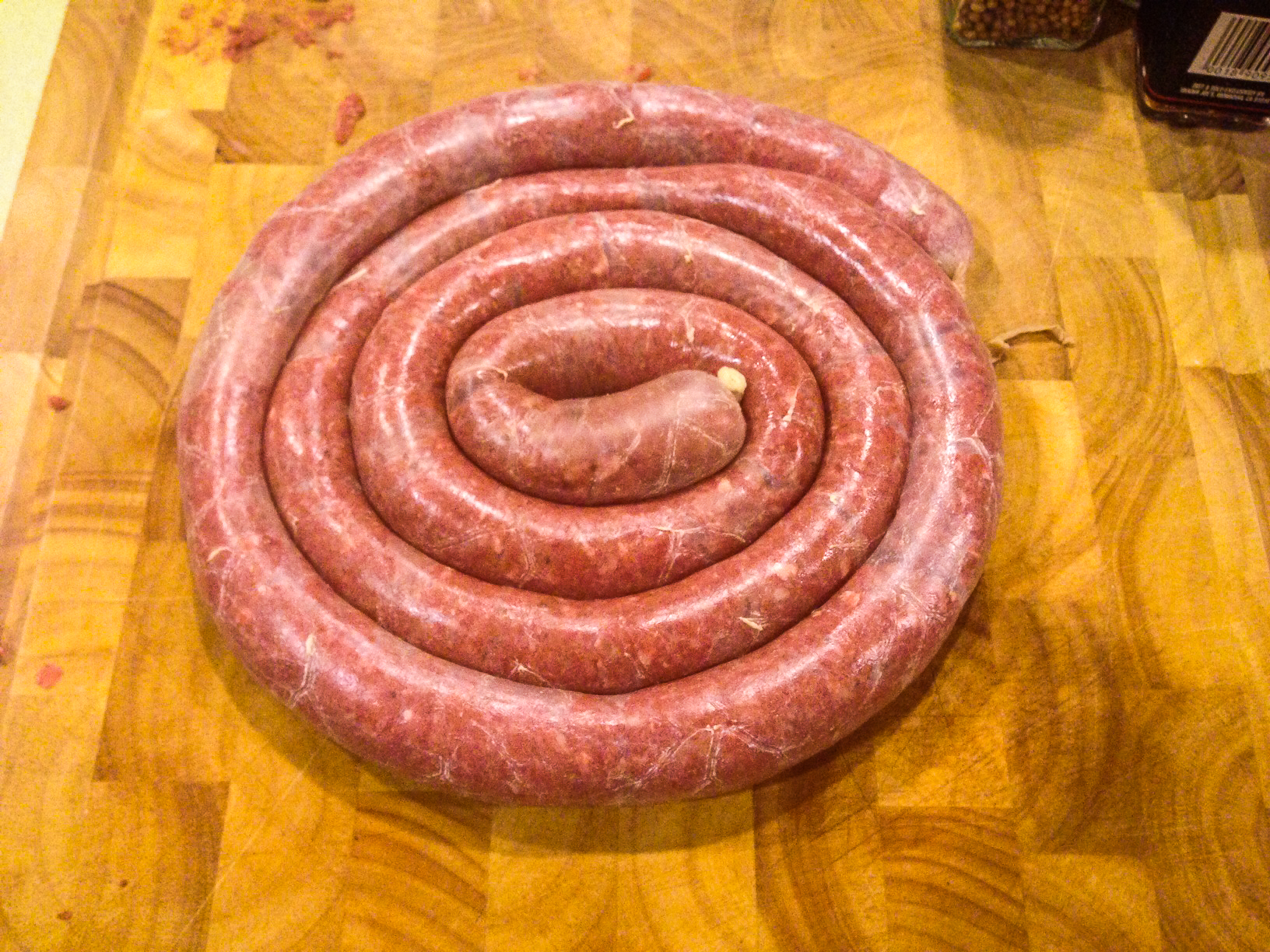
Homemade Boerewors Sausage
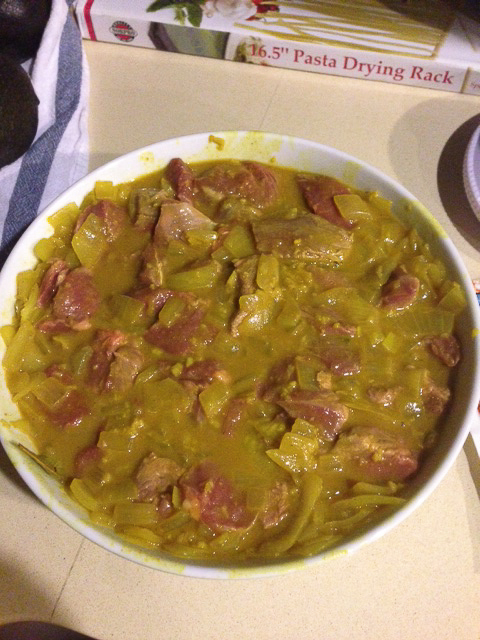
Bobotie
Gestoofde Boontjies (fancy name for beans)
Hot Rice Salad
Chakalaka and Pap

Ash and Shawn Shooting Sausage for Boerewors

Pretty Boerewors Pinwheel!

Marinating Lamb Soastie

WINES

1 Bartinney Cabernet Sauvignon 2010
2 Bayten Sauvignon Blanc 2012
3 Beyerskloof Chenin Blanc/Pinotage 2012
4 Beyerskloof Synergy Blend 2010
5 Beyerskloof Pinotage 2012
6 Beyerskloof Diesel Pinotage 2009
7 Bradgate Sauv Blanc/Chenin Blanc 2011
8 Bradgate Cab Sauv/Merlot/Shiraz 2009
9 Bradgate Syrah 2010
10 Bruwer Raats Chenin Blanc 2011
11 Bruwer Raats Bordeaux Blend 2010
12 Cape Grace Chenin Blanc 2011
13 Cape Grace Pinotage 2011
14 Cape Grace Shiraz 2012
15 De Morgenzon Chardonnay 2012
16 De Morgenzon Chenin Blanc 2011
17 De Morgenzon Rose of Cabernet Sauvignon 2012
18 De Toren Fusion V 2008
19 Elgin Vintners Pinot Noir 2010
20 Elgin Vintners Chardonnay 2010
21 Excelsior Chardonnay/Viognier 2012
22 Excelsior Cabernet Sauvignon/Petit Verdot 2011
23 Glenelly Red Blend: Syrah, Cab, PV, M 2008
24 Hamilton Russell Chardonnay 2012
25 Hamilton Russell Pinot Noir 2010
26 Indaba Chenin Blanc 2012
27 Juno Cabernet Sauvignon 2010
28 Juno Shiraz 2010
29 Kanonkop Pinotage 2010
30 Kanonkop Pinotage Blend: Kadette 2009
31 Ken Forrester Chenin Blanc 2011
32 Ken Forrester Chenin Blanc 2012
33 Music by D’Aria Shiraz, Cab, Merlot 2009
34 Rudi Schultz Syrah 2010
35 Thelema The Mint Cabernet Sauvignon 2008
36 Thelema Mountain Red 2010

7 Comments

Filed under Birthday Braai and Tasting in Brooklyn, South Africa

Wine on Wheels Fundraiser: New Yorkers, Please Read!

Although I cannot personally attend (I will be traveling out of the country), other wine loving New Yorkers should add this benefit to their calendar. Yannick Benjamin, host of the Wine on Wheels fundraiser at Le Du’s wine shop on May 4th, is an outstanding man, sommelier, and wine educator, who resumed a life in wine after a devastating accident might have otherwise crippled his spirit forever. The fundraiser is to help others who suffer disabling accidents continue to pursue their dreams.

Wine on Wheels Fundraiser

Saturday, May 4th, 2013
1-4 PM at Le Du’s Wines
$50.00 advance ticket
$70.00 at the door
$120.00 pre-event access pass
Le Du’s own Yannick Benjamin and Alex Elegudin co-founded Wheeling Forward, a 501(c)3 charitable organization, to help disabled individuals resume living active lives by going back to school, getting back to work, achieving their life goals, and striving for personal fulfillment. Wheeling Forward empowers disabled individuals to achieve their life goals and live purposefully by bringing hope to the disabled community and providing tailored, individual support services, advocacy and mentoring.
No goal is ever too big or too small!
  
Yannick competing in the 2010 New York Marathon
The 2nd Annual Wine on Wheels Fundraiser brings together some of the top Sommeliers from New York City in a wine tasting of an EPIC SCALE. The event will also feature a silent auction, blind-tasting giveaways and food provided by Taco Morelos.
What wines pair best with fresh, delicious tacos? Why not ask one of our veritable troupe of guest Sommeliers, on-hand to pour and discuss the 75 fine wines being served.
Our team of experts:
John Ragan, MS, Union Square Hospitality
Hristo Zisovski, Ai Fiori
Aldo Sohm, Le Bernardin
Alexander Lapratt, Jean Georges
Paul Altuna, Le Cirque
Dustin Wilson, MS, Eleven Madison Park
Jeff Taylor, Eleven Madison Park
Joe Campanale, L’Artusi & Dell’anima
Pascaline Lepeltier, Rouge Tomate
Raj Vaidya, Daniel Restaurant
Thomas Pastuszak, Nomad Restaurant
Mollie Battehouse, VOS/ Maslow 6
Michael Madrigale, Bar Boulud
Jordan Salcito, Momofuku
Erin Scala, Public Restaurant
Kristie Petrullo, Petrullo Consulting
Matthew Conway, Marc Forgione
Josh Nadel, Dutch/Locanda Verde
Yannick Benjamin, Le Du’s Wines
Jean Luc Le Du, Le Du’s Wines
Eric Hastings, Brushstroke
Dana Gaiser, Martine’s Wines
Alexis Brock, Lot 18
Andre Compeyre, Benoit Restaurant
Sean Kerby, Riverpark
Andy Shernoff, Musician
Tom Gannon, Spire Collection
…and to close, artisanal cognacs by Nicolas Palazzi
Advance tickets are available by calling Le Du’s Wines at212-924-6999 or by ordering online here.

If you are unable to attend, but still would like to show your support please make a donation through the website.http://www.wheelingforward.org/wineonwheels2013/
Still not convinced?
Watch Yannick and Alex clowning in theirWine on Wheels promotional video.

Leave a comment

Filed under Fundraisers, Wine on Wheels

Brad Pitt and Angelina Jolie Sell First Vintage of Château Miraval Rosé

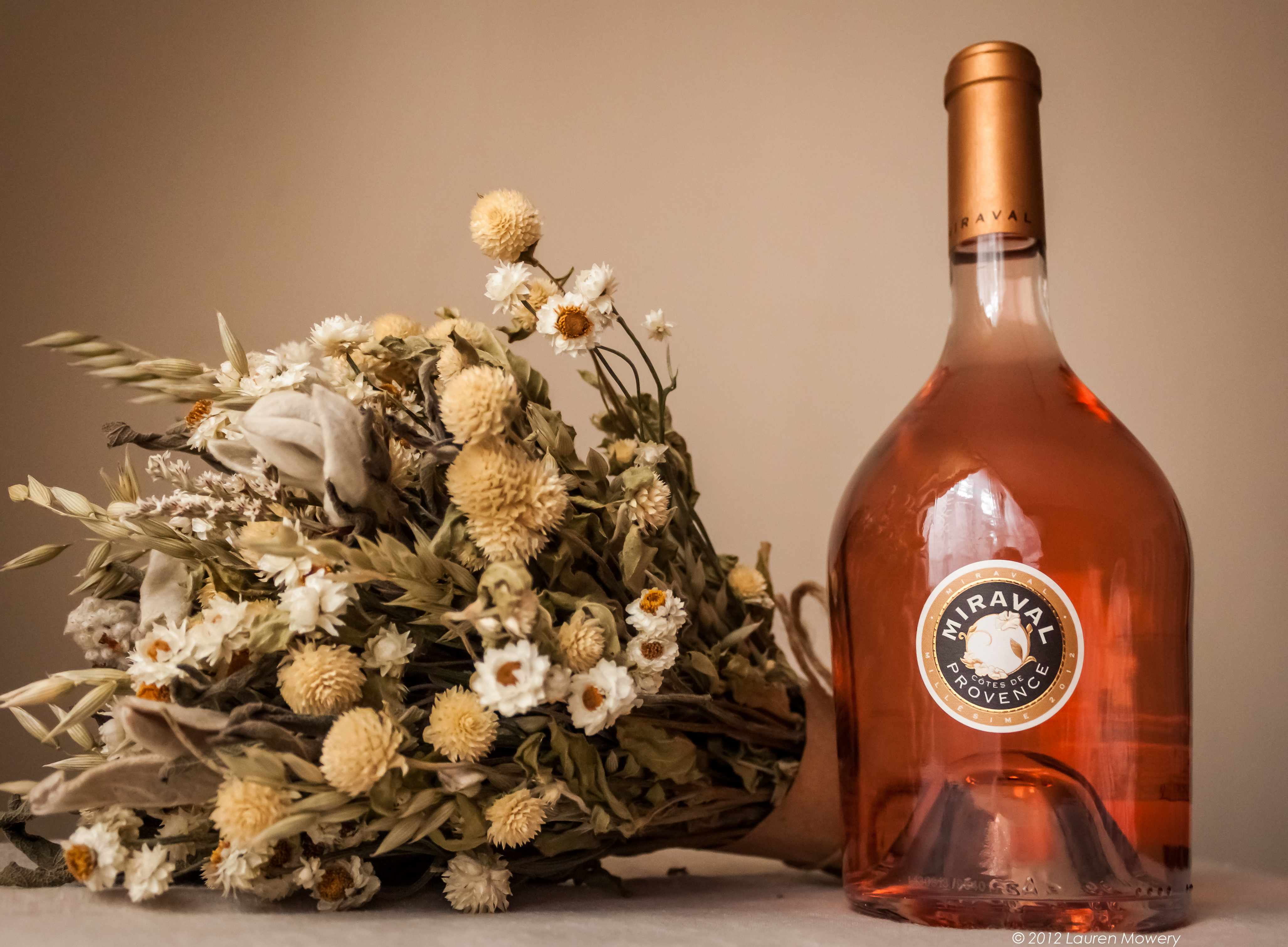
Photo by Lauren Mowery

In case you missed my column in the Village Voice this morning…

The vinous baby of Angelina Jolie and Brad Pitt has finally arrived stateside! If you haven’t heard, Brangie are now Provençal winemakers, having delivered their inaugural vintage of rosé from their Château Miraval estate last week. But erase any vision of Angie lovingly tending vines in muddy boots, hair matted to forehead under the hot midsummer sun; or Brad, come harvest time, with his usual overgrown goatee, gently picking grapes during cool pre-dawn hours and hand-sorting them at the table. That’s only in the movies, folks.

In reality, if you own a château as a second, third, or sixth home, you probably aren’t foot-stomping fruit. But that doesn’t mean the wine isn’t good. Miraval has a history of quality organic wine production long before its celebrity ownership, most notably for its Pink Floyd rosé, so named because the group recorded part of their album The Wall in the château’s recording studio.

In recent years, the 1,000-acre estate was acquired by the duo through the glitterati version of rent-to-own (they leased for several years before dropping $60 million on the property). As far as their new wine label, someone else was hired to do everything but pay the mortgage. Well, not just someone. The Jolie-Pitts teamed up with Marc Perrin, owner of famed Château de Beaucastel in Châteauneuf-du-Pape, to turn a blend of Grenache, Cinsault, Syrah, and Rolle into the high-profile Miraval Provence Rosé 2012 with the Jolie-Pitt & Perrin names featured on the back.

If you actually care about tasting the celebrity couple’s wine, move quickly. Their first offering, released on the château’s website in early March, sold out in six hours — a winemaker’s wet dream and one that is definitely not recurring for most. Fortunately for us New Yorkers, Union Square Wines just received one of the largest allotments in the country. As a recipient of USQ’s newsletter, I was notified a month ago that I could pre-order a bottle to ensure one precious little Jolie-Pitt rosé would be mine. I felt like a sucker for buying it, but inquiring minds want to know: Is it worth the hype?

The bottle itself is gorgeous, reminiscent of Ruinart Champagne’s curvy, sexy glass, although the unwieldy shape (and enormous punt!) doesn’t easily lend itself to storage. Not that you would stick this in your wine fridge for any length of time — the luminescent, salmon-pink juice practically dares you not to cut the foil and uncork it immediately. The wine inside is perfumed and smacks of summer: blooming jasmine and honeysuckle, red fruits of cherry, raspberry and watermelon, plus zippy citrus peel. Refreshing. Eminently drinkable. As lyrical asA River Runs Through It? Not quite; but profoundly better than that overhyped stinker Salt.

USQ still has a few cases in stock. Bottles are priced at $22.99 or $19.99 each if you buy six. But my advice is to buy one, skip the case, and diversify your rosé portfolio. France, Spain and USA, to name a few, all have exciting offerings from family-owned wineries of ardent vintners who can’t sell out of a wine based on star power in 6 hours, let alone 6 months, even if their wines should.

6 Comments

Filed under Chateau Miraval

New Latitude Wines: Weird Places Making OK Wine!

Namibian Wine.jpg

We are officially into spring. Flowers cautiously poke their heads from protective sheaths of green, and birds dare chirp a tune on tree boughs breaking buds. But no, we are not fooled. We New Yorkers know April barely a guarantees freedom from winter, or at least cold, grey and rainy days. So, our dreams of travel to exotic locales persist until that first trip to the North Fork or a Hamptons beach. Curiously, travels to humid, tropical or desert destinations now bring the opportunity to taste local vinos dubbed by everyone else but the locals “new latitude wines.”

Traditionally, only regions roughly between latitudes 30 and 50 were considered suitable for viticulture. Tropical or desert zones were a no-no for quality wine production due to factors such as weather, soil and access to fresh water. Yet people are planting vines all over the world, using different grapes and new technologies.

Even Robert Parker acknowledged the phenomenon: After turning over editorial oversight to his Singapore team, they announced plans for a correspondent dedicated to Asian juice. These wines have a long way to go before they make it to your table at home, but here are five countries giving it a go:

1. Namibia
Brangelina’s baby Shiloh and the world’s oldest desert come to mind when envisioning Namibia. But the country was colonized by Germans, and sure enough, a few of them planted vines to provide drink for the expats. Only a few wineries are producing quaffable stuff like Kristall Kellerei winery outside of Omaruru. They make a white Colombard and Ruby Cabernet (stick with the Colombard) plus a line-up of schnaps. Spend the afternoon in their garden with a unique albeit tasty charcuterie plate of springbok, ostrich and zebra served with a chilled bottle of white.

2. Tahiti
A vineyard on a coral reef? If there was enough wine being made on the island of Rangiroa that I could convince the IRS of a work-related write-off, I would be on a plane in less than 24. The second largest atoll in the world is home to theDominique Auroy Winery which produces French Polynesia’s own wine label, Vin de Tahiti. White, rosé, red and sweet wines are made, although word through the coconut radio is that the experiment is a money and resource suck overseen by a rich French businessman, proving more novelty than serious solution for a wine-starved nation.

Rice Paddies Bali.jpg

3. Bali 

Hot and wet may be desirable for a certain film industry, but not for growing grapes. Yet, Hatten winery, after years of trial and error, has managed to produce wine in Bali’s notoriously muggy environment. Giving up on traditional European varieties, they found a few oddball table grapes like Belgia for whites and Alphonse Lavallée for red and rosé to be effective in the climate; enough so to win a few international medals. Interestingly, Hatten also makes a traditional method sparkling wine from a local grape called Probolinggo Biru.

4. Thailand 
Hostess bars, spicy food, and shimmering beaches could sum up the usual tourist experience. Now you can add wine tasting to the list. Thailand has a growing industry with almost ten producers, the leading manufacturer being Siam Winery. The company grows and buys grapes in the “floating vineyards” of the Chao Phraya Delta south of Bangkok. The whole set-up sounds bizarre, but initial reports are, um, optimistic? Siam’s winery near Hua Hin offers the quintessential Thai touch–elephant tours through the vineyard.

5. Costa Rica 
So You Think You Can Make Wine? Napa Valley wine consultant Kerry Damskey does. His newly built winery and vineyard are located above the small city of Copey in central Costa Rica. At an altitude of 2000 meters, he planted Sauvignon Blanc, Pinot Noir, Syrah and Grenache in December 2011. The first vintage will be released in 2015, so plan your trip accordingly if wine tasting ranks as high on your “to do” list as riding the zip-line.

Leave a comment

Filed under New Latitude Wines