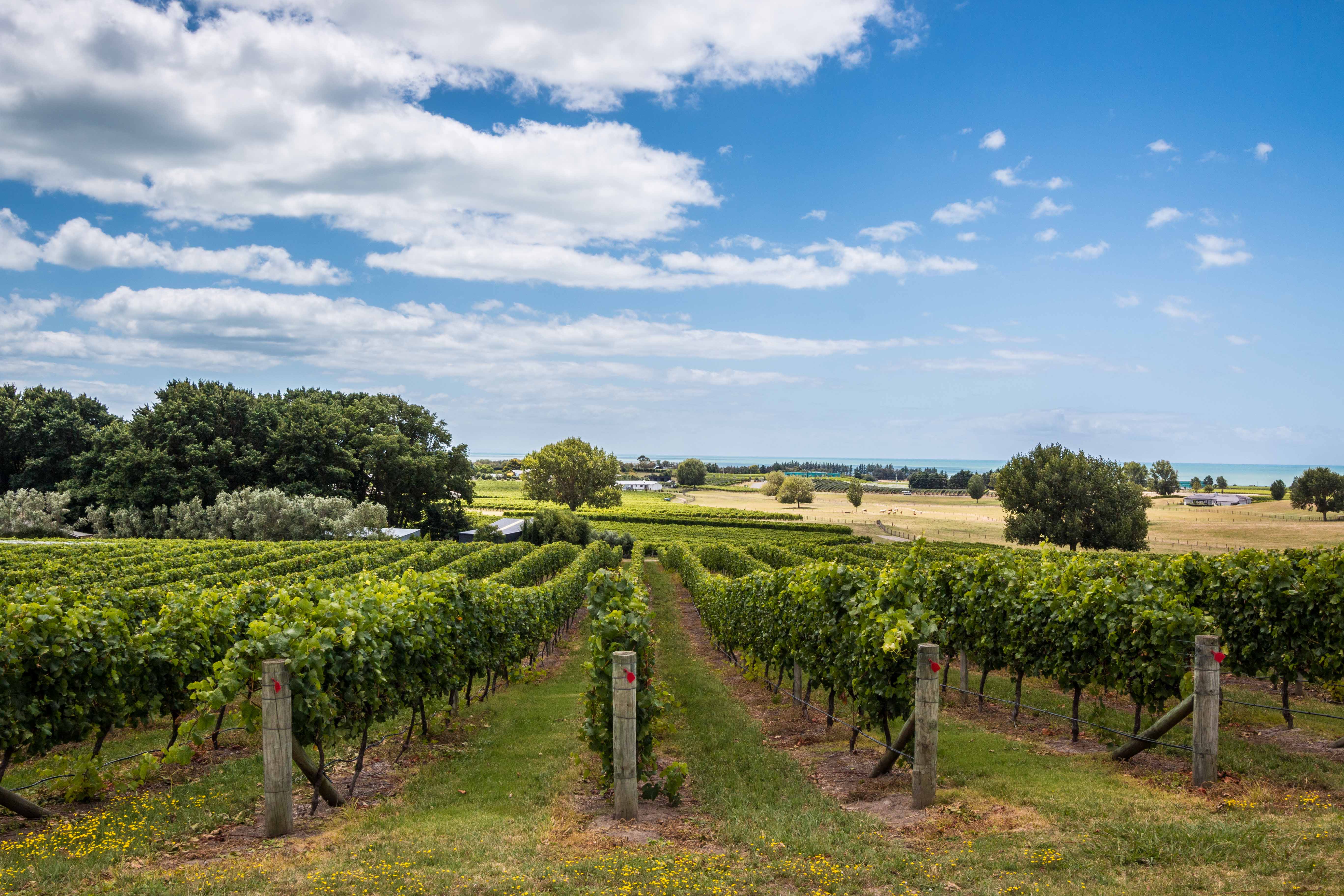
Felton Road, Bannockburn, Central Otago, New Zealand

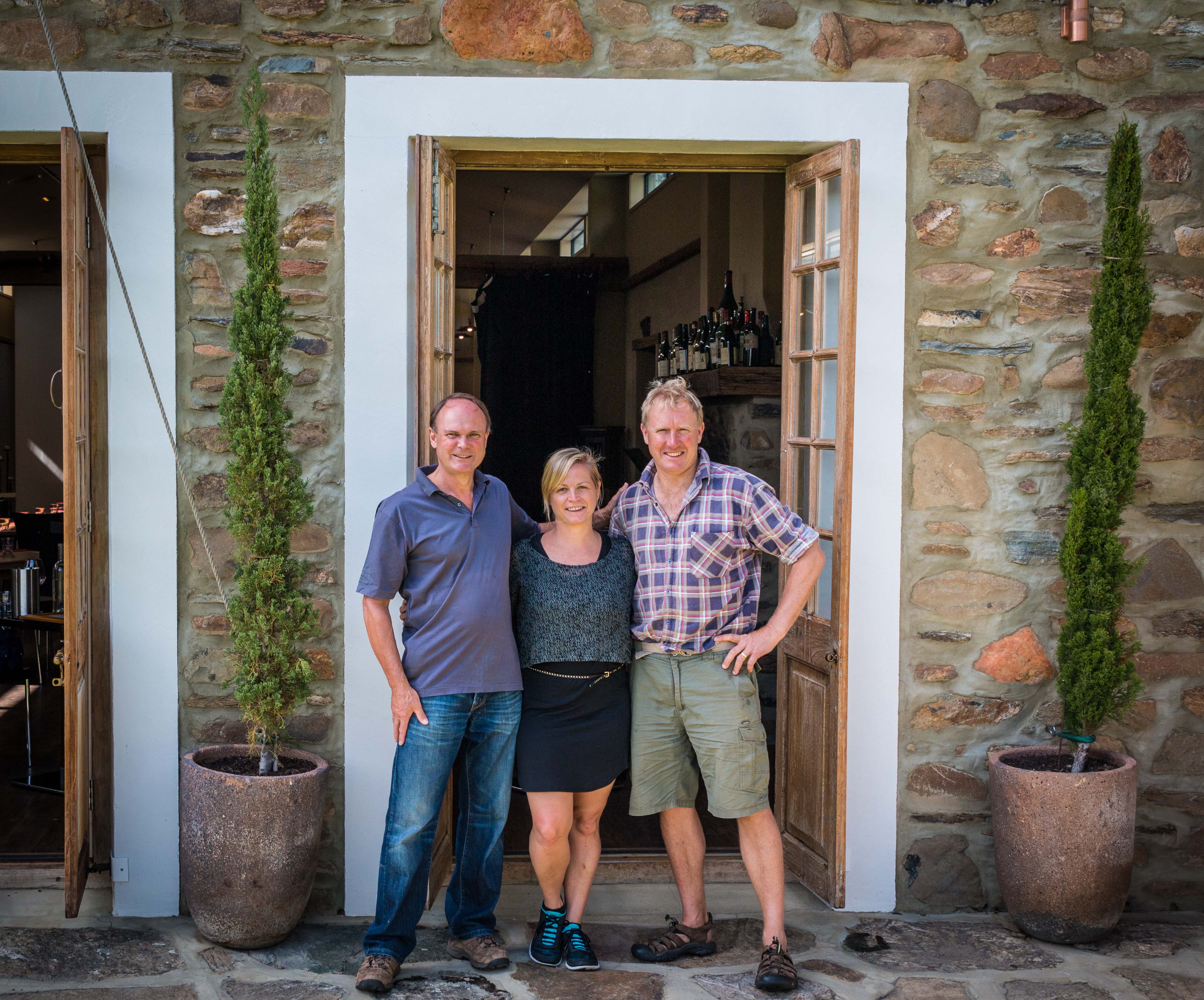
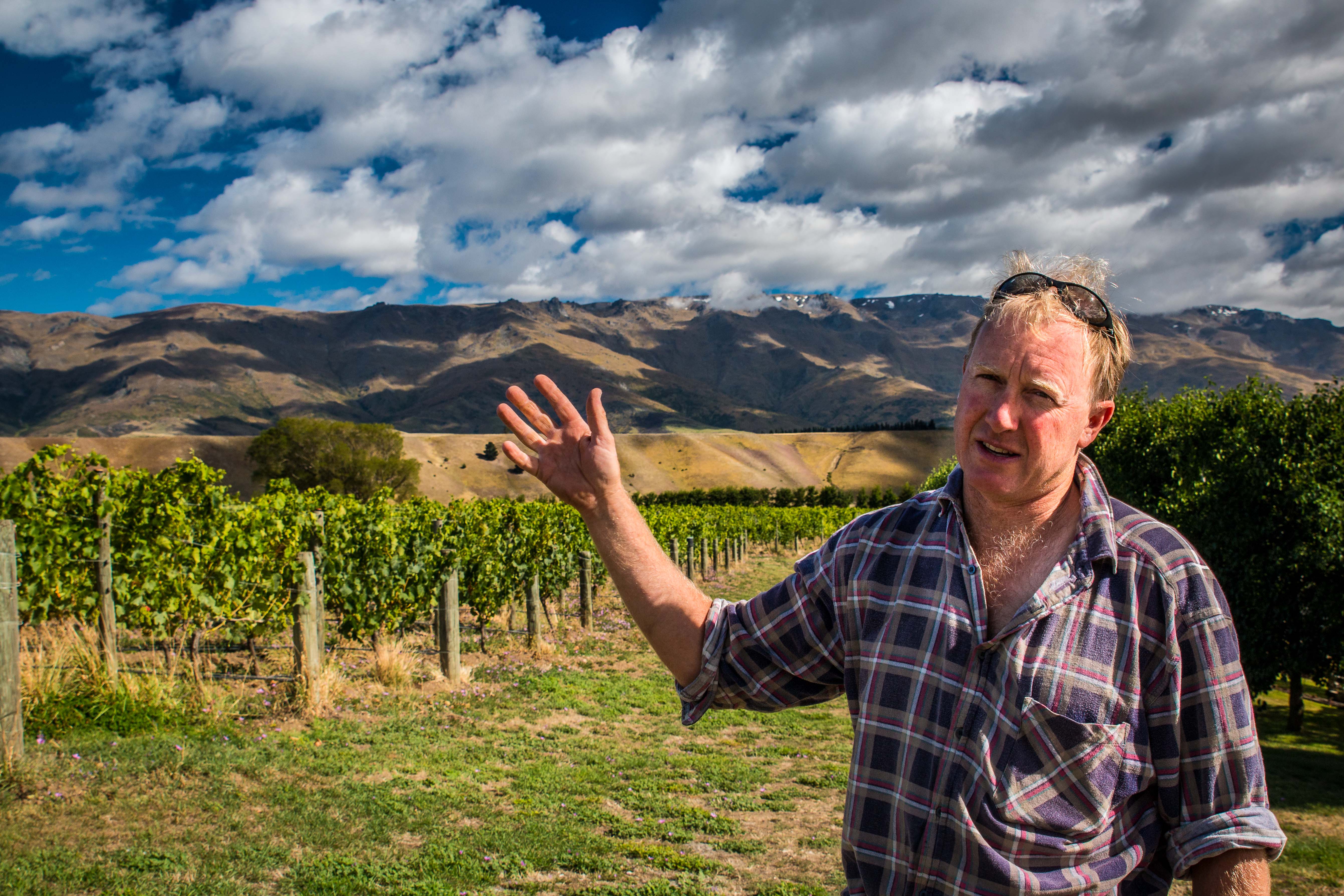
FlyingwithBlairSetting a new definition for the term “flying winemaker”, Blair Walter is both renowned winemaker of Felton Road and local pilot. I had the pleasure of spending heaps (to use a Kiwi term) of time with this charming fellow during the Central Otago Pinot Fest, at the winery, and up in the air, soaring above the Milford Sound of South Island. Fortunately, the day was clear and still so we didn’t have to test his poor weather flight skills.

Blair has been the winemaker for Felton Road–founded in 1991–since 1996. He took some time before my arrival in New Zealand to answer questions about his winemaking, as well as reveal he was formerly a guitarist in a rock’n’roll band, the “Shagnasty & the Texan Medium Fries”. Fortunately, after visiting in person, I can say that the wines are phenomenally better than the name of that band.

Signature Wines and Prices:

  • Pinot Noir ($40-$75 USD)
  • Chardonnay $30-$40)
  • Riesling $26 USD)

About the Vineyard (from the site):

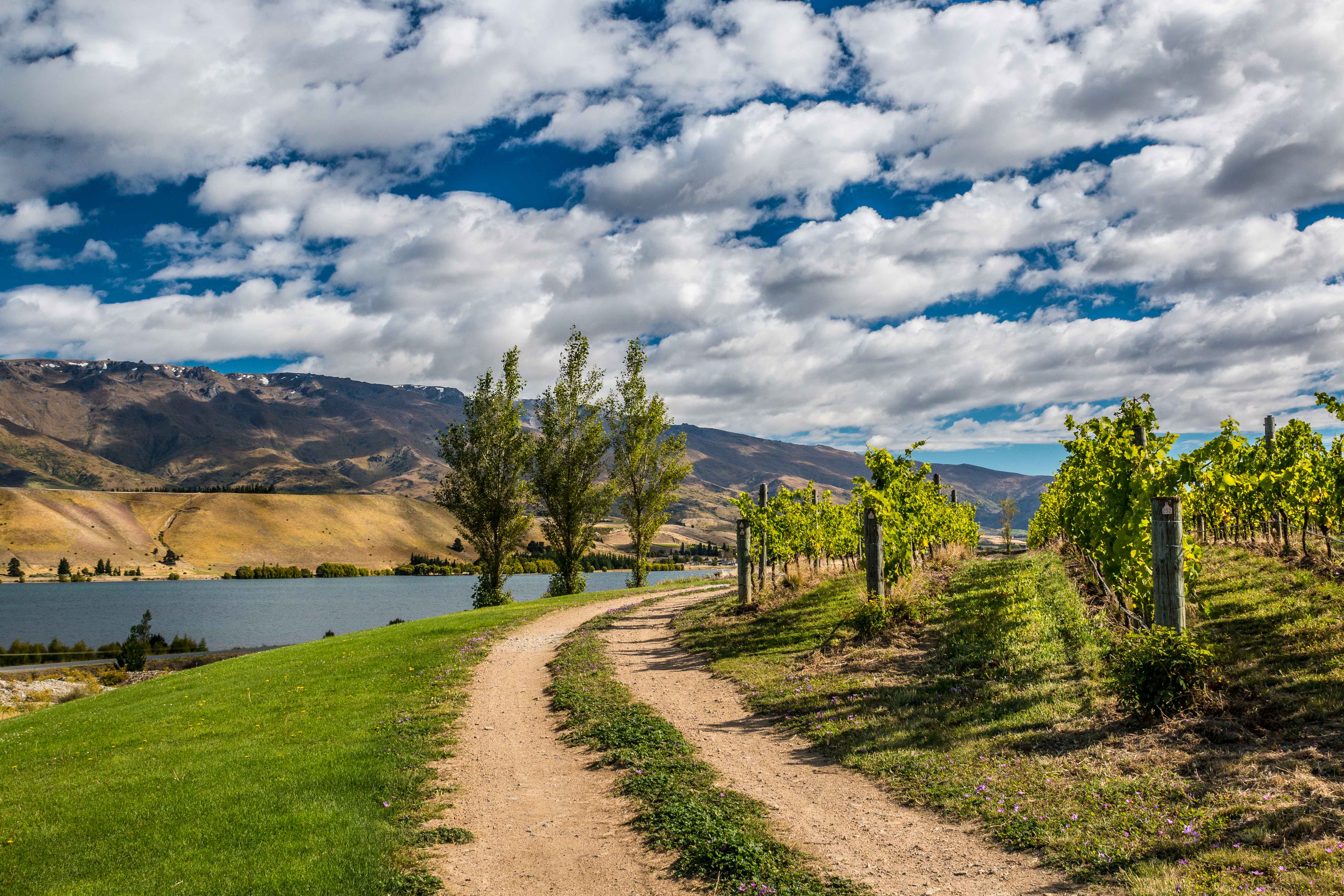
Considerable research by Stewart Elms (hence the Elm tree logo) in 1991 identified the north facing slopes at the end of Felton Road, Bannockburn as being one of the warmest and most ideal sites in Central Otago for the growing and production of premium wine. Heat summation data and soil maps of the area, developed as a result of the construction of the Clyde dam, were helpful in this decision. The three different soils identified are free draining with low fertility characteristics, and combined with the unique climate, are ideal for the production of premium quality Pinot Noir, Chardonnay and Riesling.

Our vineyards are managed by our own viticulturist, Gareth King, and his team of dedicated staff. Meticulous summer management of a single vertical shoot positioned (VSP) canopy ensures even and early fruit maturity. Shoot thinning, shoot positioning, leaf plucking and bunch thinning are all carried out by hand as required to ensure optimum quality fruit. We have inter-row planting of various different cover crops in order to assist in controlling vine vigour, improve soil health and general biodiversity.

What philosophy guides your winemaking? Our aim is to make vineyard-expressive wines of clarity, finesse, and precision; farm as sensitively as possible (Biodynamic certified on all 4 properties) and make the wines as hands-off as possible.

What are the benefits and drawbacks of grapegrowing/winemaking in your region? We have low rainfall and low humidity; pair that with our warm days, and cool nights, plus high sunshine hours, and we’ve got very low disease risk. We get bright acidity from the cool nights that translates into vibrant wines; schist soils contribute to the mineral infused and driven wines.

This slideshow requires JavaScript.

What excites you most about New Zealand wines right now? The ever increasing quality from ageing vines and minds!

How do you think Americans perceive NZ wines? The rest of the world regards NZ Pinot Noir as the finest Pinot Noirs outside of Burgundy. In America, it is different because you have your own very large domestic production of fine Pinot Noir.

What is your favorite non-kiwi wine region? Burgundy. Least? I love all wine regions that are making vineyard and regionally expressive wines (there will be some that don’t focus on this but I am not about to try and name them!).

Which wine or grape (in the world) is the least understood or respected? Riesling is a bit of a challenge for some – incredibly interesting and versatile as a food wine because of the possibility in our cool climate to make very balanced and poised wines of varying sweetness levels.

What do you drink at home when relaxing? White or Red Burgundy.

How do you spend your free time (if you have any)? Sailing, flying, mountain biking, and tramping (hiking).

If you could be traveling somewhere else right now, where would you be? Vietnam.

Give one surprising fact about yourself. Was guitarist in a rock’n’roll band called “Shagnasty & the Texan Medium Fries!”
Leave a comment

Filed under Felton Road, New Zealand

Amisfield, Central Otago, New Zealand

StephLambertonredtractor

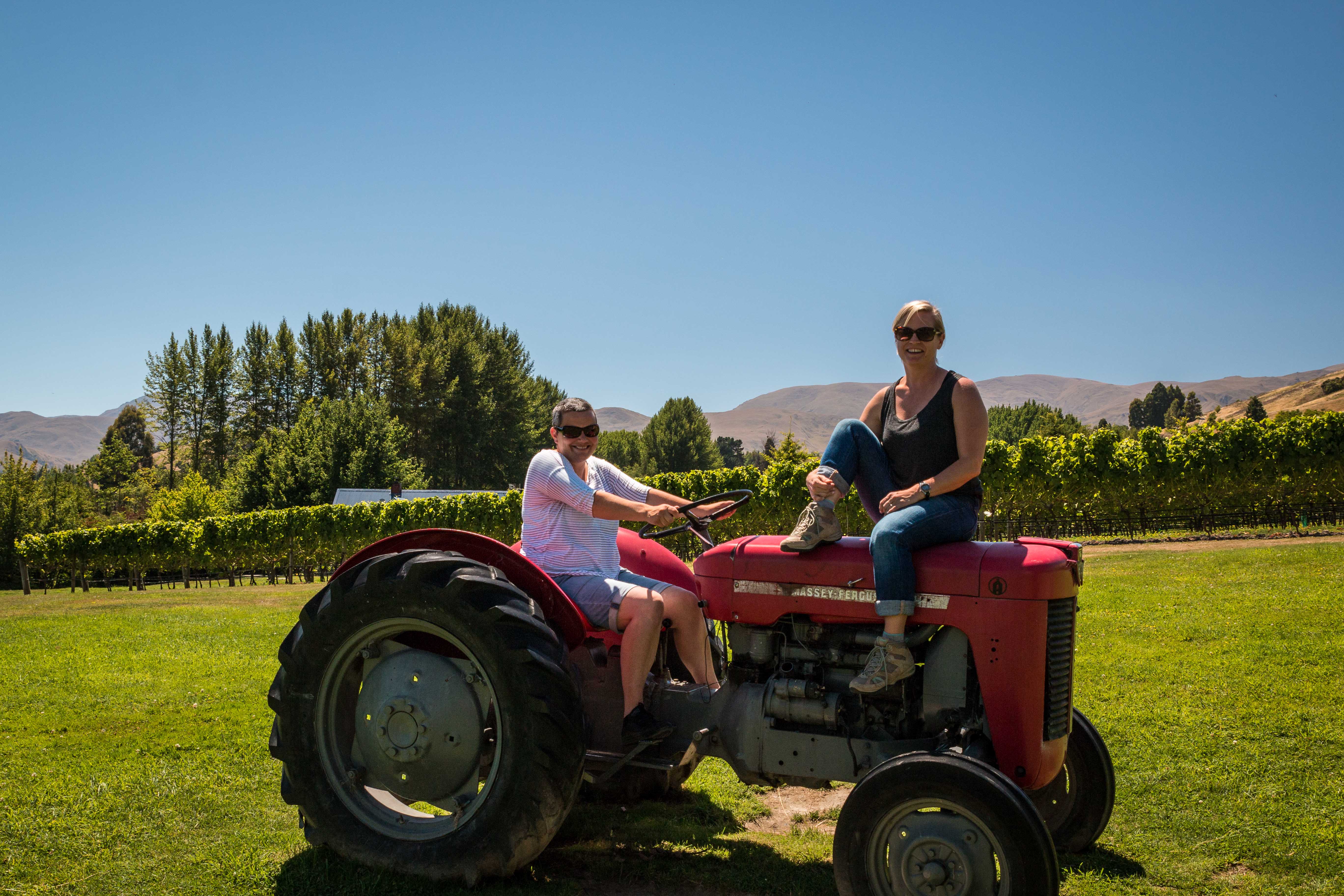
Stephanie Lambert, PhD, is one of a small percentage of female winemakers in Central Otago (and New Zealand generally). She started as assistant winemaker at Amisfield Vineyard in December 2008, and was promoted to winemaker in August of 2010.

Amisfield is still a young vineyard, like many in Otago—it was first planted in 1999, and rewarded with an inaugural vintage in 2002. They are members of the Sustainable Winegrowers of New Zealand. The owners of the winery opened a restaurant, Amisfield Bistro, not far from Queenstown, that developed a popular following for their locally sourced food and tasting menu called “Trust the Chef” which runs $65/person and requires a leisurely 3-hours of one’s time.

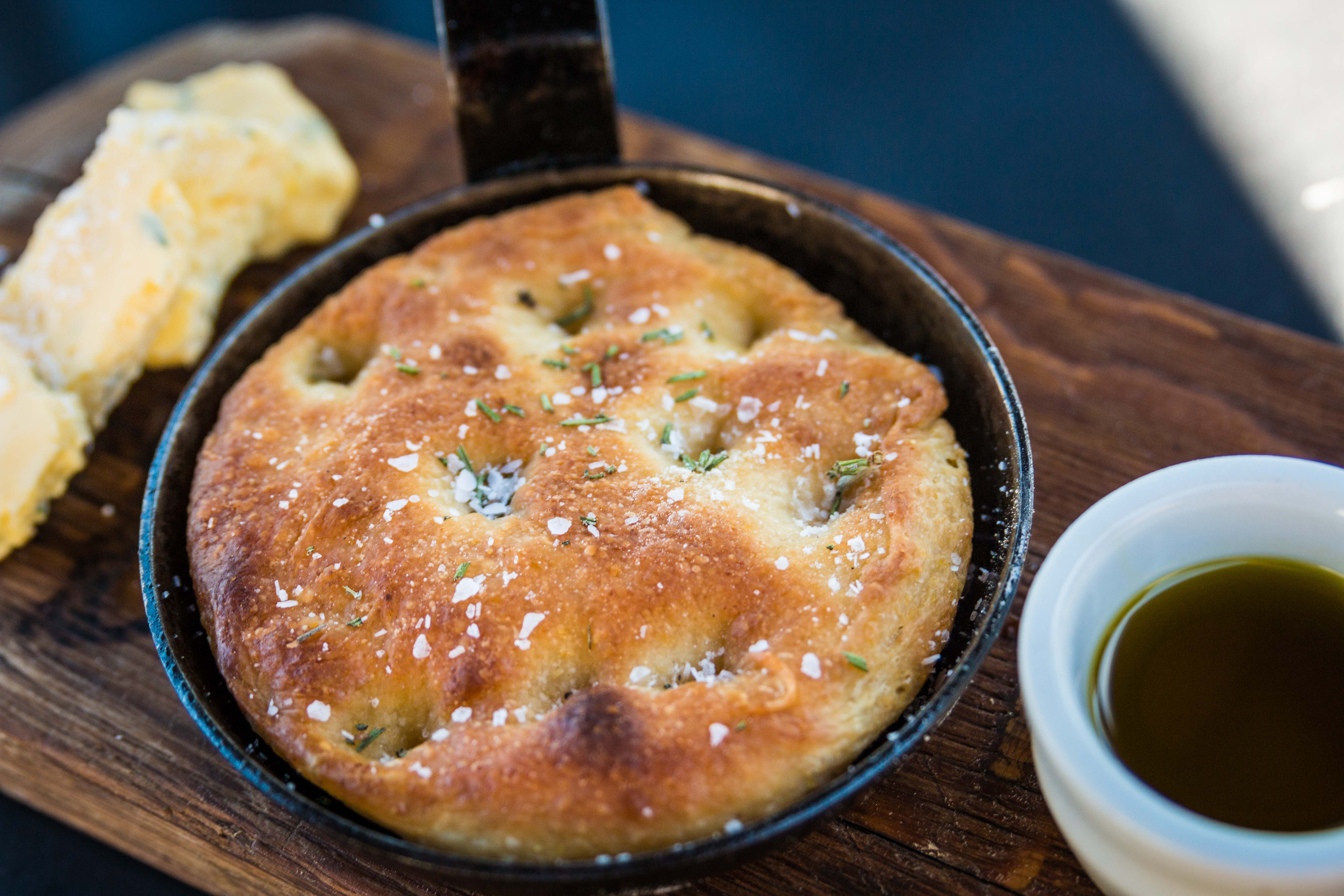
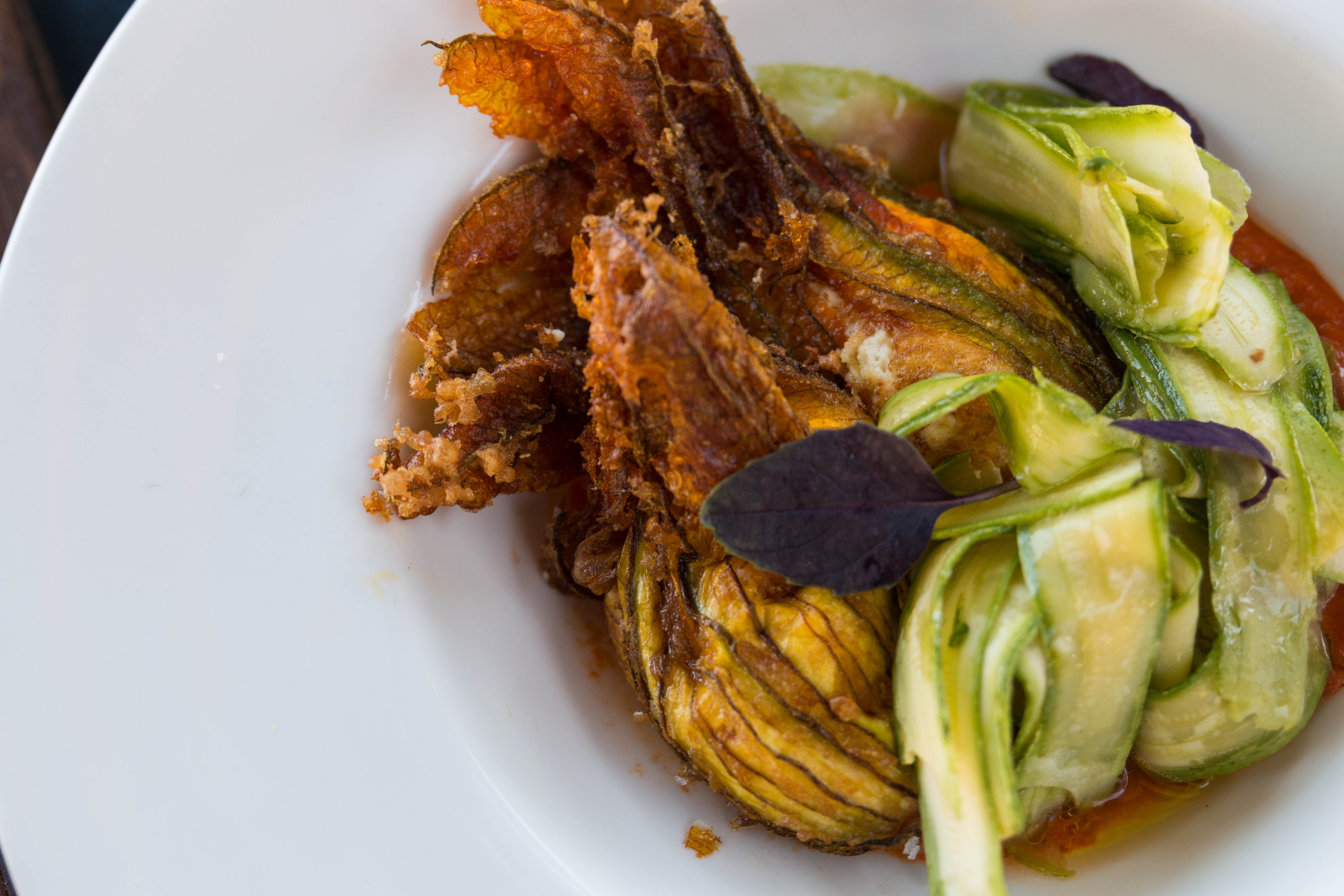
Stephanie answered a few questions prior to my arrival in New Zealand, although filled me in on much of her life while we tasted wines and had lunch at the Bistro. We dined on an excellent artisan bread board which had a flavorful sourdough and herb butter combo, plus whitebait (fish gold) and stuffed zucchini blossoms. Relatively unique to the region, Amisfield makes a small amount of Chenin Blanc—definitely track it down if visiting in person.

AmisfieldBistroZuchini

Signature Wines and Prices:

  • Amisfield Pinot Noir $45
  • Pinot Gris $30
  • Riesling $25
  • Sauvignon Blanc $25
  • Plus other varieties in very small quantities: Chenin, Gruner, and Pinot Blanc

What philosophy guides your winemaking? Our goal is to make wines with personality, that are a pure and true expression of their site, the weather, and the people that help grow and guide the wine. In Maori: He tangata! He tangata! He tangata! means “It is the people, it is the people, it is the people.”

At Amisfield we try to grow and make wines with integrity. We are very hands on in the vineyard with a full time permanent crew that has some of our longest serving staff. We want our raw environment to lead us rather than for us to put too much influence on the site. We are continuously trialing and experimenting with different techniques and applications in the vineyard to help balance our vines as well as have as little impact on the soils. We put as little on the vines as possible and try to maintain biodiversity in the vineyard. We have ducks, guinea fowl and trout in our ponds. We have an onsite wetland that treats all our winery wastewater which we can then re-use for irrigation. We are slowly converting one of our blocks to organic viticulture. We like weeds as this promotes biodiversity.

The grapes at the winery are treated very similar. We like to handle the grapes as little as possible and have a gravity flow winery built for Pinot Noir. I do not like to push the wines, and over the years I am becoming more relaxed with the grapes and the wines. For our Pinot Noir, we do natural fermentations; I like the complex wild dynamics!

With the whites, I use a combination of natural and inoculated fermentations. Again, I like to make wines with soul or personality. Some bits of the personality might be a bit strange but as long as they are telling a story, I am happy; imperfections can be interesting.

What is your biggest challenge as a winemaker (e.g., volatility of Mother Nature, expense to income ratio, having to actually market your wine)? In Central Otago, it is the weather: no two vintages are the same or can be predicted. I am very lucky at Amisfield, as the company’s philosophy matches my winemaking style. We are driven to make wines of interest, and not so much for the market.

What are the benefits and drawbacks of grapegrowing/winemaking in your region? A benefit for grape growing is the perfect weather for Pinot Noir; but that same cool weather often makes it difficult to get our Chenin ripe. We have a South African Vineyard Manager, so the most important wine in the shed is the Chenin!

AmisfieldBistroFocaccia

What excites you most about New Zealand wines right now? We are still young but now have some history behind us. We are learning what works on our sites but are also young enough to plant or try different varieties. We have 13 vintages behind us now at Amisfield, and I am just starting to feel I understand the land and the grapes. We can taste our back vintages and see our progression not only in vine age but also as winemakers. It’s a very positive outlook for the region. I like how most winemakers from NZ have travelled and seen other techniques from around the world and come back home and adapt and use these to our wines.

How do you think Americans perceive NZ wines? Hopefully Americans perceive our wines as high quality and unique. (And not Australian.) Our wines are cutting edge, coming from a small yet sophisticated country. I think in general our products are perceived as premium.

What is your favorite non-kiwi wine region? Least? I had a fabulous time in Oregon but that could have been more for the Mexican food and tequila. I was there in 2003 and 2004,so the region and winemakers were still learning a lot, but it certainly made me see how passionate and focused the region was on Pinot Noir. I loved that. I fell in love with Pinot and I fell in love with the Pinot winemakers: their outlook, their friendliness, and dedication to the one grape was fascinating. I love Alsace and Burgundy also. Champagne was not pretty but has a very interesting history, especially since visiting gave me the opportunity to see exactly what the wars did to the region. Least favourite? Well, I worked in Australia for a while and I think the Riverland region in SA/Vic would be my least favourite. Never been there, but mass-produced, clean and calculated winemaking doesn’t suit me.

Which wine or grape (in the world) is the least understood or respected? Well I must say I am a bit boring on this topic as I like the status quo grapes the most and I’m not much of an experimenter. Carignan, or closer to home, Gewürztraminer, perhaps.  I wish we made/planted more of Gewürzt. It’s a lovely wine when made well but also takes a lot of skill to perfect.

What do you drink at home when relaxing? Riesling. I love Riesling with a hoppy pale ale on the side.

How do you spend your free time (if you have any)? I am a solo mum to a 2 year old boy named Jasper, so all my spare time is spent with him having fun and playing games at Lake Wanaka.

If you could be traveling somewhere else right now, where would  you be? Right now, I would be sailing around the Whitsundays off the Australian coast. A relaxing holiday in the sun, no hassles, just swimming — I love swimming. Probably more realistically, if I was around home, I would be on the wild west coast of NZ, camping with my son in the tent at Okarito Lagoon, hunting for greenstone on the beach, making drift wood huts, and looking at the stars. The added bonus is that there is no cell phone coverage!

Give one surprising fact about yourself. Hmm, not much surprising here. I ran away to Australia for my education and then came back to NZ, so all my secrets are in Oz. University was so much fun, that’s why I stayed so long, and then once I finished my PhD I went back to get a Brewing Post Grad certificate also. Yet to be put to use…

Leave a comment

Filed under Amisfield, New Zealand

Northburn Station, Cromwell, Central Otago, New Zealand

TomRichardLaurenNorthburn

Northburn Station Winery near Cromwell in Central Otago, had a previous life as a sheep station, founded back  in 1882. Tom Pinckney, co-owner  with his wife Jan, purchased the property in 1993, and planted vines in 1999–their first vintage was a Pinot Noir from the 10×5 clone.  Jan’s brother Richard Broadhead (above in photo) is the company wine operations manager and winemaker. They’ve since built an event space/barn they call The Shed and run a restaurant, and farmgate shop from the property. They also serve a wine and small bite pairing menu.

Before my arrival in Otago, Tom took some time to answer questions about his winemaking philosophy and distaste for corned beef.

Signature Wines and Prices:

  • Northburn Station Reserve Pinot Noir RRP NZ$45
  • Northburn Station Riesling RRP NZ$25

What philosophy guides your viticulture and/or enology? We are organic and  bio-grow certified, and practice biodynamics.

What is your biggest challenge as a winemaker (e.g., volatility of Mother Nature, expense to income ratio, having to actually market your wine)? Attracting people to our facility (cellar door), and selling volumes at appropriate prices; expense-to-income ratio always a problem mainly due to the low volumes we produce, therefore fixed costs are spread over a small revenue base. However, sales are growing strongly!

What are the benefits and drawbacks of grape growing/winemaking in your region? We are ‘on the edge’ therefore yields are low and canopy management costs high.

NorthburnVineyard

What excites you most about New Zealand wines right now? Their quality and potential to maintain high prices.

How do you think Americans perceive NZ wines? High quality, high cost.

What is your favorite non-kiwi wine region? Bordeaux. Least? Southern England.

Which wine or grape (in the world) is the least understood or respected? Riesling. People still don’t get this grape.

What do you drink at home when relaxing? Our own Riesling and Pinot Noir and a wide range of European wines.

How do you spend your free time (if you have any)? I play a lot of sports with my young family.

If you could be traveling somewhere else right now, where would you be? Japan to go skiing.

Give one surprising fact about yourself. Hate corned beef….too much at boarding school!

TomPNorthburnVineyard


Leave a comment

Filed under New Zealand, Northburn Station

Pisa Range, Central Otago, New Zealand

PisaRangeJennyWarwick

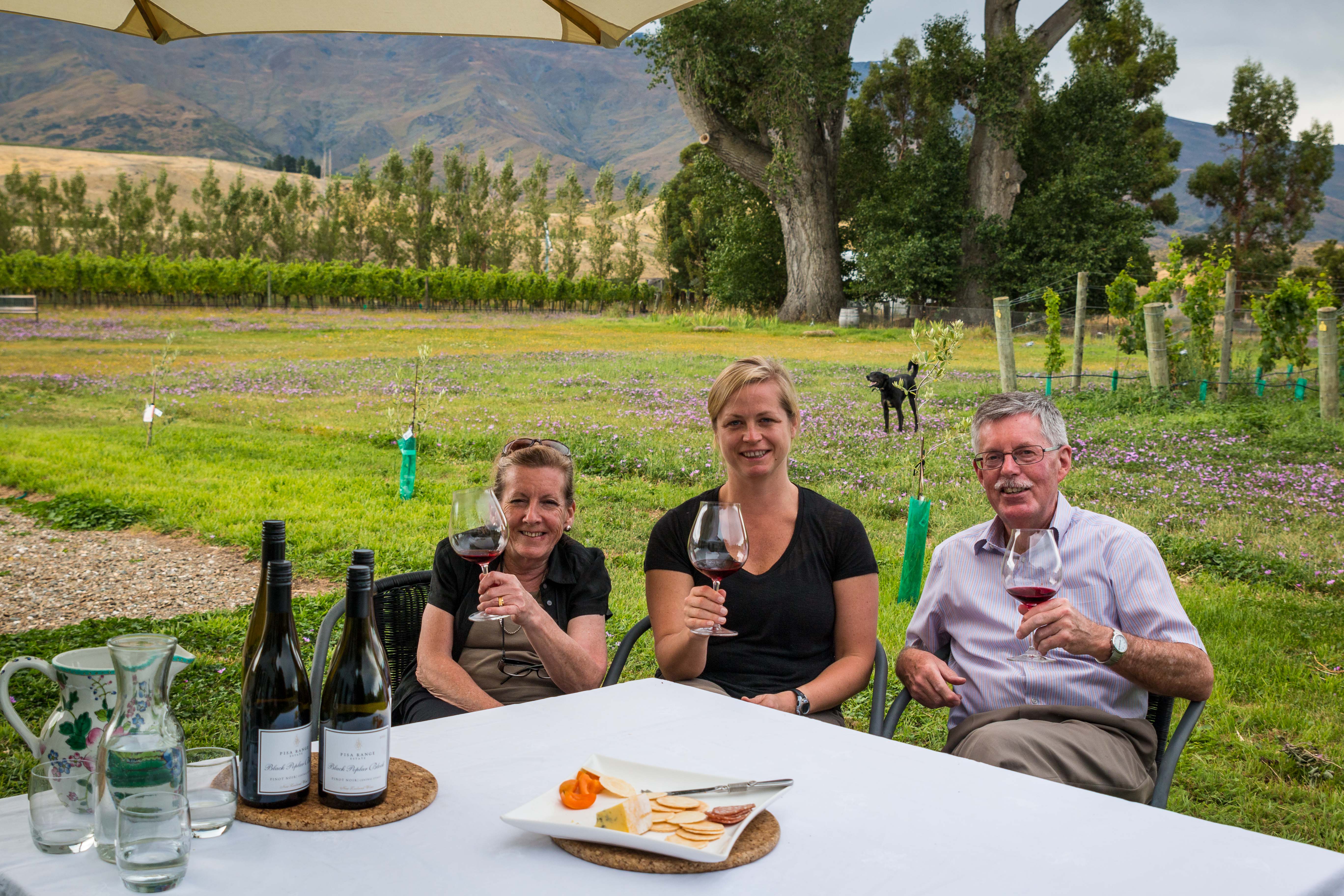
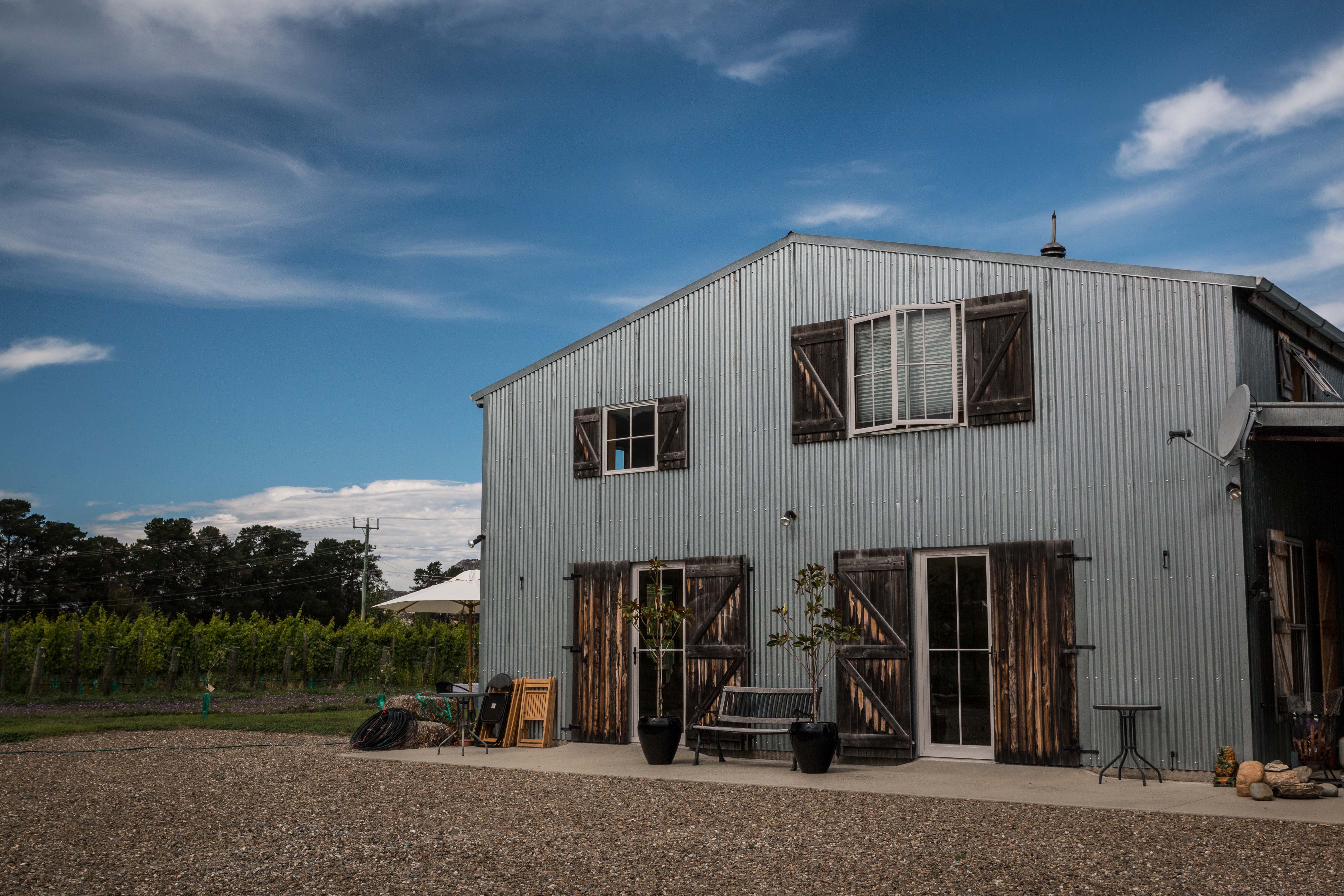
Pisa Range Estate and Winery, established in 1995, is located at the bottom of the Pisa Ranges of Central Otago, New Zealand, hence the suitable–if unimaginative–name, as Jenny Hawker professed to me during my visit last week with her and husband Warwick, son Andrew, and playful dog Pinot. Prior to my visit at the winery, Jenny answered a few questions about the property, the challenges of selling wine and why she’s passionate about her garden vegetables.

Signature Wines and Prices: 

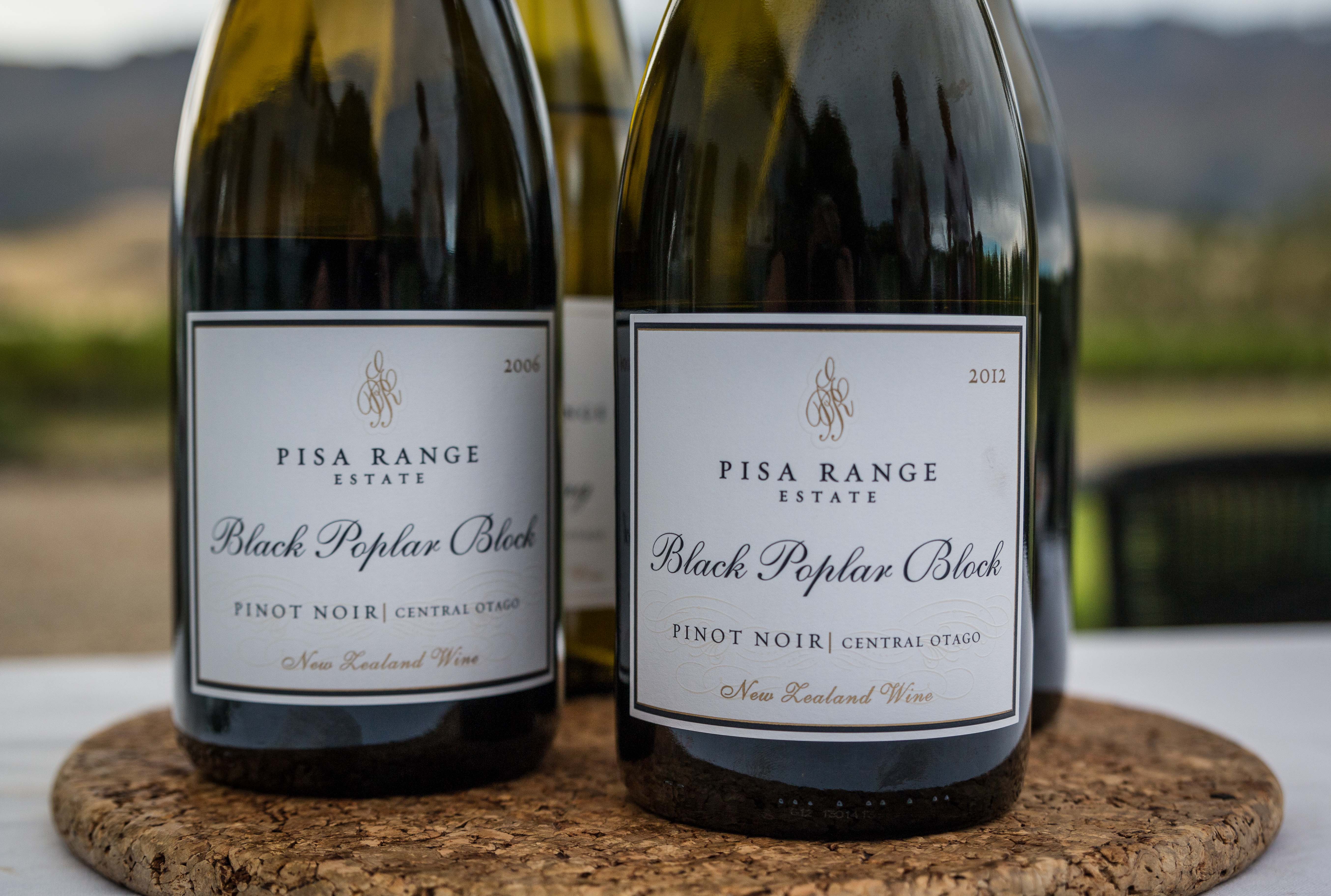
  • Pisa Range Estate ‘Black Poplar Block’ Pinot Noir RRP NZ$56
  • Pisa Range Estate ‘RUN 245’ Pinot Noir RRP NZ$32
  • Pisa Range Estate Riesling  RRP NZ$28

What philosophy guides your viticulture and/or enology? ‘Minimal intervention’: allowing the wine to express its sense of place or terroir.

What is your biggest challenge as a winemaker (e.g., volatility of Mother Nature, expense to income ratio, having to actually market your wine)? Challenges occur every season since no two are the same;  volatility of international markets.

What are the benefits and drawbacks of grapegrowing/winemaking in your region? Benefits are the climate, purity of sunlight, and our geographical position which results in minimal pest and disease pressure. The greatest drawbacks are climate, e.g., frosts, as well as labour availability.

What excites you most about New Zealand wines right now? We are still very young, but many vines are coming into maturity or at least now have some age on them.  Our future looks very exciting.

How do you think Americans perceive NZ wines? There is little or no knowledge of NZ or its wines.  NZ has a very low profile in the USA and there is a great need to raise awareness.

PisaRangeWinery

What is your favorite non-kiwi wine region? Least? Burgundy is special. Least would be South Africa — their  focus is on production of bulk wine rather than fine wine.

Which wine or grape (in the world) is the least understood or respected? Possibly Grüner Veltliner. It’s a wonderful food wine.

What do you drink at home when relaxing? Depends very much on what we are eating, but usually Pinot Noir or Riesling.

How do you spend your free time (if you have any)? Gardening. The background to this answer is somewhat long. I grew up on a ¼ acre in Hawke’s Bay—everyone grew up on a ¼ acre after the war—plots were neatly defined. At the time, we grew everything at home and thus had the luxury of plucking passion fruit, peaches, apricots, and our own asparagus. You never ever forget those tastes. They stay with you forever. We then had seven overseas postings, for varying lengths of time, and what you need when you are away most is comfort, which food provides.

We were posted in Beijing at one point. We tried to grow tomatoes on the 13th floor of an apartment by hand pollinating them. They grew, although we weren’t overrun, but we got a sense a satisfaction from it. We always dreamt of having land of our own, so after we completed this last posting in Kuala Lumpur, we started to think about what we wanted to do when we returned to New Zealand.

We looked around Nelson and Martinborough, but moving here was rather serendipitous—we went to a dinner with some people who needed to sell a block of vineyard land in Pisa, so we decided to buy it.

If you could be traveling somewhere else right now, where would you be? Singapore — it’s vibrant, interesting, and always reinventing itself.

Give one surprising fact about yourself.  I spent almost 30 years living in many different countries around the world!

PisaRangeBottles


Leave a comment

Filed under New Zealand, Pisa Range

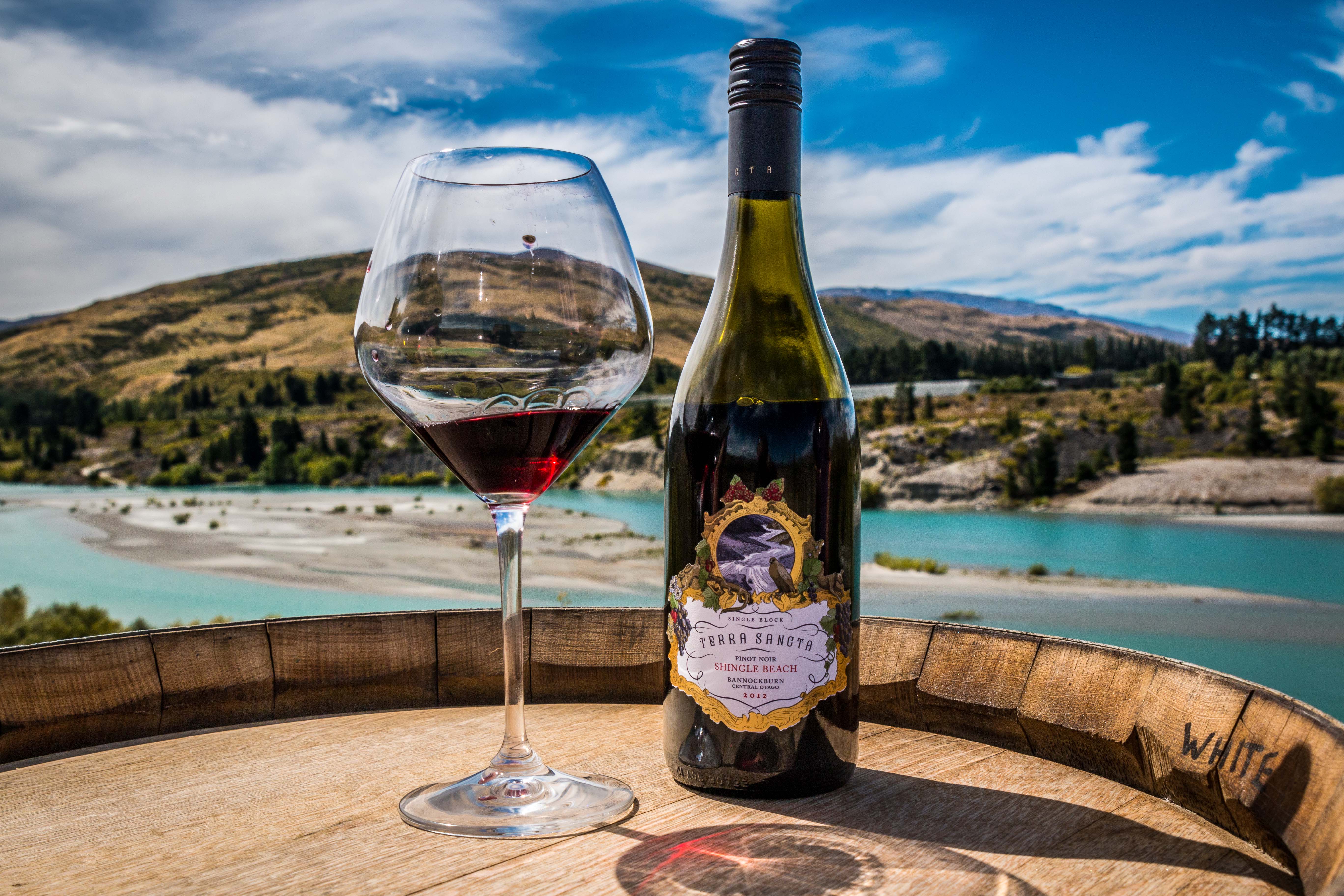
Terra Sancta, Bannockburn, Central Otago, New Zealand

JenParrReunion

Ten years ago, Jen Parr and I contemplated our future lives over a glass of Cab Franc. We’d been invited to a party held in the loft of a mutual friend under the Brooklyn Bridge just outside Manhattan. I still hear our words; I can picture the way we draped ourselves across the butcher block island of the industrial-chic kitchen, drinking a fresh vintage of our host’s newest Long Island vineyard experiment.  We soberly (in seriousness of topic) outlined our paths, oblivious to the rest of the guests floating around us.

We both aspired to follow a vinous trail, no matter how windy or steep or challenging it might become. Jen hoped hers might lead her through the great vineyards of the world; mine – I was still unsure of how it would unfold. But now, a decade later, Jen and I are reunited by our careers, on the soils of Terra Sancta in New Zealand.

Terra Sancta Winery in Bannockburn, Central Otago, was formed in 2011 by owners Mark Weldon and Sarah Eliott, Kiwis, but coincidentally, also former Manhattan-ites and still lovers of that grand East Coast city that relentlessly propels folks from its walls and into the vines.

Despite the young age of the Terra Sancta label, the oldest vines back to 1991, one of few wineries to possess a vineyard surpassing 20 years of age in the region. Jen Parr, the head winemaker since 2007, will have completed 8 vintages at the winery, come 2014 (including when it was under different ownership).

Prior to my arrival in Central Otago for the Pinot Noir Fest, of which Jen is the two-time Chairwoman, she answered a few questions about Terra Sancta’s winemaking philosophy and professed her love of Loire Valley Chenin and licorice ice cream.

TerraSanctabottleriverview

What philosophy guides your viticulture and/or enology (answer depends on role of respondent)?    Our philosophy is coined “terra specific” which means we treat our different blocks and sites as individuals and give them the love and attention they require.  Personally I try to understand every nuance of every block and think of them as extended family.

What is your biggest challenge as a winemaker (e.g., volatility of Mother Nature, expense to income ratio, having to actually market your wine)?   Mother Nature is generally kind to us in Bannockburn except in a year with significant spring frosts.   For me, the greatest challenge is trying to nurture grapes without altering their pre-ordained destiny.   Making terrior wines is “hands-off” in the winery but all interactions in the circle of wine life give energy and direction.  The goal is to work synergistically together to make wines that reflect our place.

What are the benefits and drawbacks of grapegrowing/winemaking in your region?  I struggle to think of any drawback to making wine in Bannockburn.  The climate and soils of the region are so special and perfectly suited to making great Pinot Noir.  The arid climate, the gold mining history, the lack of significant rain and the wonderfully beautiful surroundings all add to the appeal of making wine here. 

What excites you most about New Zealand wines right now?  Being involved in a young and growing industry is very exciting.   Pinot Noir excites me the most at the moment as I think in Central Otago we are embarking upon a new era where particular sites will begin to distinguish themselves as extraordinary or of a higher “cru.”  

How do you think Americans perceive NZ wines?  Sauvignon Blanc would probably be the first wine that comes to mind.  I think (would hope) that they view our Pinot Noirs as wines of great quality but they may think they are a bit expensive compared to other new world wines.

What is your favorite non-kiwi wine region? Least?  Sorry, but only one?  Northern Rhone and Beaujolais are neck and neck for me for red wines and I love Chenin Blanc from the Loire.  I don’t know that I have a least favorite region as I think it’s important to understand all wines of the world.  I drink less Bordeaux perhaps (although that’s changing) but I don’t dislike the wines, they just don’t sing for me in the way Burgundy, the Rhone or Beaujolais do.

Which wine or grape (in the world) is the least understood or respected?  Riesling. The sad reality is that this noble grape is largely mistrusted (probably as much as misunderstood).  An amazing wine with such poise and nobility, but it’s incredibly difficult to sell.

What do you drink at home when relaxing? Single Malt, Craft beer… Oh, you probably mean wine – yes, plenty of that.  Lots of Pinot Noir (including rose), Rhone reds and some Beaujolais.  I swap a lot of wines with friends so am always trying wines from all over the South Island.   Riesling and bubbles seem to be the wines for “occasions” in our house.

How do you spend your free time (if you have any)?  I spend lots of times with our dogs who are heaps of fun.  I’m outside as much as possible:  skiing in winter, mountain biking, hiking and tramping/camping the rest of the year (aside from harvest).  I also love having people around for dinner or a wine.

If you could be traveling somewhere else right now, where would you be? Right now, in the most wonderful part of summer, I’d like to be here in Wanaka.  Once the season changes, I’d like to go to Italy to explore Piemonte, Tuscany, and Sicily.   I’d love to do a lot of it on a bike.  And if I was there long enough, I’d head to the mountains and ski.

Give one surprising fact about yourself.  This is a hard one to answer as I tend to lay it all out on the table so I don’t think of myself as a modern woman of mystery.  Given my passion (bordering on obsession) for wine, it might surprise some that I used to sell financial software.  Also, I’d do just about anything for a scoop of licorice ice cream.


2 Comments

Filed under New Zealand, Terra Sancta

Postcard: Central Otago Sunset near Wanaka

This slideshow requires JavaScript.

1 Comment

January 29, 2014 · 9:11 pm

Crossroads Wines, Hawke’s Bay, New Zealand

CrossroadsWines

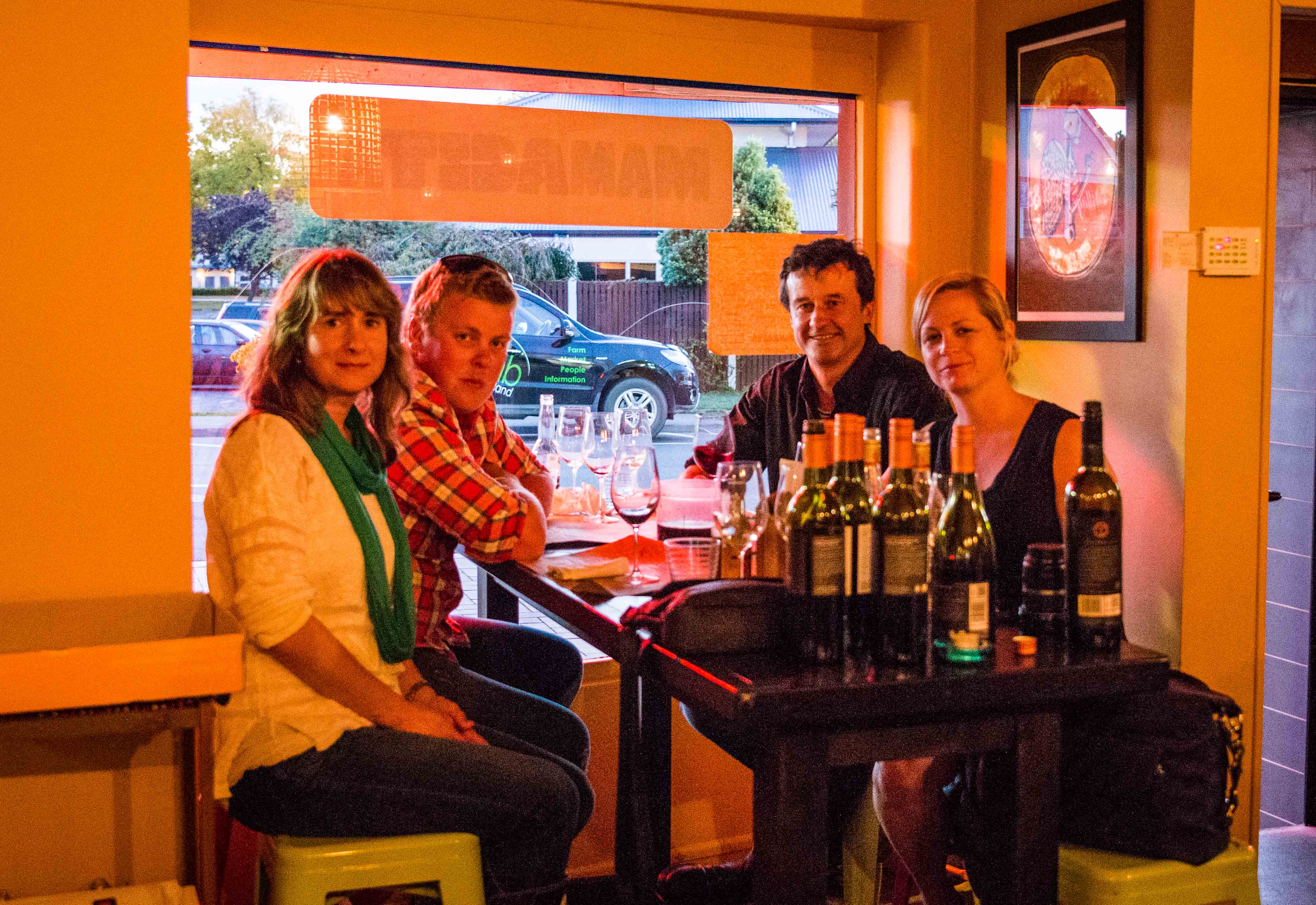
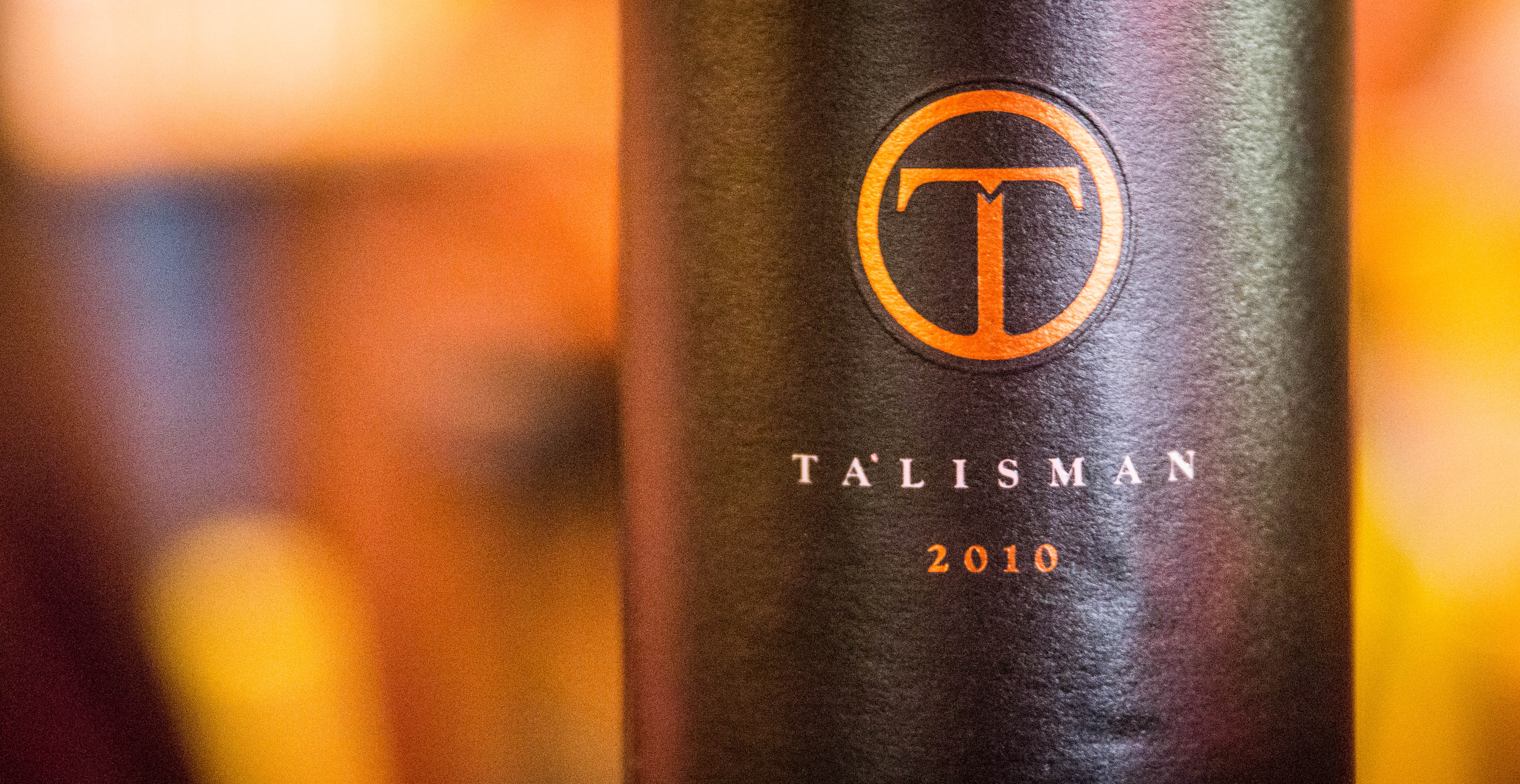
My last Hawke’s Bay meet-up was hosted in a hip little pseudo-Mexican restaurant called Mamagita in Haverlock with Miles Dineen and assistant winemaker George Leete of Crossroads Wines. I appreciated the gear shift from a winery visit to a casual cantina, allowing me to feel like a normal human just hanging with a couple of winemaker buddies, casually tasting 20 serious wines with platters of guac and tacos. Nearly tempted to guzzle a margarita, I, rather, kept my eye on the prize — the flagship wine “Talisman” that we would be tasting at the end (called, un-poetically, RGF in America due to somebody’s lame claim to the name). Talisman is a secret proprietary blend of five or so grapes, one of which is not a Bordeaux grape nor one grown by anyone else in the region. Threatening to sneak through the vineyards at night plucking leaf samples for lab analysis, I had good fun trying to trip Miles up in revealing the formula; alas, he kept it tight.

About Miles, he has been the winemaker at Crossroads since 2004.  Born and bred in Hawke’s Bay, Miles’ first vintage was in 1996 as a cellar hand in New Zealand and then over in the US before completing a post-graduate diploma in viticulture and oenology at Lincoln University, Christchurch, in 2003. Miles chats about Mother Nature as a winemaker’s biggest challenge, compares Hawkes Bay to Sonoma, and wishes he could be traveling in the U.S.A.

I should also add a thank you to Miles (hopefully you read this one day) for transporting me to the Art Deco town of Napier to shoot photos. I would not have otherwise had a chance to see it, and am grateful for your hospitality in taking me. Thank you!

A little info from the Crossroads website:

Crossroads was started in 1987 with the aim to produce the best possible wine from an exceptional place in an exceptional country – Hawke’s Bay in New Zealand. To achieve this, it became clear we had to have total control of our winegrowing and winemaking from start to finish. To that end, Crossroads purposely sourced and developed more vineyards. Today, all our Hawke’s Bay wines come from our own vineyards. 

Signature Wines and Prices:

  • Talisman $48
  • Winemakers Collection $38
  • Milestone Series $26/20

What philosophy guides your viticulture and/or enology? Simplicity, respecting the earth and its fruit, making delicious wine that is a pleasure to drink.

What is your biggest challenge as a winemaker (e.g., volatility of Mother Nature, expense to income ratio, having to actually market your wine)? The weather is still the greatest human challenge.

What are the benefits and drawbacks of grape growing and winemaking in your region? Hawkes Bay is an awesome grape growing region for a whole range of varieties and wine styles due to our diverse soils and temperate climate. We are a long way from many major markets and trade blocs, but if anything, this makes us stronger as there is no room for complacency or bad wine.

Talisman

What excites you most about New Zealand wines right now? New Zealand is one of the most dynamic wine producers in the world with ongoing rapid evolution; standards are high and the wines just keep getting better.

How do you think Americans perceive NZ wines? New Zealand Sauvignon Blanc is now well respected and widely distributed and is going well in the states. There is less familiarity with our other varieties, but Americans are generally open to trying new things and the future looks very exciting for our wines stateside.

What is your favorite non-kiwi wine region? Sonoma, California–it has many similarities to Hawkes Bay on a slightly warmer base. Least? They all have their appeal.

Which wine or grape (in the world) is the least understood or respected? Muller Thurgau, the light, fruity, low-alcohol white wine that has been with us all along.

What do you drink at home when relaxing? Preferably a different wine every time. I stay with a style or region to get a good feel for what is going on; I am just coming out of a Cotes du Rhone vs California phase .

How do you spend your free time (if you have any)? Hiking, hunting, and hanging out with my family.

If you could be traveling somewhere else right now, where would you be? U.S.A.


Leave a comment

Filed under Crossroads Wines, New Zealand

Clearview Estate Winery, Hawke’s Bay, New Zealand

This slideshow requires JavaScript.

Continuing my journey through Hawke’s Bay, Tim Turvey of Clearview Estate Winery picked me up in his truck and we set off for a coastal vineyard and photography tour, replete with striking views of the shimmering aqua-blue bay. Clearview, and many of its vines, sit near the shore in a southerly location known as Te Awanga (pronounced like Tijuana, but no tacos or tequila in sight).

Turvey purchased the property that would become the winery in 1986, and bottled his first vintage in 1989. We had a brilliant afternoon in the dazzling sun (which seared my nose—the UV light dangers of NZ are no joke) largely because Tim struck me immediately upon sight, then further after a few loose, speedy turns up, over and around curbs in the car, as my father’s kiwi winemaker doppelganger. From the bleached hair and suntan, to the eyeglass frames, driving antics, and cool-dude attitude, I couldn’t believe my good luck to spend a few hours with Jim! I hoped Tim wouldn’t  be upset by the comparison, but figured I probably looked nuts for continuously cracking up inexplicably at his responses to my questions, so I confessed. He laughed, and replied “well, funny you say that, my daughter looks just like you” and he whipped out his iphone and pulled up her photo. His daughter is Katie Turvey, up-and-coming winemaker for Kilikanoon Wines in Clare Valley, Australia. Just like dad, I’ve got an antipodean winemaker doppelganger too.

Signature Wines and Prices:

  • Reserve Chardonnay $36 NZD,
  • Old Olive Block (a Cabernets dominant Bordeaux blend) $36 NZD

What philosophy guides your viticulture and winemaking?

Let the attributes of the vineyard shine through.  When the vintage is good we don’t need to do a lot of winemaking.

What is your biggest challenge as a winemaker (e.g., volatility of Mother Nature, expense to income ratio, having to actually market your wine)? Weather, being a maritime climate we have some challenges.

What are the benefits and drawbacks of grapegrowing and winemaking in your region? Cool climate viticulture on the edge.

What excites you most about New Zealand wines right now? The vines attaining 30 years of age and starting to see complexity as a result.

How do you think Americans (or the outside world) perceive NZ wines?

They love the freshness that our maritime South Pacific climate produces.  We have wines with great, fresh acidity and vibrant flavours — a reflection of our clean climate.

Which wine or grape (in the world) is the least understood or respected? Merlot and Malbec are very undervalued as they are consistent producers, especially here in Hawke’s Bay.

What do you drink at home when relaxing? Chardonnay in all its forms from sparkling to dry

How do you spend your free time (if you have any)? I don’t have a lot, but when I do, I spend it with friends and family, and normally with good food and wine.

If you could be traveling somewhere else right now, where would you be? Cahors or St. Emillion

Give one surprising fact about yourself. I’m self-taught: nurseryman, viticulturalist, winemaker, tiler, builder, furniture maker, financier, marketer, and educator.

Leave a comment

Filed under Clearview Estate Winery, New Zealand

Sileni Estates, Hawke’s Bay, New Zealand

LaurenandGrant

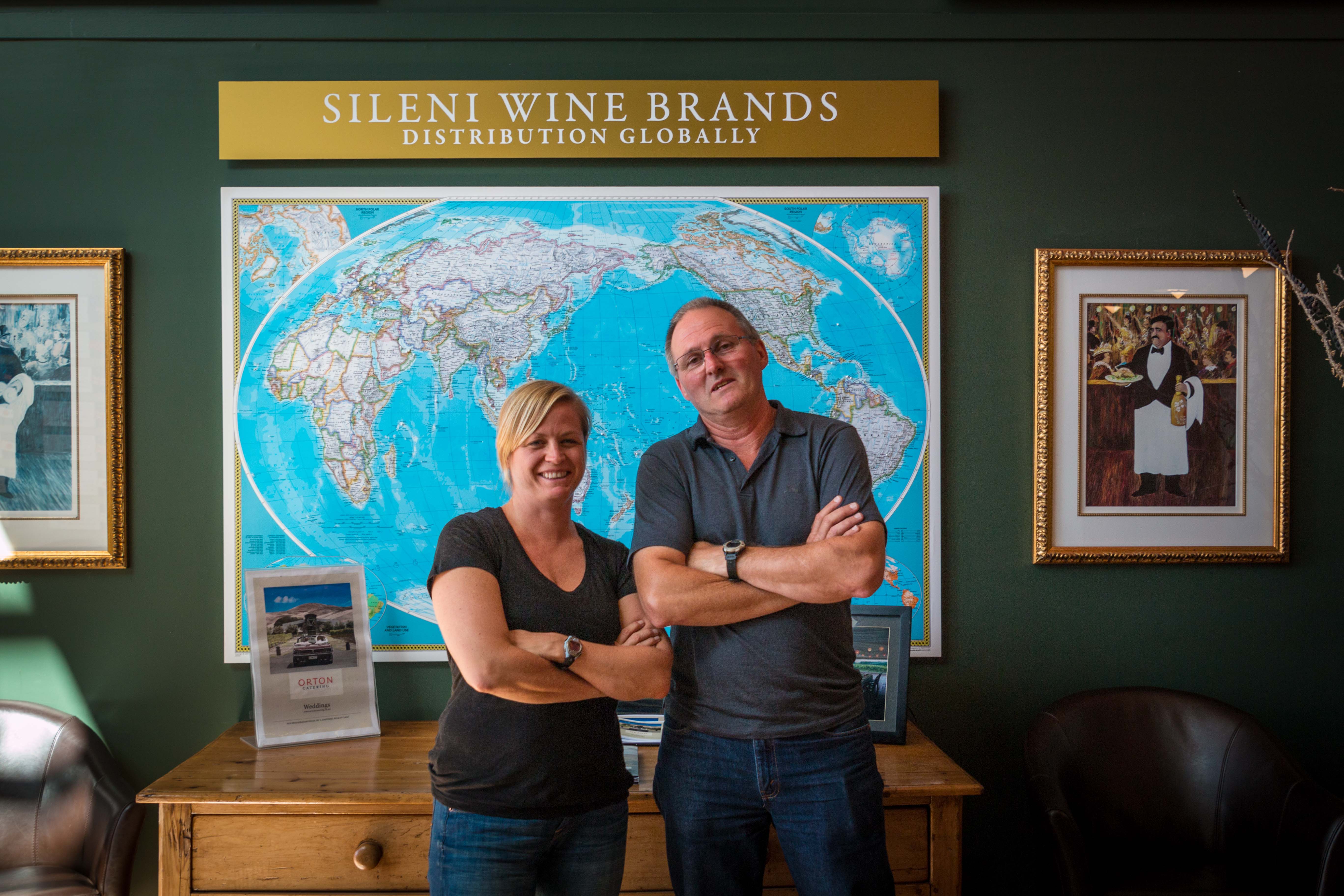
I spent the afternoon yesterday in Hawke’s Bay, tasting wine with Grant Edwards, Chief Winemaker at Sileni Estates. Prior to my arrival, Grant emailed back and forth with me about his time at the winery, his winemaking philosophy, and Semillon, the misunderstood grape.

A little info on the winery, from their website:

Sileni Estates is a major vineyard and winery development in Hawke’s Bay, New Zealand’s oldest established vineyard area. The first vintage was in 1998 and since then the wines have won world wide acclaim.

Sileni Estates is named after the Sileni who featured in Roman mythology alongside Bacchus, the god of wine. They celebrated good wine, good food and good company.

Sileni boasts a state of the art winery designed to crush over 1500 tonnes of grapes. Our Winemaking Team have honed their winemaking skills in wineries around the world and we strive to maintain high standards in environmentally sustainable viticultural and winemaking practices. Sileni Estates produce hand crafted wines that reflect the unique characteristics of the vineyards.

Signature Wines and Prices:

  • Cellar Selection Marlborough Sauvignon Blanc – RRP (NZ) $17
  • The Lodge Hawkes Bay Chardonnay – RRP (NZ) $30
  • The Triangle Hawkes Bay Merlot – RRP (NZ) $32

What philosophy guides your viticulture and/or enology? We want to make wines that are accessible and food-friendly.

What is your biggest challenge as a winemaker (e.g., volatility of Mother Nature, expense to income ratio, having to actually market your wine)? Getting consumer share of mind.

What are the benefits and drawbacks of grapegrowing and winemaking in your region? Benefits include high growing degree days, or GDD (esp. for reds), large areas of gravel based soils, well-established horticultural infrastructure, and a major port. Drawbacks include distance to main domestic consumption centres, weather volatility at harvest, and a small local population.

SileniVineyards

What excites you most about New Zealand wines right now? The fact that we are still one of the few growth categories in many world markets – much of the world still doesn’t know about us.

How do you think Americans (or the outside world in general) perceive NZ wines? I imagine there’s probably very little information available for them to base an opinion on. If anything, they might be surprised that we make wine, that we make good wine, that we make anything other than Marlborough Sauvignon Blanc.

What is your favorite non-kiwi wine region? Least? Tuscany. Champagne.

Which wine or grape (in the world) is the least understood or respected? Semillon. Makes great dry table wine if treated with
respect

What do you drink at home when relaxing? Sileni Semillon, Italian reds, GSM, and Merlot.

How do you spend your free time (if you have any)? Orienteering, reading, and gardening.

If you could be traveling somewhere else right now, where would you be? China.

Give one surprising fact about yourself. Raised two children and still have some hair…

Leave a comment

Filed under New Zealand, Sileni Estates

Te Mata Estate, Hawke’s Bay, New Zealand


This slideshow requires JavaScript.

Te Mata Estate in Hawkes Bay, New Zealand, was founded in 1896. The property was acquired by John and Wendy Buck in 1978, and is currently run by Nicholas Buck, the Estate Director, who has been with the winery, as he puts it, for “life”.   Fortunately, I met Nick in person today, since his answers to my Q&A (below) in advance of my trip, were terse and cheeky. Turns out, he’s a super affable guy surrounded by a lovely team of folks that treat each other like family. Winemaker Peter Cowley has been crafting their iconic Bordeaux blend Coleraine for the nearly 30 years of its production, and this afternoon, the fantastic Mr. Larry Morgan drove me around vineyard sites, and introduced me to the hardworking Czechs (not chicks, as I later found out) who help net the vines to prevent birds from nibbling grapes as they ripen.

A few words from the winery’s site:

Te Mata Estate was established in 1896, specialising in high-quality wines of classical style. All steps in the production of our wines are undertaken by us, from grape growing and pruning through to winemaking and bottling. Today, Te Mata Estate is recognized as one of New Zealand’s most iconic and prestigious wine producers, making nearly 40,000 cases a year of premium wine and exporting to over 40 countries.

Regarding the physical winery, horse stables, constructed in the 1870s, were converted into a winery by the Chambers family in the 1890s, and are today the centre of Te Mata Estate’s winemaking. The winery has since been updated in design, with the aim to create a modern wine-making complex that reflected the character of the landscape. Specializing in in-fill architecture and innovative modernist design, Athfield Architects created a series of buildings to reflect the art deco heritage of Hawke’s Bay and the art nouveau heritage of the original Chambers homestead.

Signature Wines and Prices:

  • Coleraine NZ$90
  • Awatea Cabernet/Merlot NZ$40
  • Bullnose Syrah NZ$50
  • Elston Chardonnay NZ$40
  • Cape Crest Sauvignon Blanc NZ$30
  • Zara Viognier NZ$30

What philosophy guides your viticulture and/or enology? Maximising the potential of Te Mata Estate.

What is your biggest challenge as a winemaker (e.g., volatility of Mother Nature, expense to income ratio, having to actually market your wine)? Disrupting the wine world status quo.

What are the benefits and drawbacks of grapegrowing/winemaking in your region? Hawke’s bay’s ability to produce world leading wines across an array of wine styles.

What excites you most about New Zealand wines right now? The growing international recognition of the absolute quality of Hawke’s Bay’s best wines.

How do you think Americans perceive NZ wines? Source of widely available, inexpensive, reliable, good qpr, light-bodied, straight-forward, aromatic, fruity, white wines.

What is your favorite non-kiwi wine region? Least? Favorite = Sonoma; Least = Napa.

Which wine or grape (in the world) is the least understood or respected? Cabernet Sauvignon.

What do you drink at home when relaxing? Wine.

How do you spend your free time (if you have any)? Family.

If you could be traveling somewhere else right now, where would you be? Mars.

Give one surprising fact about yourself. Alternative career ambition was an astronaut.


1 Comment

Filed under New Zealand, Te Mata Estate